

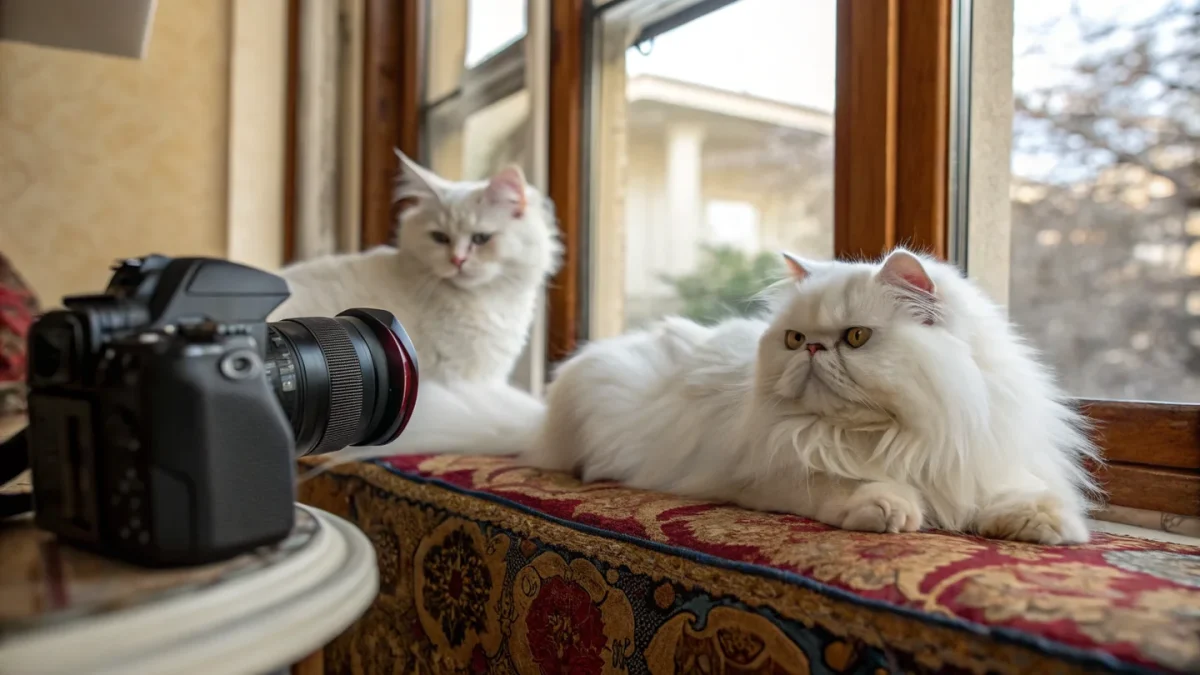
Two longhaired cats from the ancient world, both associated with aristocratic households throughout history, both with devoted followings today. The Turkish Angora and the Persian are often in the same conversation when people want an elegant, classic-looking companion — but they're substantially different animals in terms of personality, activity level, and maintenance requirements.
The cat breed comparison guide provides the systematic framework for these decisions.
Quick Comparison
| Trait | Turkish Angora | Persian |
|---|---|---|
| Coat | Fine, silky, single layer | Very dense, long, tangles easily |
| Grooming | 2-3x weekly | Daily brushing essential |
| Energy | Medium-high | Very low |
| Vocalization | Moderate | Very quiet |
| Facial structure | Normal — no flat face | Brachycephalic |
| Independence | Moderate | Moderate-high |
| With children | Good | Gentle but sensitive |
| History | Natural breed from Ankara region | Developed from longhaired imports to Europe |
The Turkish Angora: Turkey's National Treasure
The Turkish Angora is one of the oldest longhaired breeds, developed naturally in the Ankara region of Turkey over many centuries. The Turkish Angora breed profile covers the Ankara Zoo preservation program, coat genetics, and the health differences from Persian-type cats. The Turkish government has historically protected the breed through breeding programs at Ankara Zoo, particularly focused on maintaining the white-coated variety. That effort is still active today — the Angora Cat Protection, Sustenance, and Promotion Center in Ankara, established in 2017, has bred over 600 Angora cats and now produces roughly 100 kittens a year, with export of the breed from Turkey prohibited to protect the population.
The personality is considerably more active than the Persian. Turkish Angoras play well into adulthood, climb readily, and have an independent streak that reads as slightly mischievous. They're social without being clingy — they want to be involved in household activity but don't panic if left alone for moderate periods.
The coat is fine and silky, and while it's long, the single-layer structure means it mats much less readily than the Persian's dense double coat. Two or three brushings per week keeps the coat looking its best.
The Persian: The Deliberate Creation
Unlike the Turkish Angora's natural development, the modern Persian was shaped through systematic selective breeding beginning in Europe in the 19th century. The breed was developed from longhaired cats imported from Persia (modern Iran) and Turkey, then refined over generations toward the increasingly flat-faced, dense-coated type that characterizes today's show Persians.
The flat face (brachycephalic conformation) was not always extreme — earlier Persians had a more moderate facial profile. Modern show standards pushed toward progressively compressed skulls, creating real health implications for the most extreme examples. Dental crowding, eye discharge requiring daily cleaning, and in some individuals, breathing difficulties are associated with extreme brachycephalic conformation. Less extreme ("doll-faced") Persians have better health profiles. The Persian breed profile covers the grooming schedule in detail, color varieties, and how to evaluate brachycephalic degree when assessing specific cats.
The Persian personality is sedate. They're calm, quiet, and suited to quieter households where not much happens. They're gentle with people but not particularly interactive.
The Verdict
Choose the Turkish Angora if you want a longhaired breed with active, playful personality, more manageable coat maintenance, and normal (non-brachycephalic) facial conformation. The Turkish Angora is the more active and less health-complicated choice between these two breeds.
Choose the Persian if you love the specific Persian aesthetic — the very flat face, the extraordinarily dense coat, the particular quality of their sedate presence — and are committed to daily grooming and monitoring of flat-face health considerations. The Persian has great devotees who love these traits specifically; don't choose one hoping the maintenance will turn out to be less than described.
Both are beautiful breeds with long histories. The Turkish Angora is more versatile for most households.