
"Wait until they're older" is advice I've been hearing dog owners give each other for twenty years. It's also advice that makes my job harder every single time.
There's no minimum age for training a puppy. There is a maximum benefit window for socialization that closes around 14-16 weeks. Miss it, and you're doing remediation for months. Start early, and the hardest parts of training are the easiest they'll ever be.
Here's what puppies are ready for at each stage.
8-10 Weeks: Day One
Your puppy is home. Start now.
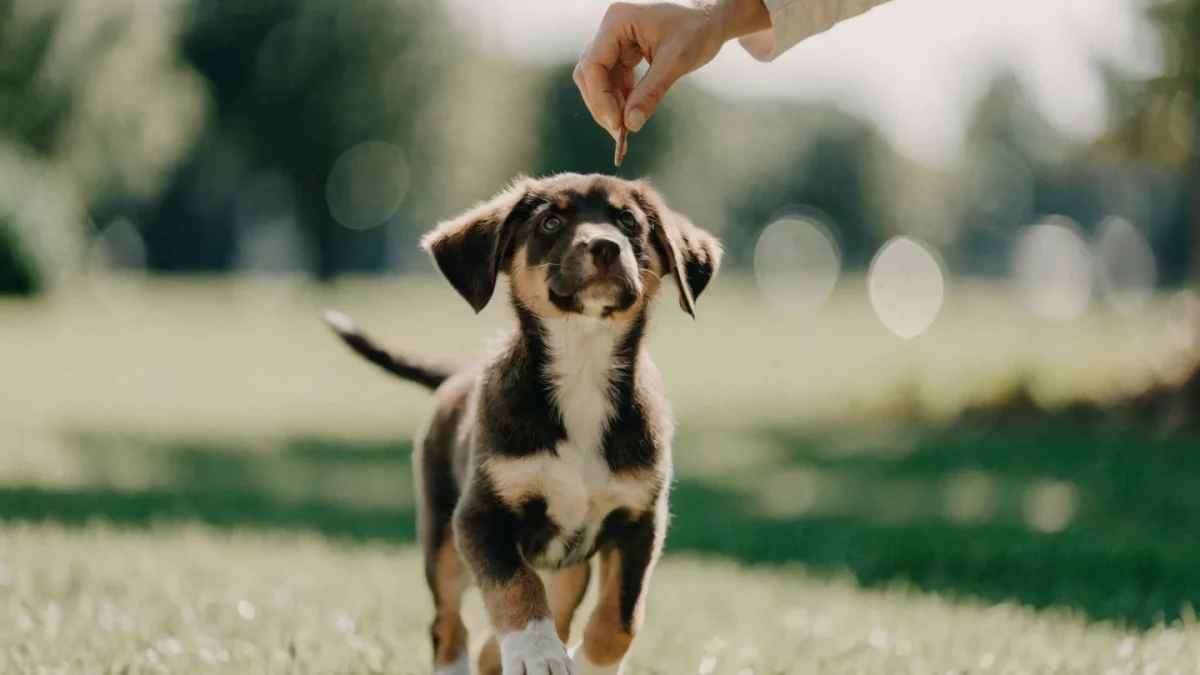
At this age, puppies are a clean slate — everything they experience is being categorized as normal or alarming. Their socialization window is wide open and their capacity for new learning is at its highest.
Ready to learn:
- Name recognition (the most important thing you can teach)
- House training basics (schedule, outdoor reward)
- Crate introduction (positive association, not confinement yet)
- Sit via lure
- Gentle handling (paws, ears, mouth — building tolerance for grooming and vet care)
- Bite inhibition (yelp response, redirection)
Session length: 2-3 minutes maximum. Shorter is better. Multiple sessions throughout the day.
Key priority: Socialization. Every experience during this window shapes how your puppy processes the world. New people, surfaces, sounds, environments, animals — brief and positive exposures as many as you can safely arrange.
10-12 Weeks
The behaviors you introduced in weeks 8-10 start becoming more reliable. Your puppy's bladder is developing, and house training progress becomes visible.
Ready to add:
- Come (basic recall in low-distraction environments)
- Wait at doors and food bowl
- "Off" (for jumping)
- Short loose-leash walking with a lightweight leash in the yard
Continue: All of the above from 8-10 weeks, with more deliberate practice.
3-4 Months
The socialization window is closing or closed, but your puppy is entering a period of active learning. They can hold their focus slightly longer and respond to slightly more complex sequences.
Ready to add:
- Stay with short duration (5-15 seconds)
- Leave it (starting with closed fist, building to floor items)
- Down (lie down on command)
- Loose leash walking outside the yard
- First group puppy class (socialization + training + structured distraction)
Watch for: Teething starts around 3-4 months. Expect increased chewing and potential biting spikes. This is normal — increase chew toy availability.
4-6 Months
This is the golden window for building solid, generalized behaviors. Your puppy can stay focused longer, work at more distance, and perform in higher-distraction environments.
Ready to add:
- Stay with duration and distance combined
- Heel or loose-leash manners outside
- Down-stay
- Leave it in real environments (sidewalk, park)
- Basic distraction proofing for all known behaviors
Session length: Up to 5-7 minutes per session. Multiple sessions daily still outperform fewer long ones.
6-12 Months: The Adolescent Phase
Brace yourself. This is the period most people mistake for their dog forgetting everything they know.
The adolescent phase — generally from around 6 to 18 months depending on breed and size — involves significant hormonal changes, brain reorganization, and increased distraction sensitivity. Behaviors that seemed solid will wobble. Recall may become less reliable. Your dog may suddenly be very interested in everything except you. (See also: dog socialization.)
This is not regression. This is normal development.
What to do:
- Maintain the training you have; don't abandon it
- Go back to basics with increased reinforcement in challenging situations
- Raise treat value in difficult environments
- Consider that recall in high-distraction environments may need a long line for safety
- Don't add complex new behaviors; consolidate what you have
By 12-18 months, most dogs stabilize and behaviors become more reliable again.
One More Thing
Older dogs can absolutely be trained. If you have a 3-year-old dog that was never taught anything, they can still learn everything on this list. Adult dogs often learn faster than puppies because they can focus longer. "You can't teach an old dog new tricks" is just wrong.
Start with the simplest thing today: ten name recognition repetitions in a quiet room. If you're reading this and your puppy is 8 weeks old, that's your homework right now.