

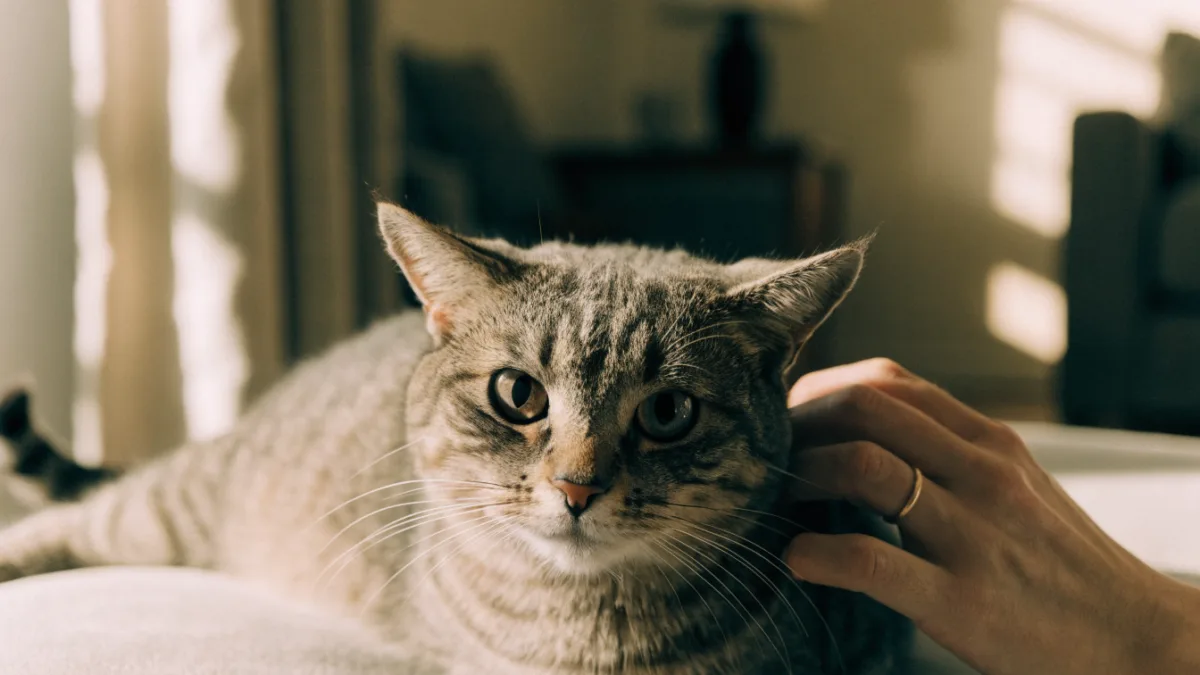
You’re settled on the couch, catching up on your favorite show. Your dog is tucked against your side, or maybe your cat is curled up in your lap, purring away. You’re stroking their fur, enjoying a quiet moment. Then, out of absolutely nowhere, teeth sink into your hand.
It feels like a betrayal. You start wondering if your pet is just moody, spiteful, or maybe developing some kind of random behavioral issue. But here’s the truth: petting-induced aggression isn’t random moodiness. It’s communication. Your pet isn’t being a jerk—they’re just telling you, the only way they know how, that they’ve hit their limit.
Let’s talk about why dogs and cats suddenly turn into tiny cuddle-tyrants, and more importantly, how you can read the room before you get bitten.
The Sensory Overload: When Good Feelings Go Bad
We humans view cuddling as the ultimate display of affection. To us, longer and tighter equals more love. But dogs and cats don’t process physical touch the same way we do.
Animals have a limited threshold for sensory input. When you pet them, it feels good at first. But as the minutes tick by, that repetitive sensory input starts to build up. Think of it like someone tickling you. For the first few seconds, you might laugh and enjoy it. But after a minute, it becomes overwhelming, frustrating, and physically uncomfortable. You’d eventually lash out to make it stop.
That’s exactly what happens to our pets. Their neurological receptors get overloaded. What started as a pleasurable massage triggers an instinctive fight-or-flight response, resulting in a bite. Behaviorists often point to a sort of unofficial “five-minute rule.” While it’s not a hard science, most pets—especially cats—have a very short tolerance window for passive petting. After roughly three to five minutes of continuous stroking, they hit their limit.
Sometimes, the issue is actually boredom. Your dog or cat might solicit attention because they have pent-up energy. They nudge your hand, you start petting them, and they quickly realize they didn’t actually want to be stroked—they wanted to run, hunt, or play. The biting is an outlet for that sudden spike of frustrated energy.
The Warning Signs You’re Probably Missing
Pets rarely bite “out of nowhere.” I used to think they did, too. I’d see a cat purring one second and biting the next, thinking the cat was just unpredictable. I was wrong. Animals almost always give plenty of warning signs before they escalate to teeth. We just don’t speak their language.
Before a cat turns into what feline behaviorists affectionately call a “tiny vampire,” they throw up a flare. If you’re petting a cat, keep your eyes peeled for these subtle cues:
- Tail twitching or thumping: A slow swish or an aggressive thump is the first major red flag that patience is running thin.
- Skin rippling: If you see the hair along their back twitch or ripple, stop immediately.
- Airplane ears: When a cat’s ears rotate to the side or pin flat against their head, they’re uncomfortable.
- Dilated pupils: If their eyes suddenly look like black saucers, their arousal level is spiking.
- Sudden stillness: If the relaxed, soft purring stops and they tense up into a rigid statue, a bite is usually imminent.
Dogs are just as expressive, but their signals often get misinterpreted as them just being “chill.” If you’re giving your dog a long hug or a prolonged scratch session, watch for these stress signals:
- Whale eye: If your dog turns their head away but keeps their eyes locked on you, showing the whites of their eyes, they are highly uncomfortable.
- Lip licking or yawning: These aren’t signs of hunger or sleepiness. In dog language, they are calming signals meant to defuse tension.
- Looking away: Actively turning the head away from your hand or breaking eye contact is a polite request for space.
- Raising a paw: A lifted front paw often means the dog is feeling uncertain or anxious about what’s happening.
- Stiffening: A relaxed dog is soft and doughy. A dog that suddenly goes rigid under your touch is bracing themselves.
If you miss these subtle cues, the “leave me alone” bite is the next logical step. Your pet isn’t attacking you. They’re simply enforcing a boundary because their polite requests went ignored.
Is It Overstimulation or Hidden Pain?
Before you chalk a biting incident up to a behavioral quirk, you have to rule out a medical issue. Sudden aggression during physical contact is incredibly frequently linked to undiagnosed pain.
Imagine you have a pulled muscle in your shoulder, and someone comes up and gives you a vigorous bear hug. You’d probably yell or shove them away. Our pets do the exact same thing.
Common medical triggers for both dogs and cats include osteoarthritis (which is especially common in older pets but often goes untreated), hidden dental disease, or skin conditions and allergies that make their skin hypersensitive. As,[1] if your older pet suddenly develops a low tolerance for being touched, chronic pain is usually the culprit. If the biting is a brand-new behavior, don’t hesitate to get them checked out at the vet’s office. You can’t train away physical pain.
How to Prevent the Cuddle Bite
So, how do we fix this? You don’t need to banish your pet to the other side of the room. You just need to change how you interact with them.
Run the Consent Test
Veterinary behaviorists and welfare organizations have heavily popularized the concept of “petting consent” in recent years. It’s exactly what it sounds like: checking to see if your pet actually wants to be pet.
Here’s how you do it. Sit with your pet and offer them a few gentle strokes on their chest or the side of their neck—avoid the top of the head, which many animals find intimidating. Then, take your hand away completely. Wait.
If your pet nudges your hand, leans into you, or actively seeks out more contact, they’ve given consent for round two. If they walk away, look out the window, or just sit there doing nothing, they didn’t really want to be petted in the first place. It sounds almost too simple, but running this quick check completely transforms the trust dynamic in your home.
Redirect the Energy
If you realize your pet is asking for attention out of boredom rather than a desire for physical affection, pivot. Swap the cuddle session for active play. Grab a wand toy and let your cat stalk, chase, and bite the feather at the end. Grab a rope toy and initiate a game of tug-of-war with your dog. Let them burn off that pent-up physical and mental energy in a way that feels natural to them, rather than forcing them to sit still and be stroked.
What Not to Do When Bitten
When teeth hit skin, human instinct kicks in. We yell. We push the animal away. Sometimes, owners try to scruff the pet or physically reprimand them to show them who’s boss.
Don’t do it. The outdated idea that you need to establish “dominance” over your pet by punishing them is incredibly harmful. If you yell or physically correct your dog or cat after they bite, you’re just adding fear and anxiety to an already stressful situation.
Think about it from their perspective. They bit you because they were overstimulated and wanted the interaction to end. If you respond by getting loud and physical, you confirm their fear that you are unpredictable and scary. Punishing the behavior doesn’t fix the underlying sensory overload. It just teaches your pet that showing discomfort leads to a fight. Next time, they won’t give you that subtle lip lick or tail twitch. They’ll just go straight to a severe bite because the early warning signs weren’t safe to use.
Instead of punishing, just calmly stand up and walk away. Withdraw your attention entirely. This teaches them that biting makes the fun stop. It’s consequence-free, but it’s highly effective.
A Final Word on “Love Bites”
One last note on the subject. Some owners actively encourage gentle nibbling during cuddle time. They think it’s cute when their cat softly mouths their hand or their dog lightly holds their arm. The debate in the behavior world is that allowing these “love bites” blurs the lines. If you teach your pet that mouthing humans is an acceptable way to communicate, they’re eventually going to use harder mouthing when they get overstimulated.
If you want to avoid the sudden cuddle bite, make a strict household rule: teeth never touch human skin. Redirect mouthing to a toy every single time.
At the end of the day, our dogs and cats aren’t plush toys. They are thinking, feeling creatures with their own boundaries and sensory limits. Learning to respect the consent of an animal—recognizing that they get to opt out of affection just like we do—is the greatest act of love you can offer them. When you stop taking their boundaries personally and start listening to what their bodies are telling you, you’ll find that the quiet moments you do share become infinitely more trusting.
Sources
- veterinary professionals point out — gulfwindsanimalhospital.com