

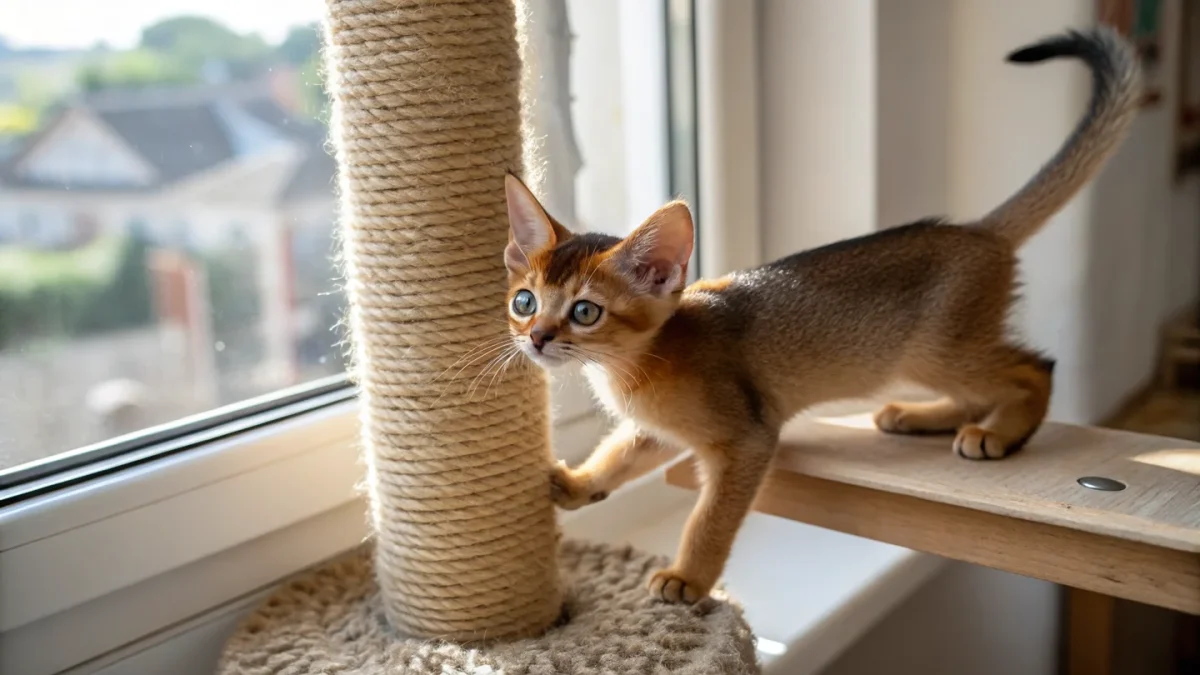
An Abyssinian kitten has a specific challenge that many owners don't anticipate: the enormous eyes miss nothing, and everything is worth investigating immediately. You bring the kitten into the introduction room — the sensible, single-space setup that gives a new cat room to orient — and within twenty minutes it has mapped every corner, found the highest point, and is now looking at you expectantly, waiting for the next thing to happen.
This is not a cat that settles gradually into its environment. It absorbs it actively. The energy that makes adult Abyssinians so engaging in a lived-with way shows up in kittens as relentless, directed curiosity from the first hours.
Understanding what this means for the first weeks and months helps you build the foundation the adult cat will be built on.
Setting Up for an Abyssinian Kitten
The Abyssinian breed has specific requirements that should be in place before the kitten arrives.
Vertical infrastructure from day one. A kitten-appropriate cat tree — stable enough for a young cat learning to judge distances — should be in the introduction room. Abyssinians are climbers from kitten stage; providing a legitimate vertical destination reduces the experimentation with furniture.
Enrichment that rotates. A few puzzle toys, batting toys, and items that move unpredictably matter more than a large quantity of static toys. Rotate what's available every few days — novelty engages an Abyssinian kitten the way familiarity doesn't.
Secured dangerous items. Kittens investigate everything at paw and mouth level. Electrical cords, small objects, toxic plants, and access to spaces they could become stuck in need to be managed before arrival, not reactively.
A vet relationship established. First vet visit within 1–2 weeks of arrival to establish baseline health, confirm vaccination status from the breeder, and raise any early concerns.
The First Days: Managing Intensity
Abyssinian kittens don't typically demonstrate the cautious, hide-and-assess entry behavior of more reserved breeds. Many go straight to exploration. Let them — but monitor for exhaustion cues (slowed movement, lack of focus) and provide access to quiet hiding spots for genuine rest.
The introduction room approach is still worthwhile even with a confident kitten. The issue isn't timidity; it's giving the kitten a manageable territory to establish before it faces the complexity of a full household.
Expect active nights in the first week. Abyssinian kittens have not yet calibrated their sleep schedules to human preference. A separate sleep arrangement for the first few weeks, while the kitten settles into household rhythms, is reasonable and prevents sleep disruption from becoming a chronic habit.
Building the Socialization Foundation
The primary socialization window largely overlaps with time still at the breeder's (2–7 weeks), but the weeks following arrival are meaningful for Abyssinian kittens specifically because of how strongly they generalize from their experiences.
Multiple-person handling. Different people handling the kitten calmly builds a broad social reference. Abyssinians that only knew one person in kittenhood can become selectively wary; those with varied early experience tend toward the confident, curious greeting behavior characteristic of the breed at its best.
Sound acclimatization. Household appliances, visitors, outdoor sounds through windows. The kitten exposed to these as normal background will navigate them as an adult without stress. The isolated kitten may become reactive to them.
Handling protocol. Daily brief sessions of paw touching, ear peeking, lip lifting. Not intrusive — ended the moment the kitten signals resistance. Building comfortable handling here makes a significant practical difference for Abyssinian grooming basics, nail trimming, and vet visits for life.
Play Structure: The Non-Negotiable
Abyssinian kittens need directed play, not just toys in the environment. Unstructured access to toys addresses boredom but doesn't satisfy the relational and prey-drive components that interactive sessions provide.
Two to three sessions daily of 10–15 minutes using interactive wand toys, feather toys, or anything that simulates prey movement. End each session with the "catch" — let the kitten actually catch and hold the toy before putting it away. This completes the prey sequence and produces a satisfied response rather than frustrated escalation.
Introducing puzzle feeders early serves a second purpose: the kitten learns that working for food is normal and engaging. Adult Abyssinians with puzzle feeding in their background use feeders readily and get real mental enrichment from them.
What You're Investing In
The Abyssinian kitten period is intensive in a way that pays off specifically. A kitten handled broadly, socialized to varied experiences, and given structured play and enrichment from the start becomes an adult that accepts handling, manages novelty without stress, and expresses the confident, curious personality that makes the breed rewarding to live with.
The adult Abyssinian's energy and curiosity are not going to diminish with age the way some breeds' do. What you do in the first six months shapes how those traits express — as endearing, engaged intelligence, or as anxious or unfocused restlessness. The foundation is set early.