

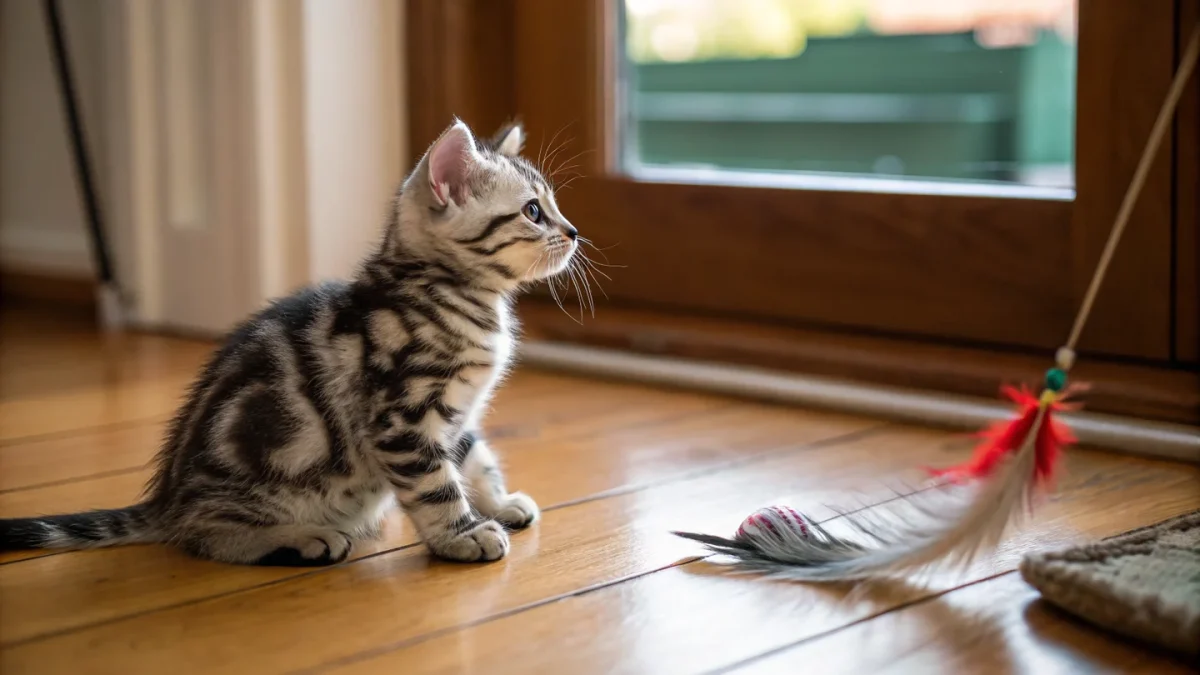
The American Shorthair's working-cat heritage shows up early. These kittens are sturdy, curious, and adapt to new environments without the prolonged adjustment period that more sensitive breeds sometimes require. The American Shorthair complete breed guide covers the breed's history and why that robustness exists. This article is about what the kitten period looks like practically.
The honest summary: raising an American Shorthair kitten is one of the more forgiving experiences in pedigreed cat ownership. The breed's health robustness, manageable temperament, and natural adaptability mean the kitten period is characterized more by the joy of watching them develop than by managing complications.
Arrival and First Days
American Shorthair kittens typically arrive home between 12 and 16 weeks, well-socialized and ready for their new environment. Unlike some breeds that hide for days after a move, American Shorthairs usually begin exploring within a few hours. Allow them to move at their own pace; they're naturally curious and will cover the new space systematically.
Provide food, water, litter box, a few hiding options, and a cat tree or climbing surface. The kitten's initial investigation is purposeful — they're establishing the layout and identifying the key resources.
The first few days are the best time to observe the kitten's breathing at rest (normal, no effort), eating and drinking, litter box use, and general energy level. Any concerns should go to a veterinarian promptly.
Playfulness: The Active Window
American Shorthair kittens are genuinely active. The adult's reputation for moderate, balanced energy doesn't fully apply in the first year — young kittens play hard, sprint unexpectedly across rooms, and investigate everything with the focused intensity of animals whose prey drive is in its formative stage.
This is the period to establish play habits that will persist into adulthood. Wand toys with prey-like movement are the most effective engagement. Brief play sessions multiple times a day — five to ten minutes each — better match the kitten's attention span than a single long session. The goal is genuine engagement rather than toy access; interactive play with you is more developmentally valuable than solo play with a toy.
Play also establishes what an appropriate target is. American Shorthairs that are played with actively from kittenhood and learn that toys are prey-substitutes rarely develop the habit of treating hands and feet as play targets.
Socialization: Building the Foundation
American Shorthairs are naturally sociable, but early handling still shapes adult behavior. Handle the kitten daily — brief restraint, paw handling, ear examination, gentle mouth opening. These experiences, presented positively, make the adult cat easy to examine and medically manage.
Introduce varied stimuli: different people, household sounds, surfaces, and environments. The American Shorthair's adaptability is a genuine trait, but early positive exposure reinforces it. A kitten that has experienced many benign variations of the world arrives at adulthood with broad confidence.
Coat Care: Starting Simple
The American Shorthair kitten's coat is similar in structure to the adult coat but typically softer in the kitten period. Light weekly brushing with a rubber grooming glove starts the habit and handles the modest loose hair.
This is also the time to establish tooth brushing if you're going to pursue it — kitten gums and teeth are more accessible, and the habit is easier to build than to introduce to an adult. Use cat-appropriate toothpaste and a soft brush, approach gradually, and reward cooperation.
For the full adult coat routine, American Shorthair coat care and grooming routine covers the spring shedding season and maintenance approach.
Health Monitoring: What Matters for This Breed
The American Shorthair's primary breed-specific health concern is hypertrophic cardiomyopathy (HCM). Responsible breeders perform echocardiogram screening of breeding cats; ask for documentation before acquiring a kitten.
There's no HCM screening recommended for kittens specifically — the condition typically develops in adulthood. But establishing a veterinary relationship with HCM-aware monitoring early means that when baseline cardiac assessments become appropriate, the vet already knows the cat and the breed.
There are no breed-specific structural problems in American Shorthairs that require kitten-specific management. No brachycephalic concerns, no extreme body proportions, no fragile coat structure. Standard kitten care is the right level of care.
Feeding
Age-appropriate kitten food in multiple small meals is the right approach for the first year. The American Shorthair's moderate metabolism means they're less prone to the lean kitten body condition that some very active breeds show, but they're also not prone to excessive weight gain during the high-activity kitten phase. Monitor body condition and adjust portion sizes accordingly.
The transition to adult food typically happens around 12 months. American Shorthairs on scheduled feeding (rather than free-feeding) as adults tend to maintain better weight throughout their lives — the breed's solid build can accommodate extra weight quietly, and the effects only become apparent when the gain is already significant.
What to Expect as the Kitten Becomes an Adult
The transition from the active, somewhat chaotic kitten phase to the balanced, moderate-energy adult is gradual and typically pleasant. The curiosity persists. The playfulness remains available. The frenetic kitten sprint sessions become less frequent, replaced by more considered, purposeful play.
What emerges around age 2-3 is the American Shorthair that the breed's reputation describes: present, warm, genuinely companionable, and remarkably easy to live with. The kitten period is the investment that produces that outcome — not a challenging phase to endure, but the time when the relationship is established.