

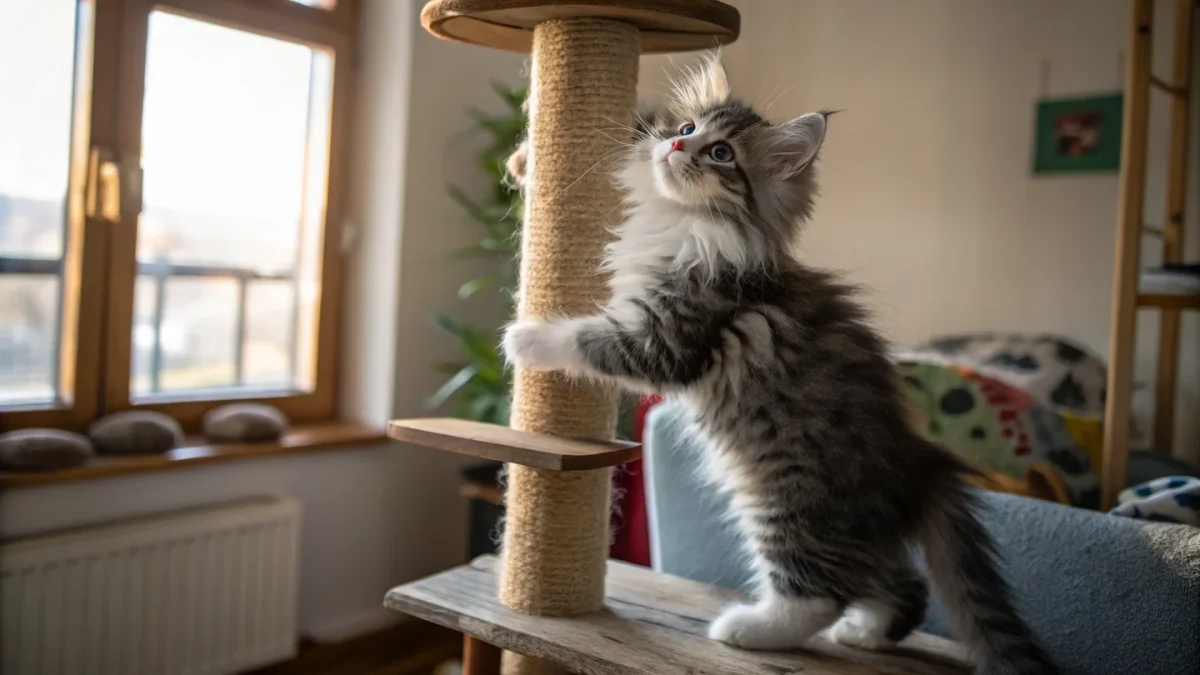
The Norwegian Forest Cat grows slowly. This is a genuine characteristic of large cat breeds: full skeletal and muscular development takes considerably longer than in smaller breeds. Where most domestic cats reach physical maturity at 12 to 18 months, the Norwegian Forest Cat continues developing until three to five years of age. The kitten you bring home at 12 weeks will not look like the adult it becomes for several years.
The kitten phase itself, though, is far from calm. The Wegie kitten is athletic, energetic, exploratory, and enthusiastically committed to finding out what happens when it launches itself from the highest available surface.
Development Timeline
12–16 weeks (typical rehoming age): The kitten has basic coordination, has completed initial vaccination series with its breeder, and is socialized enough to begin building the new household relationship. The coat is present but nowhere near adult length or density.
6 months to 1 year: The kitten grows substantially. The legs lengthen, the body deepens, the characteristic broad chest begins to emerge. The coat lengthens notably, though the full mane and tail plume aren't yet developed. Energy is very high during this period.
1–2 years: The cat begins to look recognizably like a Norwegian Forest Cat adult. The physical growth rate slows but hasn't stopped. Temperament begins settling from the kitten chaos toward the composed, independent-but-present adult character.
2–5 years: Continued development toward full size and coat density. The full winter coat — the dramatic mane, the flowing tail, the dense double layer — develops across these years.
The Kitten Phase: What to Expect
The Norwegian Forest Cat kitten has strong prey drive, high athleticism, and the investigative personality of a breed shaped by outdoor forest conditions. This means:
A kitten that climbs everything available — and tests whether each surface is stable by jumping on it. Provide a sturdy, tall cat tree from the start. If the cat tree isn't available, the bookshelf will serve.
A kitten with genuine hunting behavior in play: stalking, pouncing, the full sequence. Interactive wand toy sessions satisfy this drive and channel it productively. Short, frequent sessions throughout the day work better than one long session.
A kitten that maintains significant energy levels into the second year. The adult's composed independence arrives after the kitten phase has run its course — rushing it doesn't work.
Starting the Grooming Routine
The Norwegian Forest Cat grooming article covers the adult routine in full. The kitten's coat doesn't yet require the attention the adult coat will. But starting the routine early is the investment that pays off across the cat's life.
Begin gentle combing sessions shortly after the kitten arrives. Keep sessions short and positive — not because the kitten will resist, but because establishing the pattern of "combing is routine and comfortable" during the kitten period means the adult accepts the intensive spring shedding grooming without objection.
Handle the paws regularly — important both for nail trimming throughout life and for the inter-digital fur trimming that the breed's heavily tufted paws eventually require.
Vertical Space From Day One
This is not something to add later when the cat has grown. The Norwegian Forest Cat's need for tall climbing structures begins in kittenhood. A kitten that has appropriate vertical space from the start uses it naturally. A cat that has been without it and then has it introduced later may take time to fully adopt it.
The cat tree needs to be genuinely stable — capable of supporting a jumping adult without tipping. Buy for the adult size, not the kitten size. An undersized or unstable cat tree will be abandoned.
Building the Adult Relationship
The complete Norwegian Forest Cat breed guide covers what the adult relationship with this breed looks like — the independent-but-present quality, the affection on its own schedule, the confidence with which the Wegie moves through its world.
The kitten year is when the foundation of that relationship is built through consistent, non-pressured presence and respect for the kitten's own exploratory nature. Don't force the lap sitting. Provide the climbing options. Maintain the grooming routine. Be present without hovering. The adult that emerges from this kitten is worth the patience invested in the process.