

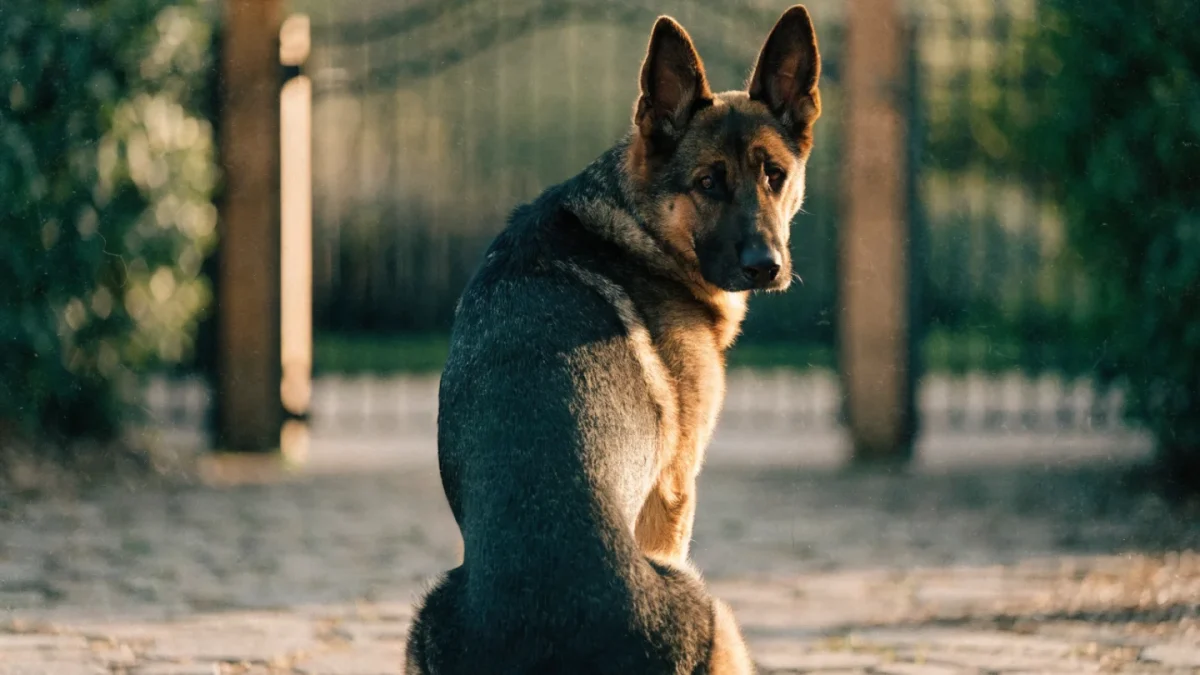
A common misconception about protection dogs: aggression equals protection. It doesn't. An aggressive dog that lunges at every stranger is a liability, not a security asset. It bites the mail carrier, the visiting neighbor, and the child who reaches through the fence. A genuinely protective dog is calm, observant, and able to distinguish a real threat from normal human activity. That discernment is the result of temperament, breeding, and proper socialization — not fear or untrained aggression.
If you're evaluating breeds for protection alongside other household needs, start with matching breed temperament to your lifestyle. Protection instinct must coexist with whatever else your life demands.
Note: some breeds on this list face legal restrictions in certain jurisdictions. Verify your local regulations before committing.
1. German Shepherd
The German shepherd was literally developed for work — Max von Stephanitz standardized the breed in 1899 specifically to create the ideal working dog. That purpose has made them the global standard for police, military, and personal protection for over a century. At 30 to 40 kg, they combine intelligence, loyalty, and physical capability. All six breeds on this list belong to the working dog breeds group, which explains the shared temperament profile: confident, protective, and demanding of experienced handling. For a detailed profile of the top protection breed, see the German Shepherd complete breed guide.
Why they protect: German shepherds bond deeply with their family and develop a natural territorial awareness. They're alert without being reactive (when properly socialized) and possess the physical presence to deter most threats on sight alone. Their trainability means protection instincts can be channeled into reliable behavior.
The tradeoff: German shepherds need experienced handling, substantial exercise (60 to 90 minutes daily), and ongoing mental stimulation. Poorly socialized individuals become fear-aggressive — dangerous to everyone, including the family. Hip and elbow dysplasia are common breed concerns. They shed heavily year-round.
2. Rottweiler
Rottweilers descend from Roman drover dogs and were used for centuries in the German town of Rottweil to guard cattle, pull carts, and protect butchers' earnings at market. That heritage produced a dog with natural guarding instinct, calm confidence, and physical power — 36 to 60 kg of measured watchfulness.
Why they protect: Rottweilers have a wait-and-assess temperament that's ideal for protection. They don't react impulsively — they observe, evaluate, and act deliberately. They're naturally territorial and their physical presence alone deters most threats. With their family, they're affectionate and often surprisingly gentle.
The tradeoff: Rottweilers require firm, consistent training from an experienced handler. Without proper socialization, their natural wariness of strangers can become problematic. They're powerful enough to cause serious harm, which makes training and management a genuine responsibility. They may face breed-specific legislation in some areas.
3. Doberman Pinscher
Karl Friedrich Louis Dobermann created this breed in the 1890s — he was a tax collector in Germany who wanted a dog that could protect him during collections. The result is a breed that's fast, athletic, and loyal, combining the guarding instinct of working breeds with an elegant, lean build at 32 to 45 kg.
Why they protect: Dobermans are among the most handler-focused protection breeds. They're constantly aware of their owner's position and emotional state, and they respond to perceived threats with speed and decisiveness. Their intelligence allows them to be trained to a high level of reliability.
The tradeoff: Dobermans need significant socialization and training. They're sensitive dogs that don't respond well to harsh methods — punishment creates anxiety, which can manifest as unpredictable aggression. Dilated cardiomyopathy is a serious breed health concern. They need substantial daily exercise and don't tolerate boredom.
4. Belgian Malinois
The Malinois has largely replaced the German shepherd in professional security and military roles worldwide due to its lighter build, higher drive, and intense work ethic. At 20 to 30 kg, they're smaller than German shepherds but significantly more intense in their working drive.
Why they protect: Malinois are alert, quick to react, and physically capable far beyond what their moderate size suggests. Their bond with their handler is intense, and their natural suspicion of unfamiliar people makes them effective deterrents without specialized training.
The tradeoff: This breed is not for beginners. Period. A Malinois without adequate exercise, training, and mental stimulation is a destructive, anxious, potentially dangerous dog. Their drive exceeds what most households can channel. They require an owner who understands working dogs and can provide structure, purpose, and an outlet for their considerable energy.
5. Giant Schnauzer
The giant schnauzer was originally developed in the Bavarian Alps as a cattle-driving dog, later adopted for guard duty. At 27 to 48 kg, they're powerful, intelligent, and naturally territorial — combining working versatility with a strong protective instinct.
Why they protect: Giant schnauzers are loyal, alert, and dominant enough to hold their ground. They're less commonly seen than German shepherds or Rottweilers, which means potential intruders are less likely to know what to expect. They're trainable, responsive to their handler, and naturally suspicious of unfamiliar people on their property.
The tradeoff: The wire coat requires regular grooming — hand-stripping or clipping every 6 to 8 weeks. Giant schnauzers are strong-willed and need consistent, experienced handling. They don't coexist easily with other dominant dogs. Their exercise needs are high (60+ minutes daily).
6. Rhodesian Ridgeback
The ridgeback's origin — tracking lions in southern Africa — produced a dog with fearless courage, exceptional territorial awareness, and a calm confidence that doesn't default to barking or lunging. At 32 to 41 kg, they're powerful athletes with a quiet, watchful presence.
Why they protect: Ridgebacks are naturally alert and territorial without being noisy. They observe silently, which can be more effective than a dog that barks at every stimulus. Their physical capability and courage are not in question — this is a breed that was bred to face lions.
The tradeoff: Ridgebacks are independent thinkers with moderate biddability. They won't blindly follow commands — they assess and decide. This requires an owner who earns respect through consistent leadership, not force. They need significant exercise and can be aloof with strangers to the point of making social situations uncomfortable if not socialized early.
A Responsible Note on Protection Dogs
A protection breed in the wrong hands is more dangerous than no protection at all. Every breed on this list requires socialization with diverse people, environments, and situations during puppyhood. An unsocialized protection breed is not a guard dog — it's an accident waiting to happen. If you want serious personal protection work, invest in professional training from a qualified trainer who uses ethical methods. The goal is a dog that's stable, discerning, and under control — not one that's aggressive by default.