

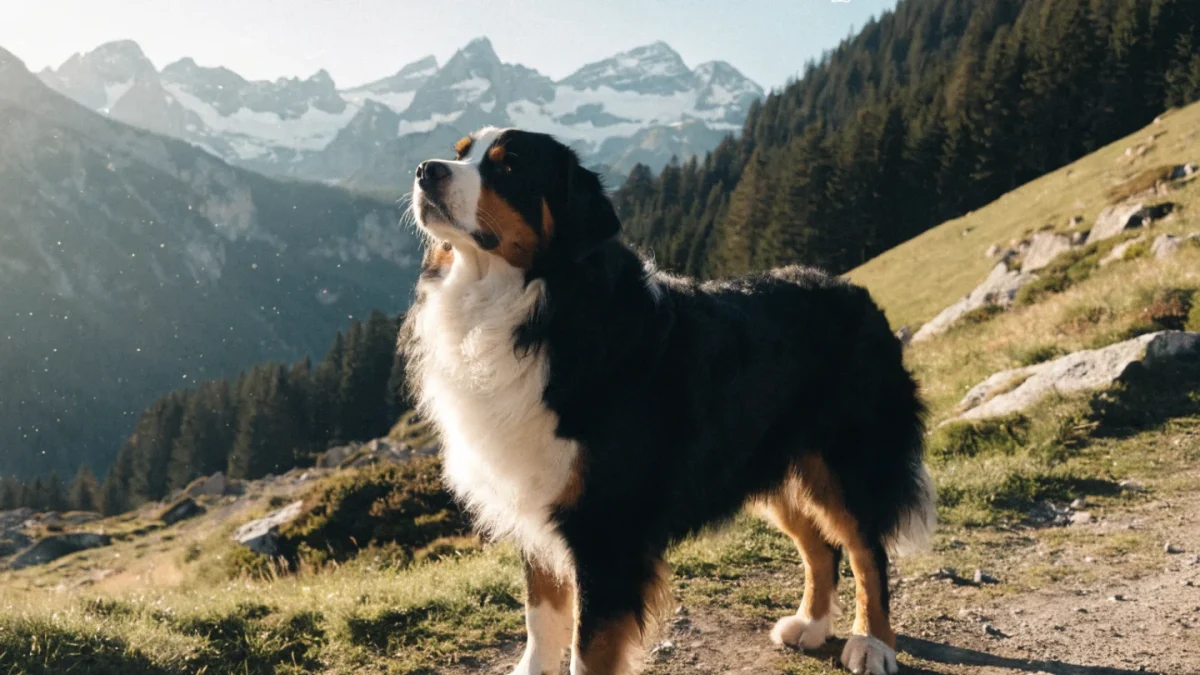
"Working dog" means something specific, and we've diluted it almost beyond recognition. When a Great Dane sits on someone's couch and a Rottweiler does weekend agility, we call them working dogs. When a Siberian Husky gets walked twice a day and a Bernese Mountain Dog poses for photos with children, we call them working dogs. These breeds are all in the Working Group. What they were actually built to do — pull freight sleds across hundreds of kilometers of frozen terrain, protect livestock against predators, haul fishing nets off the Newfoundland coast in freezing water — most of them haven't done in generations.
This matters because the drive, the size, the physical capacity, and the temperament those functions required didn't disappear when the jobs did. What we're asking of these breeds and what they were designed for are genuinely different things. That gap creates most of the management challenges that working breed owners face, and understanding it honestly is more useful than celebrating the group's heroic history while ignoring what living with that history actually involves.
Working breeds were developed for jobs that demand size, strength, endurance, and the ability to make independent decisions under pressure. They are the heavy lifters of the dog world — guardians, haulers, rescue swimmers, and draft animals whose original functions required physical capability that most other breeds simply don't possess.
What "Working" Actually Means
The Working Group encompasses several distinct functional specializations:
Guardians — breeds like the Rottweiler, Doberman Pinscher, and Akita — were developed to protect livestock, property, or people. They are typically confident, territorial, and reserved with strangers. Their protective instinct is innate, not trained, though it absolutely requires socialization and direction to channel appropriately.
Sled and draft dogs — Siberian Huskies, Alaskan Malamutes, Bernese Mountain Dogs, Greater Swiss Mountain Dogs — were bred to haul loads across long distances. They combine physical endurance with a cooperative pack mentality, though "cooperative" in sled breeds often means cooperating with other dogs rather than deferring to human authority.
Water rescue dogs — Newfoundlands and Portuguese Water Dogs — were developed for aquatic work, from hauling fishing nets to pulling drowning people from the water. The Newfoundland's instinct to "rescue" anyone in water, whether they need rescuing or not, is one of the strongest breed-specific drives in any dog.
Multi-purpose working dogs — Great Danes, Boxers, Giant Schnauzers — performed combinations of guarding, hunting, and estate management depending on the region and era they were developed in.
The Working Temperament
Despite their diversity, working breeds share a temperament profile shaped by the demands of their original jobs:
Confidence. Working dogs were bred to confront threats, navigate harsh environments, and make decisions without waiting for human instruction. This confidence is an asset in capable hands and a serious management challenge in inexperienced ones. A confident working breed without clear leadership fills the vacuum by making its own rules.
Loyalty and bonding. Working breeds form intense bonds with their primary handler or family. This loyalty is one of the group's most appealing traits — and one of its most demanding, because it comes with a strong need for proximity and can manifest as separation anxiety or resource guarding if not managed.
Reserve with strangers. Most working breeds are not the social butterflies that sporting breeds tend to be. They assess unfamiliar people before engaging, and some never fully warm up to strangers. This is by design — a guardian dog that greeted every visitor enthusiastically would be useless at its job. Early and extensive socialization is critical to prevent natural reserve from becoming defensive aggression.
Physical intensity. These are powerful animals. A 50 kg Rottweiler or a 70 kg Great Dane that hasn't been taught leash manners is genuinely dangerous not because of aggression, but because of sheer physical capability. Strength management through training must begin early.
Representative Breeds
The Rottweiler descends from Roman drover dogs that accompanied legions across Europe, eventually becoming the cattle-driving and guarding dog of the German town of Rottweil. Modern Rottweilers retain the breed's original confidence, intelligence, and physical power. They are devoted to their families and among the most trainable working breeds — but they require experienced handling and extensive socialization.
The Siberian Husky was developed by the Chukchi people of northeastern Asia as a sled dog capable of hauling moderate loads over vast distances in extreme cold. The breed's independent streak, prey drive, and escape artistry make it one of the most challenging working breeds for typical pet households. Huskies are magnificent animals, but the gap between what people expect and what they get is wider than in almost any other breed.
The Great Dane — originally a German boar-hunting dog, not Danish at all — is among the tallest dog breeds, with males routinely exceeding 76 cm at the shoulder. Despite their imposing size, Danes tend toward a gentler temperament than most working breeds, earning them the nickname "gentle giant." Their abbreviated lifespan — often 7 to 10 years — is the group's starkest example of the size-longevity tradeoff.
The Boxer emerged in Germany in the late 1800s, developed from the now-extinct Bullenbeisser crossed with English Bulldogs. Boxers are the working group's most energetic and playful members, maintaining puppy-like exuberance well into adulthood. Their combination of intelligence, athleticism, and clownish personality makes them popular family dogs, though their energy level often surprises owners who expected a calmer breed.
The Bernese Mountain Dog is a Swiss farm dog bred for drafting (pulling carts), herding, and guarding. Berners are among the most gentle and affectionate working breeds, but their health profile — particularly the elevated incidence of histiocytic sarcoma — represents one of the breed world's most significant welfare challenges.
Health Patterns in the Working Group
The Working Group's health challenges are largely driven by two factors: large body size and the genetic consequences of breeding for specific physical traits.
Bloat (gastric dilatation-volvulus) is the most acute health emergency across the group. GDV is a life-threatening condition in which the stomach fills with gas and rotates, cutting off blood supply. Deep-chested breeds — Great Danes, Boxers, Dobermans, Akitas — are particularly vulnerable. Without emergency surgery, GDV is fatal. Prophylactic gastropexy (surgical tacking of the stomach) is increasingly recommended for high-risk breeds.
Hip and elbow dysplasia affect virtually every large-to-giant working breed. Screening programs exist, but no protocol eliminates the risk entirely. Environmental factors — growth rate, nutrition, exercise on developing joints — play a significant role alongside genetics.
Cardiac disease is a major concern in several working breeds. Dilated cardiomyopathy (DCM) is prevalent in Doberman Pinschers and Boxers. Subaortic stenosis occurs in Rottweilers, Boxers, and Newfoundlands. Cardiac screening of breeding stock is standard practice.
Cancer disproportionately affects several working breeds. Bernese Mountain Dogs have exceptionally high rates of histiocytic sarcoma. Rottweilers face elevated risks of osteosarcoma (bone cancer). Boxers have higher-than-average rates of mast cell tumors.
Shortened lifespan is the working group's overarching health reality. Giant breeds frequently live 7 to 10 years. Even medium-large working breeds like the Boxer (10 to 12 years) and Rottweiler (9 to 10 years) have lifespans that fall below the all-breed average. This is the fundamental tradeoff of size in molosser-type breeds — more dog, less time.
The Working Group and Ownership Reality
Working breeds are not beginner dogs. That statement isn't gatekeeping — it's pattern recognition. The breeds most commonly surrendered to shelters and rescue organizations include working breeds acquired by owners who underestimated the combination of size, strength, energy, and behavioral complexity these dogs bring.
The right owner for a working breed understands that:
- Socialization isn't optional; it's foundational, and it must begin during the puppy's first critical period (roughly 3 to 14 weeks)
- Physical containment (fencing, leash management) must be proportional to the dog's size and athleticism
- Training must be consistent, firm without being harsh, and maintained throughout the dog's life
- Veterinary costs will be higher than average, both for routine care (more medication, more food) and emergency care (GDV surgery alone can exceed several thousand dollars)
- The dog's lifespan will likely be shorter than many other breeds
If those realities don't discourage you — if they actually excite you because you want a powerful, loyal, deeply bonded partner and you're prepared to provide the structure that partnership demands — then working breeds offer something no other group can match.
Frequently Asked Questions
Are working breeds dangerous?
Working breeds are powerful, which means mistakes have larger consequences than with smaller dogs. But "powerful" is not the same as "dangerous." A well-socialized, properly trained Rottweiler or Doberman is a stable, reliable companion. An unsocialized, untrained working breed is a liability — not because the breed is inherently aggressive, but because an unsocialized 45 kg dog with guardian instincts and no impulse control is a preventable disaster.
Can working breeds live in apartments?
It depends on the breed and the owner. A Great Dane actually adapts well to apartment life because Danes are relatively low-energy indoors despite their size. A Siberian Husky in an apartment is a much harder proposition because of the breed's exercise demands and vocal nature. The critical factor isn't square footage — it's whether the owner can meet the dog's exercise, socialization, and mental stimulation needs regardless of living space.
Why did herding breeds get separated from the Working Group?
The AKC split the Herding Group off in 1983 because herding and working breeds serve fundamentally different functions. Working breeds guard, haul, and rescue; herding breeds manage livestock movement. The behavioral profiles differ accordingly — herding breeds tend toward higher handler focus and movement sensitivity, while working breeds tend toward more independent decision-making and physical intimidation. The split allowed show judges to evaluate breeds against others with similar structure and temperament.