

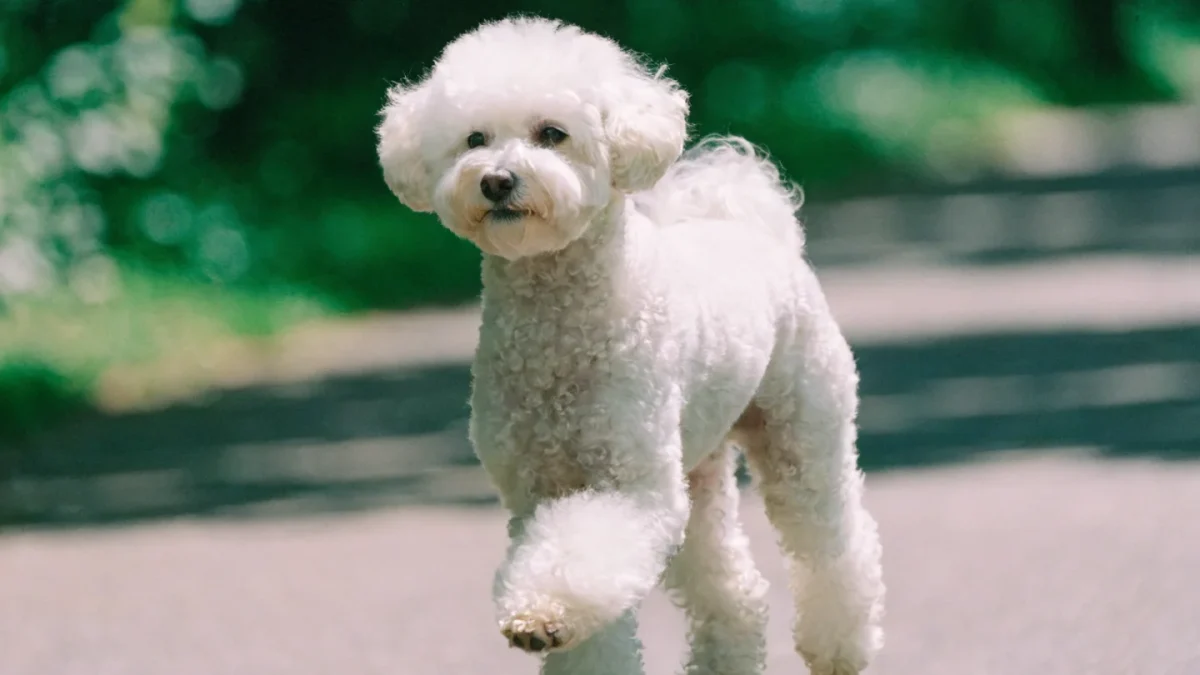
The Bichon Frise spent centuries as the preferred companion of Mediterranean sailors, French and Spanish nobility, and eventually circus performers who traveled extensively across Europe. None of those lifestyles involved sitting on a cushion all day. The sailors' dogs worked the docks. The performers' dogs ran routines that demanded agility, stamina, and focus. That athletic heritage is easy to forget when you're looking at a 5-kilogram ball of white fluff, but the energy is still in there — and it needs somewhere to go.
An adult Bichon Frise in good health needs approximately 30 to 45 minutes of daily exercise. That number seems modest compared to sporting breeds, but it's considerably more than many small-dog owners provide. The gap between what a Bichon needs and what it gets is where most behavior problems originate.
What Daily Exercise Looks Like
Walking
Two daily walks of 15 to 20 minutes each form the foundation. Bichons have short legs but a surprisingly quick, springy gait that covers ground efficiently. They enjoy walking and benefit from the environmental stimulation — new scents, sights, and sounds — that a varied route provides.
Pace should match the dog, not the other way around. A Bichon's natural walking speed is brisk for its size but relaxed for a human. Let the dog move at its preferred cadence rather than dragging it at your stride length. Short legs working overtime to keep up with a long-legged owner is exercise, but it's not enjoyable exercise.
Vary routes when possible. The Bichon Frise breed guide covers the breed's intelligence and sociability — both traits that benefit from novel environments. A Bichon that walks the same block every day gets less mental stimulation from the activity than one that encounters new territory regularly.
Active Play
This is where the Bichon's personality emerges most clearly. The breed is naturally playful — genuinely, enthusiastically playful in a way that persists well into middle age. Short games of fetch (scaled to the dog's size), chase games, and interactive toys engage both body and brain.
Indoor play counts toward the daily total. Bichons are small enough that a living room provides adequate space for meaningful activity. Tug games with appropriately sized toys, hide-and-seek with treats or toys, and even improvised obstacle courses using household items can provide genuine exercise when weather limits outdoor options.
The Bichon temperament includes a performative streak — these dogs enjoy showing off and respond enthusiastically to an audience. Play sessions that involve tricks, spins, or learned behaviors tap into that inclination and add a mental component to the physical activity.
Mental Enrichment
Physical activity alone doesn't fully settle a Bichon. The breed's intelligence demands cognitive engagement. Puzzle feeders, snuffle mats, and scent games provide mental work that complements physical exercise. A 10-minute puzzle-feeding session can tire a Bichon's brain as effectively as a walk.
Training sessions — kept short at 5 to 10 minutes — double as mental exercise. Bichons learn new behaviors readily and enjoy the interaction that training provides. Teach a new trick weekly, and the cumulative mental stimulation makes a measurable difference in the dog's baseline calmness.
Puppy and Senior Adjustments
Bichon puppies are energetic in short, intense bursts. They sprint, play wildly for a few minutes, then crash. Multiple brief play sessions throughout the day — three to four sessions of 10 to 15 minutes — suit the puppy's natural rhythm better than one long exercise period.
The five-minutes-per-month-of-age guideline for structured exercise applies, though small breeds are less vulnerable to growth-plate issues than large breeds. Still, forced repetitive exercise on hard surfaces isn't appropriate for any growing puppy.
Senior Bichons slow down but don't stop. Most Bichons maintain playfulness into their senior years, though the duration and intensity decrease. Two shorter walks with gentle play in between typically maintains fitness and mental engagement for dogs over 10 years old.
Weather Considerations
Bichons handle moderate weather well but have limitations at both extremes. The breed's single-layer coat (despite its volume, the Bichon's hair grows continuously rather than shedding in seasonal cycles) provides less insulation than a double coat. Cold, wet conditions may require a coat or jacket for extended outdoor time, and most Bichons express a strong preference for dry ground.
Heat tolerance is moderate. The coat's volume can trap body heat during intense exercise in warm weather. Exercise during the coolest parts of the day in summer, provide water, and watch for signs of overheating — excessive panting, reluctance to continue, seeking shade.
Signs of Insufficient Exercise
A Bichon that isn't getting enough activity displays recognizable patterns: excessive barking (especially at minor stimuli), spinning or racing in circles (the so-called "Bichon Blitz" — often mistaken for a cute quirk when it's actually pent-up energy), destructive chewing, and general restlessness that escalates through the evening.
These behaviors are frequently misidentified as breed characteristics rather than exercise deficits. The "Bichon Blitz" in particular has been normalized in online communities as something all Bichons do. Adequately exercised Bichons still have occasional energy bursts, but the frequency and intensity are markedly lower.
The Right Routine
The simplest effective routine: a morning walk of 15 to 20 minutes, an afternoon play or training session of 10 to 15 minutes, and a brief evening walk or indoor activity period. Puzzle feeders at mealtimes add mental enrichment without requiring dedicated time. Owners who maintain this consistently describe a calm, happy dog that settles readily. Those who skip exercise consistently describe something less settled — and louder.