

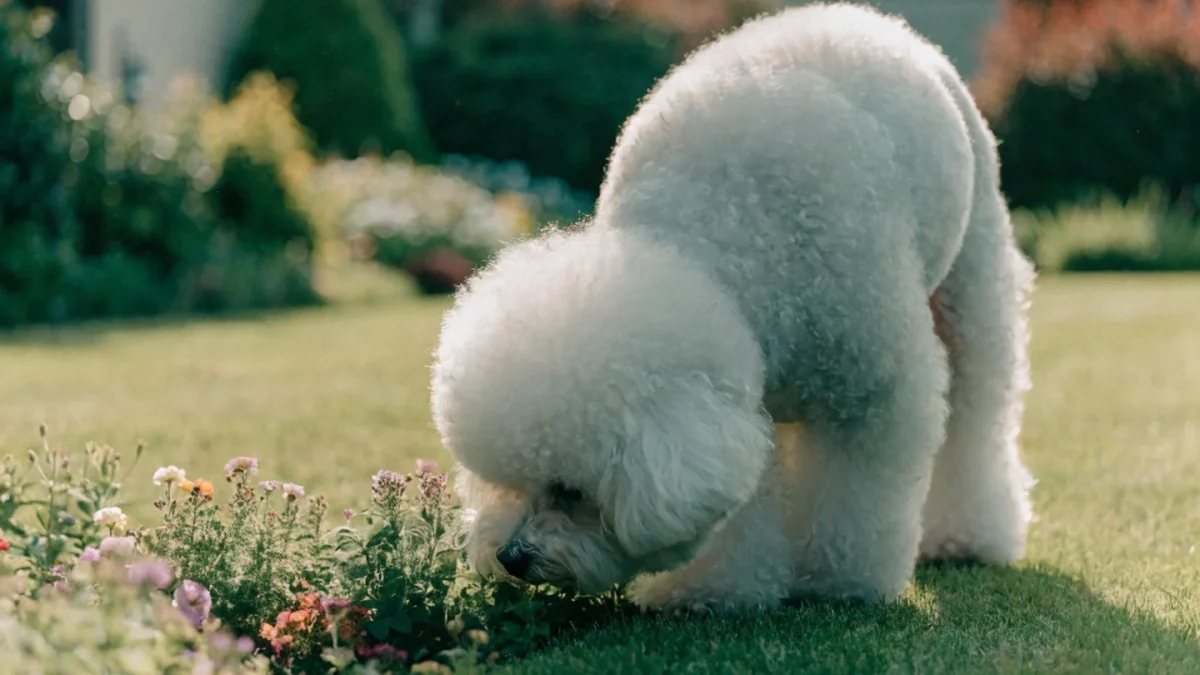
When the first breed standards for the Bichon Frise were written in France in the 1930s, the coat was described as "fine, silky, loosely curling" and white. The genetic mechanisms behind that description — why the coat curls instead of lying flat, why it grows continuously instead of shedding seasonally, why it's white, and why puppies born with cream or apricot shadings lose those colors as they mature — would take decades of canine genetics research to explain. The answers, it turns out, involve a handful of genes that interact to produce one of the most distinctive and demanding coats in the dog world.
The Low-Shedding Coat: Why It Works
Coat Growth Cycle
All dog hair follows a growth cycle: anagen (active growth), catagen (transition), telogen (resting), and exogen (shedding). In breeds with heavy seasonal shedding, the cycle is synchronized — large sections of coat enter telogen and exogen simultaneously, producing the dramatic coat blows that retriever and shepherd owners know too well.
In Bichon Frises, the anagen phase is significantly extended. Individual hairs grow for a much longer period before entering the resting and shedding phases, and the cycle is asynchronous — different hairs are at different stages at any given time. The result is continuous, gradual hair turnover rather than bulk shedding events.
The FGF5 gene plays a central role in coat length and growth cycle duration across breeds. FGF5 normally signals hair follicles to transition from the anagen (growth) phase to the catagen (regression) phase — variants that disrupt this signal extend the anagen phase, producing longer coats. In breeds like the Bichon Frise, this extended growth phase is part of what creates the continuously growing coat that requires regular trimming.
The Curl Factor
The KRT71 gene is responsible for the curly coat texture found in Bichon Frises, Poodles, and several other breeds. The curly-coat variant (a mutation in the KRT71 gene) produces a tightly curling hair shaft that functions as a trap — any hair that does shed gets caught in the surrounding curls rather than falling off the dog and onto your furniture. The Poodle coat genetics and low-shedding inheritance article examines the same mechanism in the breed most often cited alongside the Bichon for this trait, with notable differences in how the gene interacts with the Poodle's distinct FGF5 configuration.
This combination — extended growth plus curl-based trapping — explains both the breed's low-shedding reputation and its high grooming demand. The coat doesn't release dead hair. It holds it. And held dead hair tangles with living hair, forming mats that progressively tighten unless the coat is brushed regularly and trimmed on a four-to-six-week cycle.
The Bichon Frise breed guide addresses the practical grooming implications. From a genetic standpoint, the low-shedding trait and the high-maintenance grooming requirement are the same mechanism viewed from two different angles.
Furnishings
The RSPO2 gene controls "furnishings" — the longer hair on the face, eyebrows, and muzzle that gives breeds like the Bichon, the Schnauzer, and the Poodle their characteristic facial hair. Bichon Frises carry the furnishings variant, which interacts with the FGF5 and KRT71 variants to produce the breed's full, rounded coat profile.
Color Genetics: White and the Fading Question
The White Coat
Adult Bichon Frises are white. The breed standard permits slight shadings of cream or apricot around the ears and on the body in young dogs, but the mature coat should be predominantly white.
The genetics of white in Bichon Frises involve the extreme white-spotting allele at the S (MITF) locus, which suppresses pigment cell migration during embryonic development so extensively that the entire coat appears white. The underlying pigment genetics are still present — a white Bichon carries the same A, E, and B locus alleles as any other dog — but the white-spotting pattern overrides their expression in the coat.
The black pigment on the nose, eye rims, and paw pads confirms that the dog has functional melanocytes — the pigment cells are present in the skin, just absent from the coat.
Puppy Color Fading
Many Bichon puppies are born with noticeable cream, buff, or apricot patches — typically on the ears, around the eyes, and on the body. These colors fade progressively during the first 12 to 18 months as the puppy coat is replaced by the adult coat.
The fading process is controlled by genes that modify phaeomelanin intensity over time. The specific modifiers involved are not fully mapped in the breed, but the pattern is consistent: colors present at birth dilute as the dog matures. Some adults retain faint cream shadings on the ears — accepted in breed standards. The Bichon breed history notes that historical descriptions included more color variation, with progressive selection for pure white coats concentrating the extreme white-spotting genotype.
Breed-Specific Genetic Health Conditions
Bladder Stones
Bichon Frises have a well-documented predisposition to urinary stone formation, particularly calcium oxalate and struvite stones. The genetic basis involves metabolic pathways that affect mineral processing in the kidneys and urinary tract. While no single-gene test is available, the breed-level predisposition suggests polygenic factors that concentrate stone-forming tendencies.
Males are at higher risk for obstruction due to anatomical differences in the urethra. Diet management, water intake, and regular monitoring are the primary prevention strategies.
Patellar Luxation
Patellar luxation — dislocation of the kneecap — occurs at elevated rates in Bichon Frises and most small breeds. The condition is polygenic, involving genes that influence the depth of the patellar groove, the alignment of the quadriceps mechanism, and the skeletal geometry of the hind leg. Breeding from evaluated dogs with normal patellar grading reduces the incidence.
Legg-Calve-Perthes Disease
Avascular necrosis of the femoral head occurs in small breeds including the Bichon Frise. The genetic basis is not fully elucidated, but the condition is widely recognized as hereditary in small breeds, and breeding from affected dogs is not recommended. The condition typically presents before one year of age and often requires surgical treatment.
Allergic Skin Conditions
Atopic dermatitis — allergic inflammation of the skin — appears at elevated rates in the breed. The genetic predisposition involves multiple genes affecting immune response and skin barrier function. The condition is lifelong and requires ongoing management.
What the Genetics Tell Us
The Bichon Frise's genome reflects centuries of selection for a specific profile: a white, curly-coated, non-shedding companion dog. The genes responsible for the coat — FGF5, KRT71, RSPO2, and the S locus — produce the breed's most recognizable feature, while the same genetics that attract allergy sufferers create the grooming demands that define ownership.
The health genetics remind us that every breed concentrates both desirable and undesirable traits. Bladder stones, patellar luxation, and skin conditions accompany the Bichon's size and breeding history. Understanding these genetics helps breeders make better decisions and helps owners prepare — not for surprises, but for known quantities to manage proactively.