

The Bichon Frise has been a recognized breed in its modern form since the 1930s, when French breeders standardized a dog that had already existed in various forms for centuries across the Mediterranean, the French court, and European circus circuits. Decades of popularity have built a public image that's partly accurate and partly mythology — and the mythology leads to mismatched expectations, unprepared owners, and dogs that end up in rescue because they turned out to be different from what someone imagined.
Here are five misconceptions that I encounter with frustrating regularity.
1. Bichon Frises Are Hypoallergenic
No dog breed is hypoallergenic. The term implies zero allergenic potential, and that doesn't exist in any mammal that produces dander, saliva, and urine — which is all of them.
What Bichon Frises are is lower-shedding than most breeds. Their coat grows continuously (similar to human hair) rather than cycling through shed-and-regrow phases. This means less dead hair circulating through your home carrying dander particles. For many allergy sufferers, this reduced dander distribution translates to fewer symptoms. For others, it makes no meaningful difference — because the allergenic proteins in dander and saliva are still present regardless of how much hair falls off the dog.
The Bichon Frise breed guide addresses this nuance in detail. The practical advice is straightforward: if allergies are your primary reason for choosing this breed, spend extended time with a Bichon in a home environment before committing. Your individual immune response is the only reliable test. Marketing language about hypoallergenic breeds is oversimplification at best.
2. They Don't Shed, So They're Low-Maintenance
This misconception follows directly from the shedding trait and represents a complete inversion of reality. The Bichon Frise is one of the highest-maintenance coat breeds relative to its size.
Because dead hair remains trapped in the coat rather than falling out, it tangles with the living coat and forms mats. Without regular brushing — a minimum of three to four times per week, ideally daily — those mats tighten against the skin, pulling and causing discomfort. Severe matting leads to skin infections, hot spots, and eventual shaving that takes months to recover from.
Professional grooming every four to six weeks is not a luxury. It's required infrastructure for owning this breed. The bath-dry-trim cycle for a Bichon takes one to two hours with a professional, and the cost reflects that time investment.
Owners who chose the Bichon because it "doesn't shed" and then discover the grooming obligation are the source of a meaningful percentage of breed-rescue intakes. The coat doesn't shed onto your couch. It demands your time and money instead. The trade-off is real, and pretending it isn't does the breed a disservice.
3. They Don't Need Real Exercise
The assumption: small dog, small needs. A Bichon can get all the activity it needs from wandering around the house, right?
Wrong. An adult Bichon Frise needs approximately 30 to 45 minutes of daily exercise — structured walks, active play sessions, and mental enrichment. The breed's temperament is energetic, playful, and alert. A Bichon that gets no structured exercise doesn't gracefully accept a sedentary life. It barks more, develops destructive habits, gains weight, and displays a nervous energy that owners often mistake for a personality trait rather than a symptom.
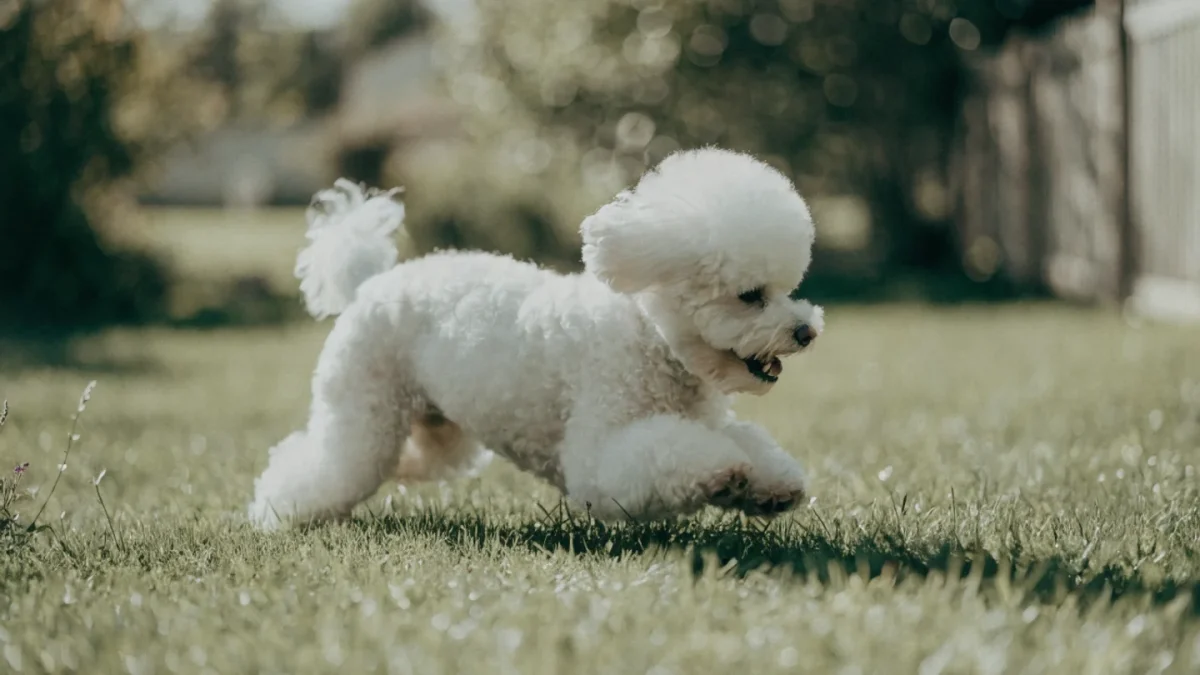
The infamous "Bichon Blitz" — a sudden burst of frantic running — is partly the breed's natural exuberance and partly a release of accumulated energy that didn't have a proper outlet. Adequately exercised Bichons still blitz occasionally, but the episodes are shorter, less frequent, and less manic.
Small breeds are not exempt from exercise requirements. They are merely exempt from the distance and intensity that large sporting breeds demand.
4. They're Fragile Lapdogs
The Bichon Frise weighs 5 to 7 kilograms. It's covered in fluffy white hair. People carry it around. The conclusion that it's a fragile, delicate creature follows naturally — and is mostly wrong.
The breed descended from dogs that sailed on trading vessels across the Mediterranean, worked the docks of port cities, and later performed athletic tricks in European circus rings for decades. These were not coddled, protected animals. They were working companions in environments that demanded physical resilience, adaptability, and a tolerance for chaos.
Modern Bichons retain that sturdiness. They're solidly built for their size, with compact musculature and dense bone structure relative to their frame. They handle rough-and-tumble play with other small dogs without issue. They jump, climb, and navigate obstacles with the agility you'd expect from a former circus performer.
That said, they are small. Very young children can injure a Bichon through rough handling, accidental dropping, or sitting on the dog. Supervision is necessary — not because the Bichon is fragile, but because the size differential with a toddler creates physical risk. The dog isn't made of glass. It's also not indestructible.
5. Small Dogs Are Unintelligent — Bichons Included
The general assumption that small dogs are less intelligent than large dogs has no basis in comparative research. It's a cultural bias that associates physical size with cognitive capacity.
Bichon Frises, specifically, have a documented history of trainability that contradicts this myth completely. The breed performed as circus dogs across Europe from roughly the late 1800s through the early 1900s — learning complex, multi-step routines that required memory, timing, and the ability to perform reliably in novel environments with crowds and noise. Those aren't tricks that a dull dog picks up.
The breed learns new behaviors quickly, retains them well, and enjoys the process of training when it involves positive interaction. Bichons are not stubborn or slow — they're responsive, attentive, and motivated by social reward. The owners who call their Bichons "dumb" almost always have a training approach problem, not a dog intelligence problem.
The myth costs Bichons. When owners assume a dog is too stupid to train, they don't bother training it. An untrained Bichon is a barking, jumping, demanding little dog that confirms every negative stereotype — not because it couldn't learn better, but because nobody taught it.