

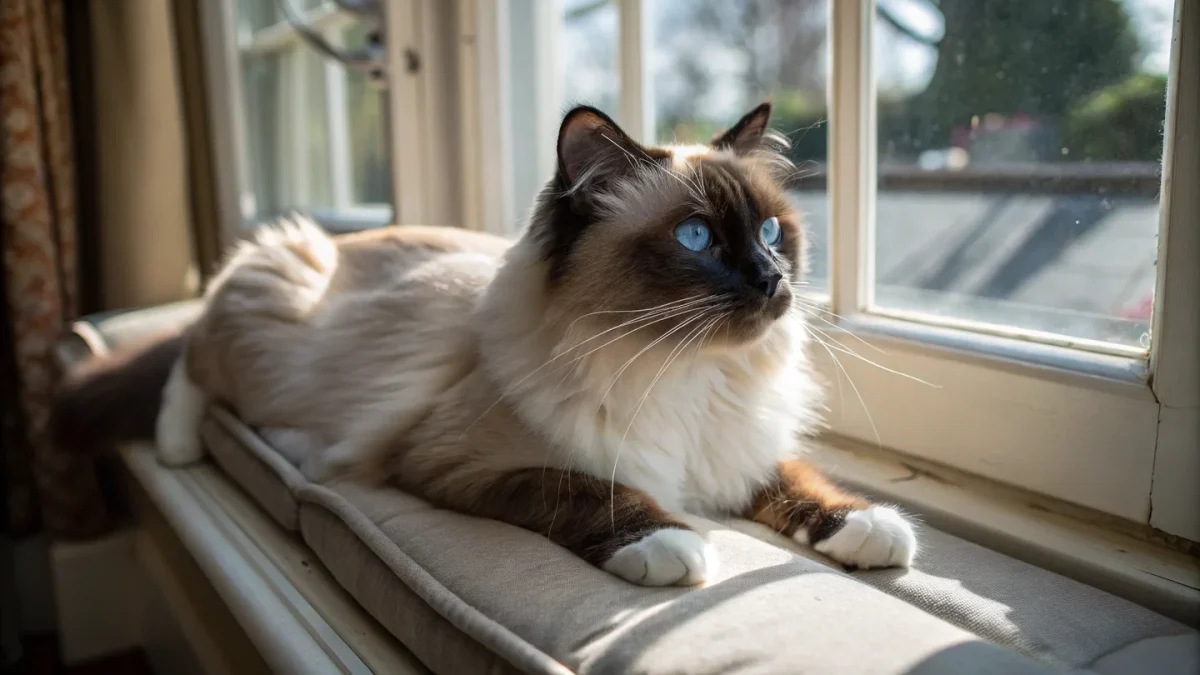
The Birman's semi-long silky coat looks more demanding than it is. This is a breed that frequently surprises new owners — people who expected Persian-level grooming commitment discover they're working with something considerably more manageable. The secret is in the coat's structure: the Birman lacks the dense, prone-to-matting undercoat that makes some longhaired breeds genuine daily grooming projects.
Understanding the Birman Coat
The Birman coat is silky in texture and semi-long in length — longer than a shorthaired breed, shorter and less voluminous than a Persian or Maine Coon. Crucially, it has a significantly thinner undercoat than most longhaired breeds. This reduces mat formation substantially.
The outer coat lies relatively flat, which means tangles tend to develop slowly and in predictable locations rather than forming rapidly throughout the coat the way they can in breeds with dense, cottony undercoats. Weekly maintenance keeps the Birman coat in excellent condition without heroic effort.
The white gloves are not a grooming concern specifically — the white fur on the paws is the same silky texture as the rest of the coat and responds to the same care. Keeping the paws white and clean is more about preventing environmental staining (from food, litter, or garden debris) than about any specific grooming technique.
The Weekly Session
One focused session per week keeps the Birman coat in good condition year-round.
Tools to use:
- Wide-toothed metal comb: the primary tool. Run it through the coat in the direction of growth, working in sections
- Fine-toothed comb: useful for the collar area and facial ruff
- Slicker brush: good for a finishing pass to add fluff and sheen
- Soft bristle brush: effective for the shorter fur on the face and legs
Begin with the comb, working from the neck toward the tail. Pay particular attention to:
The underarm and "armpit" areas. Friction between the forelegs and chest creates tangles more readily here than anywhere else on the Birman. A brief check and comb-through each session prevents small tangles from developing into mats.
Behind the ears. The collar area and behind the ears accumulate tangles faster than the body coat. This is also where collars create friction if the cat wears one.
The chest ruff. Long and decorative, the ruff can knot if neglected, but responds readily to gentle combing when maintained regularly.
The tail. The Birman's plumed tail is beautiful and can clump if not maintained. A wide-toothed comb separating the fur gently prevents this.
Seasonal Shedding
The Birman sheds more in spring as the winter coat releases, and less so in autumn. The semi-long fur is visible when shed — you will notice it on furniture and clothing during heavy shedding periods. Increasing grooming frequency to every two or three days for three to four weeks during peak shedding collects most of the loose coat before it lands on your sofa.
A deshedding comb used carefully during heavy shedding periods can significantly reduce the loose coat volume. Use it gently — aggressive deshedding on a silky coat can cause coat damage.
Bathing
Most Birmans do not need regular bathing. The coat stays relatively clean with the cat's own grooming habits and normal weekly brushing. An occasional bath — perhaps two to four times a year — refreshes the coat and removes accumulated skin oils, and can make the white areas of the coat (paws, chin) visibly brighter.
When bathing a Birman, use lukewarm water and a gentle cat shampoo. The coat takes thorough wetting (run your hands against the grain to wet the coat fully) and thorough rinsing. Towel dry well and follow with a gentle warm air dry if the cat tolerates it — the semi-long coat can take some time to dry completely in a cool room. Ensure the cat is fully dry before exposure to cold temperatures.
Nail and Ear Routine
Standard cat nail trimming (every two to three weeks) keeps the nails at an appropriate length. Check the ears periodically for wax accumulation and clean gently when needed with an appropriate ear cleaning solution.
The Birman cat breed guide covers the full picture of the breed. The grooming is honestly the simplest aspect of Birman ownership — an investment of 20 to 30 minutes per week yields a coat that looks and feels genuinely impressive. For a complete assessment of whether this breed fits your household, is a Birman right for you? covers the full picture of lifestyle compatibility.