

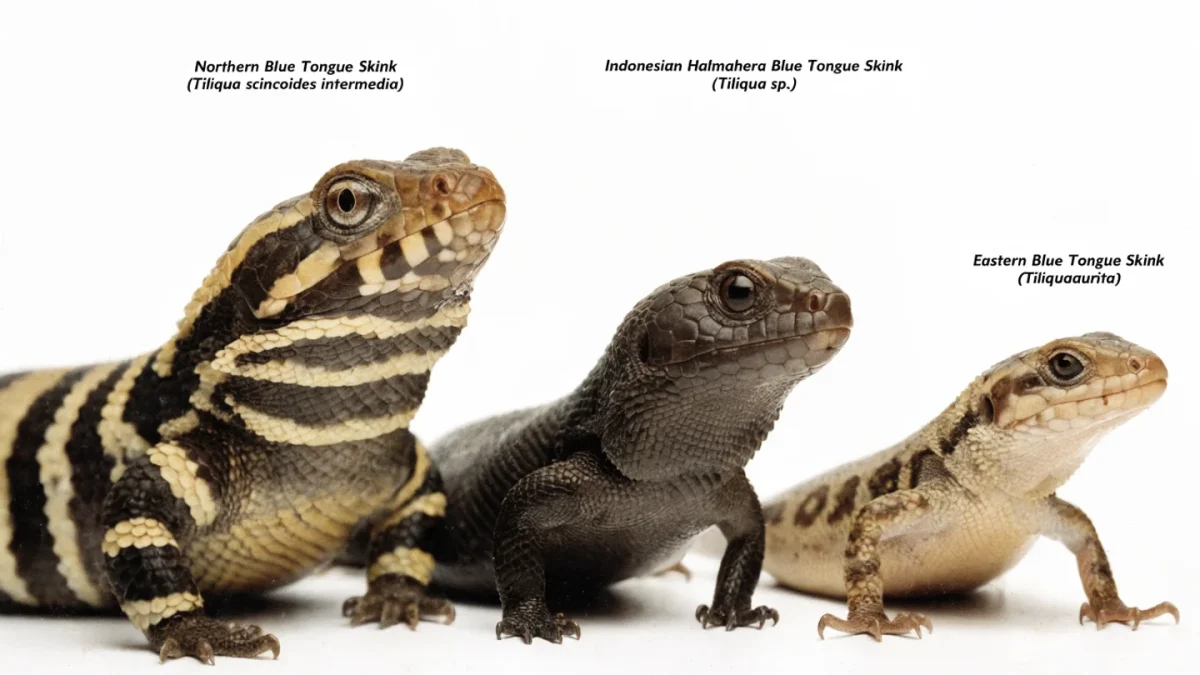
Someone emailed me last month asking whether they should buy an "Indonesian blue tongue skink" because it was $100 cheaper than a Northern at their local reptile expo. My answer was three paragraphs long, and by the end of it, they bought the Northern.
The price difference between blue tongue skink species isn't a deal — it's a signal. Northern, Eastern, and Indonesian blue tongues sit under the same genus, but they differ in humidity requirements, temperament, wild-caught vs. captive-bred availability, and the amount of experience you'll need to keep them healthy. Choosing a species based on price alone is how animals end up rehomed or worse.
Northern Blue Tongue Skink (Tiliqua scincoides intermedia)
The Northern is the largest commonly kept species, with adults routinely hitting 55-60 cm. They're heavy, broad-headed, and come in a range of tan and brown banding patterns. Some selectively bred morphs — hypo, albino, caramel — push prices well above $500, but a standard captive-bred Northern runs $200-400 depending on your market.
What makes Northerns the default recommendation is everything about their keeping requirements. Humidity between 40-60% means most keepers don't need to modify their enclosures beyond what a water dish provides. They bask eagerly, eat without drama, and tame down fast. I've had rescue Northerns go from defensive huffing to sitting calmly in my lap within three weeks of daily handling.
They're also almost exclusively captive-bred in the hobby at this point. Australia banned reptile exports decades ago, so every Northern in the trade outside of Australia descends from animals exported before the ban. Captive-bred means healthier, calmer, and parasite-free at purchase.
The downside? Northerns are common, and some keepers find that boring. That's valid — but "boring" is underrated when you're talking about a 20-year commitment.
Eastern Blue Tongue Skink (Tiliqua scincoides scincoides)
Easterns are a subspecies of the same species as Northerns, and they look similar at first glance — same general body plan, same blue tongue. The differences are subtle: Easterns tend to be slightly smaller, have thinner banding, and their coloration can include more silver-gray tones compared to the warmer browns of Northerns.
Temperament is comparable but a little more variable. I've met exceptionally calm Easterns and ones that never fully settled into handling. They're not worse than Northerns in this regard — just less predictable.
Availability is the real issue. Outside of Australia, Easterns are far less common in the trade than Northerns. When they do appear, they're usually priced similarly or slightly higher due to scarcity. If you find a reputable breeder with Easterns, great. But don't stress about tracking one down — the care experience is nearly identical to a Northern.
Humidity needs overlap with Northerns: 40-60% is fine.
Indonesian Blue Tongue Skinks
This is where things get complicated, because "Indonesian blue tongue" actually covers several distinct species and localities:
Halmahera (Tiliqua gigas gigas): The most commonly available Indonesian species, often imported wild-caught by the hundreds. They're stunning — dark chocolate banding, more slender than Northerns — but their care requirements are substantially different. Humidity needs range from 60-80%, which means sealed or partially sealed enclosures, humidity-retaining substrate like coconut fiber, and regular misting. Get this wrong and they develop respiratory infections. Get it right, and the enclosure grows mold. Finding the balance takes experience.
Temperament is the other challenge. Wild-caught Halmaheras frequently arrive stressed, parasitized, and defensive. Some tame down with patient, consistent handling. Others remain nippy for years. I had a Halmahera rescue who would bolt for the back of her enclosure every time I opened the door — for fourteen months straight. She eventually tolerated handling, but "tolerated" isn't the word most people want to hear about their pet.
Merauke (Tiliqua gigas edeniana): The compromise Indonesian, if such a thing exists. They're larger than Halmaheras, closer in body build to Northerns, and their humidity needs are moderate — 50-70%. They're increasingly available as captive-bred animals, which makes a significant difference in both health and temperament. A captive-bred Merauke is a genuinely enjoyable animal to keep.
Irian Jaya: These are sometimes sold as "Irian Jaya blue tongues" but their taxonomy is unclear — they may be a locality variant rather than a true subspecies. Care requirements align roughly with Meraukes. Buy captive-bred if possible.
Side-by-Side Comparison
| Factor | Northern | Eastern | Halmahera | Merauke |
|---|---|---|---|---|
| Adult size | 55-60 cm | 45-55 cm | 45-55 cm | 55-65 cm |
| Humidity | 40-60% | 40-60% | 60-80% | 50-70% |
| Temperament | Calm, tames fast | Variable, mostly calm | Often defensive | Moderate, improves CB |
| Availability (CB) | Excellent | Limited | Rare | Growing |
| Typical price | $200-400 | $250-450 | $100-200 (WC) | $200-350 |
| Lifespan | 15-20 yrs | 15-20 yrs | 15-20 yrs | 15-20 yrs |
CB = captive-bred. WC = wild-caught. Prices reflect general market trends and vary significantly by region.
Which Species Should You Pick?
If you're reading a species comparison article, you probably already want a blue tongue — you're just deciding which one. So I'll be direct.
First blue tongue, first reptile, or limited exotic experience? Northern. Don't overthink it.
Experienced keeper who wants a humidity-dependent species and doesn't mind a longer taming curve? Captive-bred Merauke. The wild-caught Halmaheras are cheaper upfront, but the vet bills and the stress — yours and the animal's — usually erase that savings.
I've kept all of these species at various points. Northerns remain my favorites to recommend, Meraukes are my favorites to watch (there's something about their curiosity that the more placid Northerns lack), and Halmaheras taught me more about humidity management than any other animal I've kept. Each has its appeal. But the right choice depends on what you're prepared to provide, not what catches your eye at an expo.
Refer back to the full blue tongue skink care guide for enclosure, diet, and handling details that apply across species.