

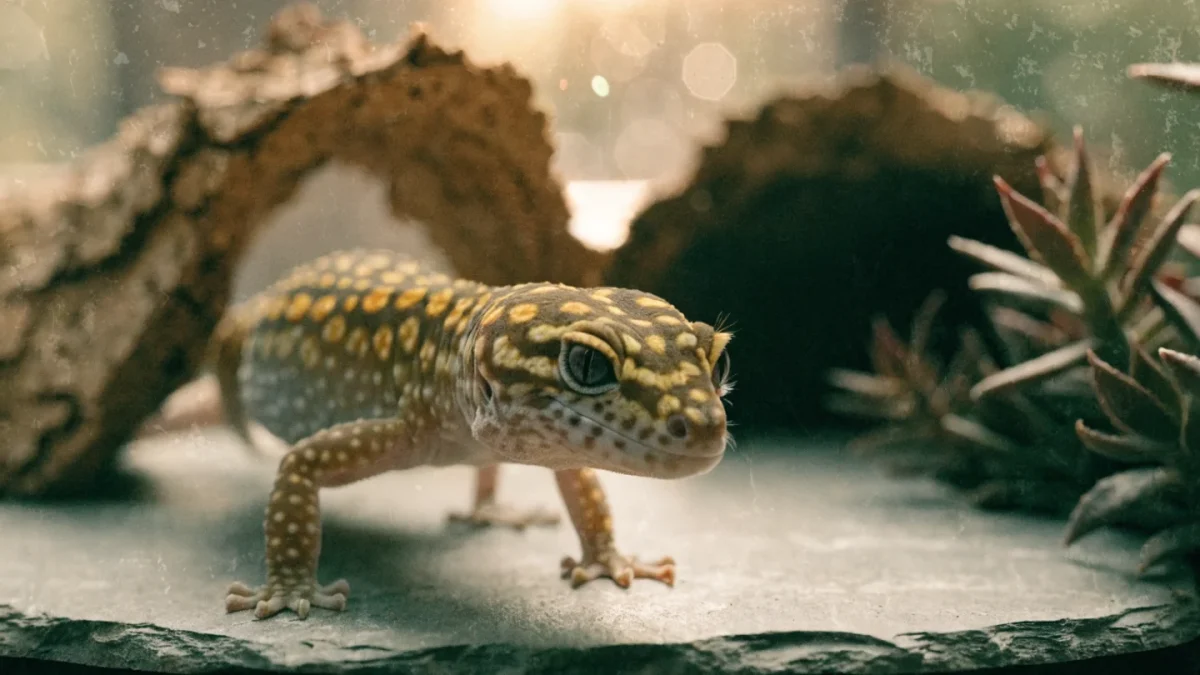
The first leopard gecko I ever kept ate exactly one cricket, looked at me like I'd personally offended her, and didn't touch food again for eleven days. I was seventeen, convinced I'd already killed my new pet, and refreshing care forums at two in the morning. She was fine — just settling in. But that panic? I still remember it, and I see the same fear in almost every new keeper who messages me.
Leopard geckos (Eublepharis macularius) need a warm basking zone around 88-92°F, a cooler side near 75°F, a humid hide to support healthy shedding, and a diet of gut-loaded, calcium-dusted insects. They're one of the most forgiving reptiles for beginners, but "forgiving" doesn't mean "no effort." Get the basics right and these geckos can live over twenty years. Rush the setup, and you'll spend those years solving problems that didn't need to exist.
Why Leopard Geckos Work for Beginners (and Why That Label Misleads)
They tolerate a wider temperature range than most reptiles. They eat commercially available insects. They don't need a massive enclosure. All true.
But the "beginner-friendly" tag makes people think they can wing it. I've taken in rescues from owners who kept them on sand with a single heat lamp and no calcium — animals with metabolic bone disease so advanced their jaws were rubber. These aren't disposable pets. They're small, quiet animals that will outlive your dog if you treat them right.
The real reason leopard geckos suit beginners is that their needs are predictable. Temperature, humidity, diet — each one has a clear target, and when something goes wrong, the symptoms are visible early enough to fix. That predictability is a gift. Use it.
The Enclosure
A single adult leopard gecko does well in a 20-gallon long tank (roughly 30 x 12 x 12 inches). Bigger is fine — a 40-gallon breeder gives more room for enrichment and a proper temperature gradient. Front-opening enclosures are easier on both you and the gecko, since hands coming from above trigger a predator response.
You need three hides minimum. Warm side, cool side, humid hide. The humid hide — a container with damp sphagnum moss or paper towel — sits on the warm side and stays crucial for shedding. Without it, you'll be dealing with stuck shed on toes and tail tips, which can cut off circulation permanently.
I use overhead heating — a halogen flood bulb on a dimming thermostat — for the warm side. Under-tank heaters work but they only warm the belly, not the air. Leopard geckos benefit from ambient warmth too. A thermostat isn't optional. Unregulated heat sources kill reptiles. Full stop.
Temperature and Lighting
Warm side surface: 88-92°F. Cool side air: 72-77°F. Nighttime drop to the low 70s is natural and fine.
The UVB question divides keepers. Leopard geckos are crepuscular — active at dawn and dusk — and survive without UVB if you supplement vitamin D3 through diet. But recent research shows they do use low-level UVB when offered it, and keepers who provide a shade-gradient UVB setup report better feeding responses and brighter coloration. I've switched all my leopard geckos to low-output UVB bulbs (5-7% output, mounted with a mesh-appropriate fixture) and I won't go back. It's not mandatory, but it's a genuine improvement.
A 12-hour light cycle gives them day/night rhythm. No colored "night" bulbs — they can see red and blue light, and it disrupts their rest.
Diet and Supplements
Leopard geckos are insectivores. Crickets, dubia roaches, mealworms, black soldier fly larvae, and occasional waxworms or hornworms as treats. Every feeder insect gets gut-loaded — fed nutritious greens and grains for at least 24 hours before offering — and dusted with calcium powder.
The dusting schedule: calcium without D3 at most feedings, calcium with D3 once or twice a week, and a multivitamin once a week. If you're providing UVB, you can reduce the D3 supplementation, but don't drop it entirely.
Juveniles eat daily. Adults eat every other day, sometimes less. An adult female I've kept for nine years eats about four dubia roaches every three days and maintains perfect body condition. Overfeeding is more common than underfeeding — a fat tail is healthy, but a gecko shaped like a sausage is obese, and fatty liver disease is real.
One thing that catches new keepers off guard: leopard geckos go off food. Seasonal appetite drops in winter, during breeding season, sometimes just because. If the gecko is maintaining weight and the husbandry checks out, patience beats panic.
Handling
Wait at least two weeks after bringing your gecko home before attempting handling. Let them eat, explore, and establish a routine. When you start, keep sessions to five or ten minutes. Scoop from below — never grab from above, never grab the tail.
Leopard geckos can drop their tails as a defense mechanism. The tail regenerates, but the replacement is a smooth, bulbous stub that never looks quite the same. More importantly, the tail stores fat reserves, so a gecko that drops its tail has lost its caloric safety net.
I've handled hundreds of leopard geckos. The ones that tolerate handling best are the ones whose owners moved slowly and consistently in the early weeks. Rushing builds distrust. A gecko that walks willingly onto your hand is a gecko that's been given time.
Health: What to Watch For
Healthy leopard geckos have clear eyes, plump tails, smooth skin, and alert posture. They lick their lips after eating. They use one corner of the enclosure as a bathroom — yes, they're that tidy.
Metabolic bone disease (MBD) shows up as bowed legs, tremors, a soft jaw, or difficulty catching prey. It's a calcium and D3 deficiency, almost always caused by poor supplementation or missing UVB. Caught early, it's reversible. Caught late, it causes permanent deformity.
Stuck shed around the toes, tail tip, or eyes means the humidity is too low or the humid hide isn't working. Retained eye caps look like a cloudy film — if you spot one, increase humidity and see an exotic vet if it doesn't resolve in a day.
Respiratory infections produce wheezing, mucus around the nostrils, or open-mouth breathing. Usually caused by temperatures too low or substrate too damp. Crypto (Cryptosporidium) is the nightmare — a parasitic infection that causes rapid weight loss, stick tail, and is extremely difficult to treat. Quarantine any new gecko for at least 90 days before introducing it near your existing collection — veterinary guidelines consistently recommend this minimum because Cryptosporidium sheds intermittently and can take multiple fecal tests to detect.
Enrichment and Behavior
Leopard geckos are more active and curious than people expect. A bare tank with three hides and a water dish technically meets survival needs, but it's boring — for you and the gecko.
Add textured climbing surfaces (cork bark, low stone stacks), a dig box with organic topsoil, and rearrange the decor every few weeks. I've watched my geckos explore rearranged enclosures for hours, tongue-flicking every new surface. That tongue-flicking is their version of reading a room.
They vocalize, too. Chirps, squeaks, and the occasional bark when startled. The first time you hear one scream during a tail drop or rough handling attempt, you won't forget it.
At a reptile expo last year, a breeder had a display enclosure with ledges, a shallow water feature, and live plants (gecko-safe species). The geckos in that setup were visibly more active than the ones in standard rack systems. Environment matters. These aren't just animals that sit under a rock — they respond to their space.
Choosing Your Gecko
Buy captive-bred. Always. Wild-caught leopard geckos carry parasites, stress poorly, and support collection practices that damage wild populations. Fortunately, leopard geckos have been captive-bred for decades, so availability isn't an issue.
Look for clear eyes, a plump tail, no visible stuck shed, and an alert demeanor. Ask the seller what the gecko has been eating and at what temperatures. If they can't answer, walk away.
Morphs — the color and pattern varieties — are endlessly tempting. A normal wild-type gecko has the same care needs as a high-end designer morph. Don't let aesthetics push you into spending more than your setup budget. The enclosure matters more than the animal's price tag.
And if you're comparing leopard geckos to other beginner species, the differences in bearded dragon care are bigger than most people realize — different diet, different lighting needs, different space requirements. Both are excellent first reptiles, but they're not interchangeable.
Quick-Reference Parameter Table
| Parameter | Target |
|---|---|
| Enclosure | 20-gallon long minimum (40-gallon breeder preferred) |
| Warm side surface | 88-92°F (31-33°C) |
| Cool side air | 72-77°F (22-25°C) |
| Night temp | Low 70s°F (21-22°C) |
| Humidity (ambient) | 30-40% |
| Humid hide | 70-80% |
| UVB | Optional but recommended (5-7% output) |
| Light cycle | 12 hours on / 12 hours off |
| Diet | Gut-loaded insects, calcium + D3 dusted |
| Feeding (juvenile) | Daily |
| Feeding (adult) | Every 2-3 days |
| Lifespan | 15-25+ years in captivity |
Frequently Asked Questions
Can leopard geckos live together?
I don't recommend it. Two females can cohabitate in a large enough enclosure, but "can" and "should" aren't the same thing. I've seen cohabitated females that seemed fine for months suddenly start bullying — one dominant gecko hogging the warm hide while the other slowly loses weight. Males will fight. Male-female pairings result in constant breeding stress on the female. Give each gecko its own space.
Do leopard geckos need a water bowl?
Yes. A shallow dish of fresh water, always available. Some geckos drink from it; others seem to get most of their moisture from food and the humid hide. But the bowl matters — dehydration contributes to shedding problems, and you won't always be there to see whether the gecko drank.
How often should I clean the enclosure?
Spot-clean the bathroom corner daily. Replace the humid hide substrate weekly. Full substrate change and enclosure disinfection every four to six weeks, depending on the substrate type. Leopard geckos are clean animals by reptile standards — the dedicated bathroom corner makes maintenance easier than you'd think.
Is a leopard gecko right for someone who works long hours?
Honestly, they're one of the best pets for that lifestyle. Crepuscular activity means they're most active around the time you'd be coming home from work anyway. They don't need daily interaction to stay healthy. The main commitment is maintaining the enclosure conditions and keeping a feeding schedule — maybe ten minutes a day once you're set up.
My gecko is glass surfing — why?
Glass surfing (repeatedly walking or scratching along the glass walls) usually signals that something is off. It could be temperatures outside the comfort range, an enclosure that's too small, or stress from seeing their own reflection. Check your temps first. If everything reads normal and the enclosure is appropriately sized, try adding more visual barriers — background film on three sides reduces reflection stress for a lot of geckos.