

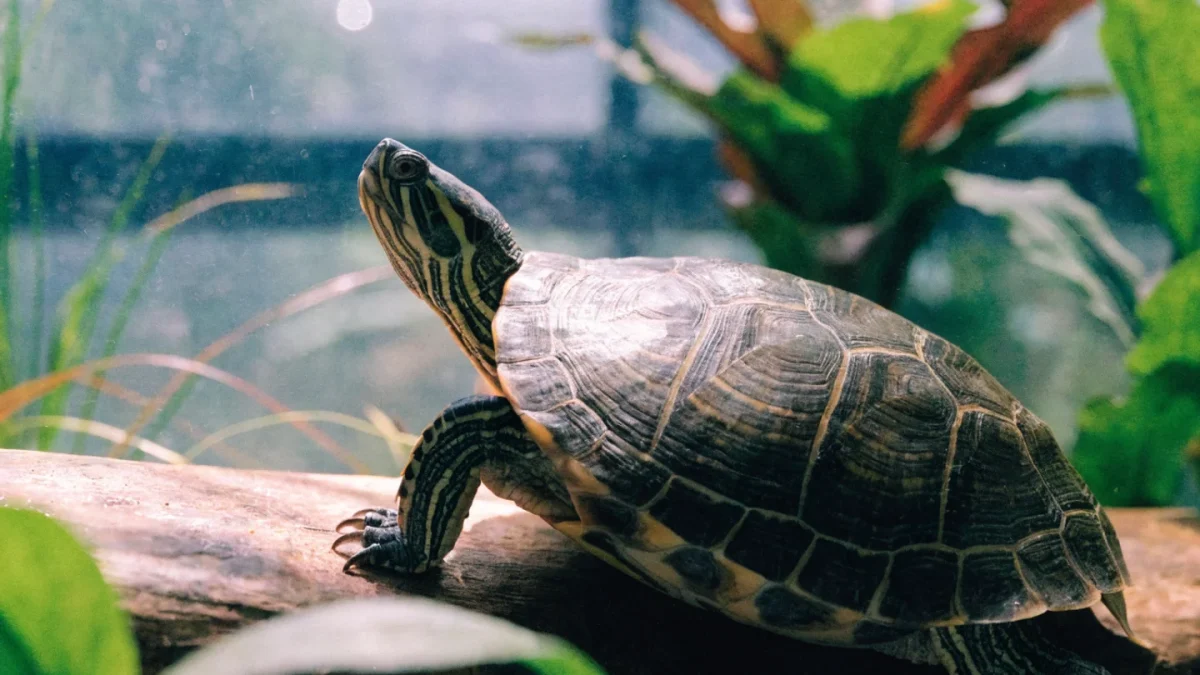
The first turtle I ever kept was a hatchling painted turtle I found crossing a road when I was eleven. I put it in a plastic tub with two inches of water, a rock from the driveway, and whatever lettuce was in the fridge. It survived about three months before my parents drove it to a wildlife rehabilitator — which, looking back, was the best possible outcome for that animal. I had no UVB, no filtration, no basking heat, and no understanding that a quarter-sized turtle could live past forty with proper care.
Turtles and tortoises — collectively called chelonians — need species-appropriate habitats with correct temperatures, UVB lighting, clean water (for turtles) or dry substrate (for tortoises), and diets matched to whether they're herbivores, omnivores, or primarily carnivorous. The gap between "keeping one alive" and "keeping one healthy for decades" is almost entirely about setup and diet.
Turtle or Tortoise: The First Decision
This sounds obvious, but I get emails about it weekly. Turtles are aquatic or semi-aquatic. They need water to swim in, filtered tanks, and basking platforms above the waterline. Tortoises are fully terrestrial. They don't swim. Some can't even float safely.
The confusion matters because the setups are completely different. A Russian tortoise in a water tank will drown. A red-eared slider in a dry enclosure will dehydrate and develop shell problems within weeks. I once visited a pet store — won't say where — that had a juvenile sulcata tortoise in two inches of standing water with a "semi-aquatic turtle" label on the tank. That animal had early shell pyramiding and was clearly stressed.
Before you pick a species, ask yourself two things: do you have space for an aquarium with a high-capacity filter, or do you have floor space (or outdoor space) for a tortoise table or pen? And how many decades are you prepared to commit? Because cheap impulse turtles from fairs and markets are one of the leading reasons reptile rescues are overwhelmed.
Choosing a Species
I'm going to be direct about species selection because it's where most mistakes happen.
Popular Pet Turtles
Red-eared sliders (Trachemys scripta elegans) are the most commonly kept turtle worldwide. They're hardy, eat readily, and have engaging personalities. They also reach 25-30 cm (10-12 inches) as adults and need 300+ liters (75+ gallons) of filtered water. Most people don't plan for that.
Painted turtles (Chrysemys picta) stay slightly smaller and tolerate cooler water. Musk turtles — particularly the common musk turtle (Sternotherus odoratus) — max out around 10-13 cm (4-5 inches) and are genuinely manageable in a 150-liter (40-gallon) setup. If someone tells me they want a turtle but has limited space, musk turtles are where I start the conversation.
Map turtles, mud turtles, and various cooters round out the common options, each with specific water flow, depth, and temperature preferences.
Popular Pet Tortoises
Russian tortoises (Agriobaelys horsfieldii) stay small — 15-25 cm (6-10 inches) — and tolerate a wider humidity range than many species, making them a reasonable first tortoise. Hermann's tortoises (Testudo hermanni) are similarly sized and share that Mediterranean hardiness.
Sulcata tortoises (Centrochelys sulcata) are the third most commonly kept species and the number-one surrender animal at tortoise rescues. They're sold as palm-sized hatchlings and reach 45-90 kg (100-200 pounds). I've seen adults push through drywall. Sulcatas are rewarding animals, but they need outdoor space in warm climates or a dedicated heated room, and they outlive most pet commitments.
Species availability and legality vary significantly by country. Some turtle species are restricted or banned in certain regions.
Habitat Setup: Aquatic Turtles
The enclosure is the most expensive part of turtle keeping, and it's not optional equipment.
Tank Size
The old "10 gallons per inch of shell" rule is a rough starting point, but I find it undersizes for active species. A single adult red-eared slider does best in 300-450 liters (75-120 gallons). Yes, that's a large tank. Turtles are messy, active animals — they produce far more waste than fish of equivalent size, and cramped quarters mean ammonia buildup and stress.
Water Quality
Filtration is non-negotiable. Turtles produce two to three times the bioload of fish, so you want a filter rated for two to three times your tank volume. A canister filter rated for 600 liters on a 300-liter turtle tank isn't overkill — it's appropriate.
Water changes of 25-30% weekly keep nitrates manageable. I test water weekly with a liquid test kit (not strips — they're less accurate) and target ammonia and nitrite at zero, nitrates under 40 ppm.
Water temperature depends on species but falls between 24-28°C (75-82°F) for most tropical and subtropical turtles. A submersible aquarium heater with a guard does the job. The guard matters — turtles climb on everything and can crack an exposed glass heater.
Basking Area
Every aquatic turtle needs a dry basking spot where it can fully leave the water. The basking surface temperature should be 32-35°C (90-95°F) for most species, achieved with a heat lamp positioned above the platform. A UVB bulb covering the basking area provides the ultraviolet radiation turtles need to metabolize calcium and maintain shell health.
Without UVB, turtles develop metabolic bone disease. The shell softens, the bones weaken, and by the time visible symptoms appear, the damage is often irreversible. UVB bulbs need replacement every 6-12 months because UV output degrades before the visible light does — the bulb still looks bright but has stopped producing useful UVB.
Habitat Setup: Tortoises
Tortoises don't need water tanks, but their setup has its own demands.
Indoor Enclosures
A tortoise table — an open-topped enclosure with solid walls — works better than a glass tank for most species. Glass tanks trap humidity (problematic for arid species like Russians) and restrict airflow. For a single Russian or Hermann's tortoise, the table should be at least 120 cm × 60 cm (4' × 2'), though bigger is always better.
Substrate depends on species. Arid species do well on a soil-sand mix; tropical species like redfoots need higher-humidity substrates like coconut coir mixed with sphagnum moss. Avoid cedar or pine shavings — the aromatic oils are respiratory irritants for reptiles.
Outdoor Enclosures
Tortoises thrive outdoors in appropriate climates. A secure outdoor pen with buried wire mesh (to prevent both escapes and predator intrusion), shade areas, and a heated shelter for cool nights can be a primary enclosure during warm months. I've seen keepers in Mediterranean climates house Hermann's tortoises outdoors year-round with minimal supplementation.
The two things that go wrong with outdoor setups are escapes and predators. Tortoises dig. A determined Russian tortoise can excavate under a fence in a single afternoon. Bury hardware cloth at least 30 cm (12 inches) deep along the perimeter. And birds of prey, raccoons, and dogs are all threats to small and medium tortoises — a covered pen or supervised outdoor time prevents disasters.
Lighting and Heat
Indoor tortoises need the same UVB and basking heat as turtles, just configured for a dry setup. A basking spot of 32-38°C (90-100°F) with an ambient cool side of 21-26°C (70-78°F) gives the animal a thermal gradient to self-regulate. UVB placement follows the same rules: replace bulbs on schedule, position them at the manufacturer's recommended distance, and ensure the tortoise can bask under both heat and UVB simultaneously.
Diet
Diet is the second place where turtle and tortoise keeping diverges sharply, and where the most persistent bad advice circulates online. I still see care sheets recommending iceberg lettuce and commercial pellets as a complete diet. Neither is adequate on its own.
Aquatic Turtle Diets
Most pet turtle species are omnivores. Juveniles eat a higher proportion of animal protein — insects, small fish, worms, aquatic invertebrates — and shift toward more plant matter as they mature. For a young red-eared slider, the diet might be 70% protein and 30% greens. An adult slider should be closer to 50/50 or even 60% greens.
Good protein sources include earthworms, crickets, black soldier fly larvae, and small feeder fish (avoid goldfish — they contain thiaminase, which blocks vitamin B1 absorption). Leafy greens like dandelion, turnip greens, endive, and red leaf lettuce provide fiber, vitamins, and calcium. Avoid spinach in quantity — the oxalates bind calcium.
Commercial turtle pellets can supplement a varied diet but shouldn't be the sole food source. Think of pellets as 25% of the overall diet, not the base.
Tortoise Diets
Tortoises are primarily herbivorous, and the details depend on whether you're keeping a Mediterranean, tropical, or grassland species. Mediterranean species like Russians and Hermann's do best on a diet of weedy greens: dandelion, clover, plantain, hibiscus leaves, and hay. The fiber content matters — these are grazing animals that evolved eating tough, low-calorie vegetation.
Tropical species like redfoots can have small amounts of fruit (10-15% of diet) and occasional animal protein. But for Testudo species, fruit causes digestive issues and shouldn't be offered regularly.
Calcium supplementation is necessary for all chelonians in captivity. Dust greens with a calcium powder (without phosphorus, unless using a product specifically balanced for reptiles) three to four times weekly for adults, daily for growing juveniles. A cuttlebone left in the enclosure provides supplemental calcium on demand — many tortoises gnaw on it voluntarily.
Health: What to Watch For
Chelonians hide illness extremely well. By the time a turtle or tortoise stops eating, the problem has usually been developing for weeks.
Shell health is the most visible indicator. The shell should be firm (in adults), evenly colored, and free of soft spots, flaking, or foul odor. Soft shells in juveniles can indicate metabolic bone disease from insufficient calcium or UVB. White fuzzy patches on an aquatic turtle's shell suggest fungal infection. Pitting or exposed bone underneath the scutes points to shell rot, which requires veterinary treatment.
Respiratory infections show up as wheezing, open-mouth breathing, bubbles from the nostrils, or excessive mucus. These are almost always caused by incorrect temperatures or humidity. An arid-species tortoise kept too damp, or a turtle in water that's too cold, will develop respiratory symptoms reliably.
Eye swelling — puffy, closed, or sunken eyes — can indicate vitamin A deficiency (common with pellet-only diets), respiratory infection, or poor water quality in aquatic species. An exotic vet should evaluate any eye problem that doesn't resolve within a day or two.
I've kept chelonians for over twenty years now, and the pattern I see repeatedly is the same: problems almost always trace back to habitat or diet. Fix the environment, and many health issues resolve. Ignore the environment, and you'll be treating symptoms indefinitely. It's worth getting the reptile care fundamentals right, because the principles of heat, UVB, and species-appropriate diet cross over into every reptile you'll ever keep.
Handling and Temperament
Turtles and tortoises aren't cuddly pets. That's not a criticism — it's a calibration of expectations.
Most aquatic turtles tolerate brief handling but prefer being observed. They'll learn to associate you with food and come to the glass when you approach. Some red-eared sliders become remarkably interactive, following your movements and eating from your hand. But extended handling stresses most turtle species.
Tortoises are generally calmer about handling, especially captive-bred animals raised with regular interaction. Russian tortoises and Hermann's tortoises in particular become quite personable — they'll walk toward you, investigate your shoes, and accept chin scratches. Sulcatas are the Labrador retrievers of the tortoise world: friendly, food-motivated, and large enough that "handling" eventually becomes "managing."
When you do handle any chelonian, support the full body. Never hold a turtle by the tail or a single leg. Wash your hands before and after — chelonians can carry Salmonella asymptomatically, and good hygiene protects both you and the animal.
Costs Nobody Mentions
The animal itself is usually the cheapest part. A captive-bred hatchling slider might cost $15-30. The setup to keep that slider healthy for its 20-30 year lifespan starts at $300-500 and runs into the thousands for a properly filtered, heated, UVB-equipped aquarium.
Ongoing costs include electricity for heating and lighting, filter media replacement, UVB bulb replacement every 6-12 months, food, calcium supplements, and occasional exotic vet visits. An exotic vet visit — and you need an exotic vet, not a dog-and-cat clinic — typically costs $75-150 for a basic checkup, more for diagnostics.
If you're keeping a tortoise outdoors, the enclosure build can cost more upfront but saves on electricity long-term. That trade-off depends entirely on your climate.
Frequently Asked Questions
Can turtles and tortoises live together?
No. Aquatic turtles and terrestrial tortoises have incompatible habitat needs. A turtle will drown a tortoise in its tank. A tortoise will dehydrate in a dry setup that a turtle's tank partner needs. Even within the same category — two tortoise species, or two turtle species — mixing species risks disease transmission, aggression, and hybridization. House chelonians individually or in same-species, same-size pairs with adequate space.
How often should I feed my turtle or tortoise?
Juvenile turtles eat daily. Adult aquatic turtles do well with feeding every other day or three to four times weekly — overfeeding is more common than underfeeding in pet turtles. Tortoises should have access to greens daily but don't need large volume at each feeding. A portion roughly the size of the tortoise's shell is a reasonable daily offering. I weigh my tortoises monthly to track whether I'm over or under.
Do turtles and tortoises need a vet?
Yes. An annual checkup with an exotic veterinarian catches problems early — fecal tests for parasites, shell examinations, and weight tracking are standard. Finding an exotic vet before you need one urgently is something I push hard. Emergency vet visits at 10 PM because your turtle stopped eating are expensive and stressful.
Can I release a pet turtle into the wild?
Never. Released pet turtles introduce diseases to wild populations and compete with native species for resources. Red-eared sliders are one of the most invasive species on the planet precisely because of pet releases. If you can't keep your turtle, contact a reptile rescue or rehoming network.
How big will my turtle or tortoise get?
It depends entirely on species. Common musk turtles stay around 10-13 cm (4-5 inches). Red-eared sliders reach 25-30 cm (10-12 inches). Sulcata tortoises can exceed 70 cm (28 inches) and weigh over 45 kg (100 pounds). Research the adult size before purchasing — always.