

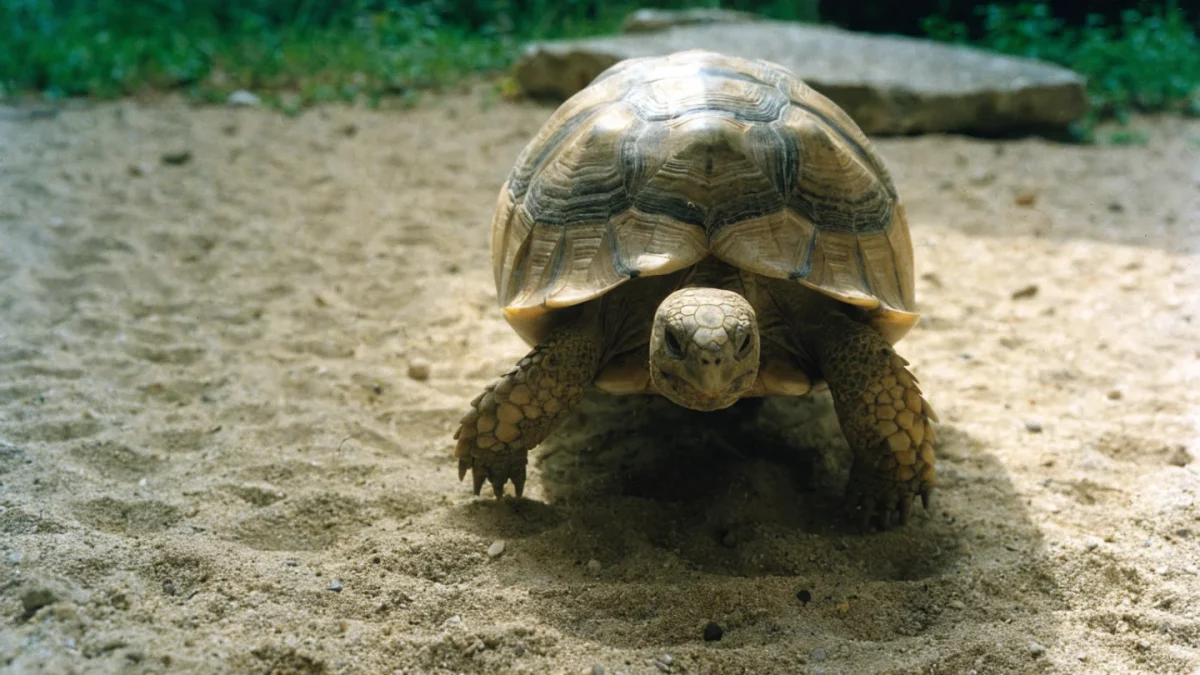
A woman contacted me through an online forum last spring asking for help with her "small tortoise" that had stopped eating. She sent photos. It was a sulcata — technically still juvenile but already 30 cm (12 inches) across, living in a 90-cm (3-foot) tortoise table in a studio apartment. The animal wasn't sick. It had simply outgrown its enclosure and was stressed from confinement. That sulcata will eventually weigh more than a large dog.
The best pet tortoises for first-time owners stay manageable in size, eat a diet you can source from a grocery store or your backyard, and are hardy enough to tolerate the learning curve that comes with any first reptile. Not every tortoise species fits that description, and the gap between good beginner species and bad ones is enormous.
I've covered the broader setup requirements — lighting, heating, substrate, outdoor enclosures — in the complete turtle and tortoise care guide. Here I'm focusing on species selection, because that's the decision that determines everything else.
1. Russian Tortoise (Agriobaelys horsfieldii)
If I had to recommend a single species to a first-time tortoise owner, it would be a Russian tortoise nine times out of ten.
Adults reach 15-25 cm (6-10 inches), with males typically smaller. That size means an indoor tortoise table of 120 cm × 60 cm (4' × 2') provides adequate space for a single adult. They're active, curious, and surprisingly fast — I've watched mine cross a room in under a minute when food is involved.
Russians evolved in the harsh steppes of Central Asia, which gave them a tolerance for temperature and humidity fluctuations that other species lack. They're comfortable in lower humidity (40-60%) and handle cooler nights better than tropical species. That environmental flexibility is exactly why they're forgiving for beginners.
Diet is simple: dandelion greens, clover, plantain, turnip greens, endive, hay. This is a grazing species that does best on high-fiber, low-sugar vegetation. No fruit. No lettuce as a staple (it's mostly water). The weeds growing in your yard — assuming no pesticide use — are often better food than anything you'd buy at a store.
One quirk: Russians dig. Obsessively. An outdoor Russian tortoise will tunnel under any barrier that isn't buried deep enough. I lost track of one for three hours once before finding her wedged under the garden shed, perfectly content. Bury barriers at least 30 cm (12 inches) deep.
Difficulty: Low to moderate. The animal is forgiving; the main challenge is providing enough space and UV exposure.
2. Hermann's Tortoise (Testudo hermanni)
Hermann's tortoises share many of the Russian tortoise's advantages — similar adult size (15-20 cm for the western subspecies, up to 28 cm for eastern), similar Mediterranean climate tolerance, similar diet. They're arguably more attractive, with brighter yellow and black patterning that makes them photogenic in a way that matters to some keepers.
Where Hermann's differ is temperament. Mine are calmer than my Russians — less frantic during feeding, less prone to ramming the enclosure walls, more content to bask for extended periods. That temperament makes them slightly easier to observe and enjoy as pets, though "personality" varies between individuals and I've met feisty Hermann's too.
I've kept both western (T. hermanni hermanni) and eastern (T. hermanni boettgeri) subspecies. The western stays smaller and can be more challenging to source as captive-bred specimens. The eastern is more widely available in the trade and grows a bit larger but is equally manageable.
Difficulty: Low. Similar to Russians in most practical aspects.
3. Greek Tortoise (Testudo graeca)
Greek tortoises are the third Mediterranean species that works well for beginners. Adults reach 15-25 cm (6-10 inches), and their care overlaps heavily with Russians and Hermann's — same temperature ranges, same diet, same general setup.
The caution with Greek tortoises is that the species complex contains multiple subspecies with varying care needs and hardiness. Some are well-established in captivity; others are predominantly wild-caught and arrive with parasites, dehydration, and stress. Always buy captive-bred, and if the seller can't confirm the subspecies, I'd pass. A healthy, established captive-bred Greek tortoise is a wonderful animal. A stressed wild-caught import is a veterinary project.
Difficulty: Low to moderate — if captive-bred. Higher if you're dealing with a wild-caught animal.
4. Red-Footed Tortoise (Chelonoidis carbonarius)
This is the first tropical species on the list, and it's here because red-footed tortoises have a personality that's hard to beat. They're interactive, food-motivated, and tolerate handling better than most tortoises. They'll walk toward you, investigate objects in their enclosure, and some keepers describe them as "dog-like" — which is a stretch, but I understand the comparison.
Red-foots reach 25-35 cm (10-14 inches) and need higher humidity than Mediterranean species — 70-80%. That means coconut coir substrate, regular misting, and a soak area. Their diet includes fruit (up to 10-15% of intake), protein (occasional invertebrates or a pinch of moistened low-fat commercial food), and the usual leafy greens. The dietary variety is slightly more complex than feeding a Russian tortoise, but nothing unmanageable.
A keeper I know in a tropical climate keeps her red-foots outdoors year-round in a heavily planted enclosure with natural rainfall providing humidity. In drier climates, indoor humidity maintenance is the main challenge.
Difficulty: Moderate. The humidity requirements and more varied diet make them a step up from Mediterranean species.
5. Leopard Tortoise (Stigmochelys pardalis) — With Caveats
I'm including leopard tortoises because they're stunning animals, widely available, and often recommended as beginner species. But I have reservations.
Adults reach 30-45 cm (12-18 inches) and can weigh 13-18 kg (30-40 pounds). That's not unmanageable — it's not sulcata territory — but it's large enough that indoor housing becomes difficult for adults. They need warm, dry conditions and do best in climates where they can live outdoors for much of the year.
They're also more sensitive to humidity and temperature dips than the Mediterranean species listed above. A Russian tortoise can handle a brief cold spell. A leopard tortoise exposed to cool, damp conditions will develop a respiratory infection alarmingly quickly.
If you live in a warm, dry climate and have outdoor space, a leopard tortoise is a magnificent pet. If you're in a small apartment in a cold climate, this isn't the species.
Difficulty: Moderate to high. Size, space requirements, and climate sensitivity push them beyond true beginner territory.
Species to Avoid as a First Tortoise
Sulcata tortoises (Centrochelys sulcata): Sold as adorable palm-sized hatchlings. Grow to 45-90 kg (100-200+ pounds). Need permanent outdoor enclosures in warm climates or entire heated rooms. The number-one reptile surrender to rescues. I love sulcatas, but they're not a starter animal.
Star tortoises (Geochelone elegans): Beautiful but finicky. Sensitive to humidity, prone to respiratory issues, and the captive-bred supply is limited in many regions. Experienced keepers only.
Pancake tortoises (Malacochersus tornieri): Fascinating flat-bodied species that needs specialized rock-crevice habitat and a keeper who understands their unique behavioral needs. Conservation concerns add another layer of responsibility.
Where to Buy
Captive-bred, always. Reptile expos are the best way to meet breeders directly, inspect animals, and ask questions about lineage and care. Online breeders with verifiable reviews are another option — but insist on photos of the specific animal and shipping guarantees.
Pet stores vary wildly. Some carry healthy captive-bred tortoises from reputable suppliers. Others sell stressed, parasite-laden imports with no documentation. If the staff can't tell you whether the animal is captive-bred or wild-caught, that's your answer.
If you're considering adopting, check tortoise rescues. Many have healthy adults surrendered by owners who couldn't maintain the commitment — and adopting an adult gives you a more predictable animal in terms of size and temperament. If you're drawn to aquatic species instead, the best pet turtles for beginners has similar species-by-species guidance.
Frequently Asked Questions
How long do pet tortoises live?
Decades. Russian tortoises live 40-60+ years. Hermann's tortoises are similar. Sulcatas can exceed 70 years. This isn't a 5-year pet commitment — it's a multi-decade one, and in many cases the tortoise will outlive the owner. Estate planning sounds extreme, but serious tortoise keepers include their animals in their wills.
Can I keep a tortoise in a glass aquarium?
I'd avoid it. Glass tanks trap humidity (bad for arid species), restrict airflow, and the reflective sides can stress animals that don't understand glass barriers. Open-topped tortoise tables or purpose-built enclosures with solid, opaque walls work much better. Many keepers build their own from melamine-coated shelving boards — it's cheaper than a glass tank and provides a better environment.
Do tortoises need companions?
Tortoises are solitary animals and do not need social interaction with other tortoises. Two males will fight. A male and female pair means constant mating attempts that stress the female. Two females is the only combination that sometimes works, and only with generous space. A single tortoise in an appropriate setup is perfectly content.
Can I take my tortoise outside?
Outdoor time in a secure, predator-proof area is excellent for tortoises — natural sunlight provides far better UVB than any artificial bulb. Supervise every outdoor session. Tortoises are faster than they look, they dig under fences, and birds of prey are a real threat to small species. Never leave a tortoise unattended outdoors in an unsecured area.