

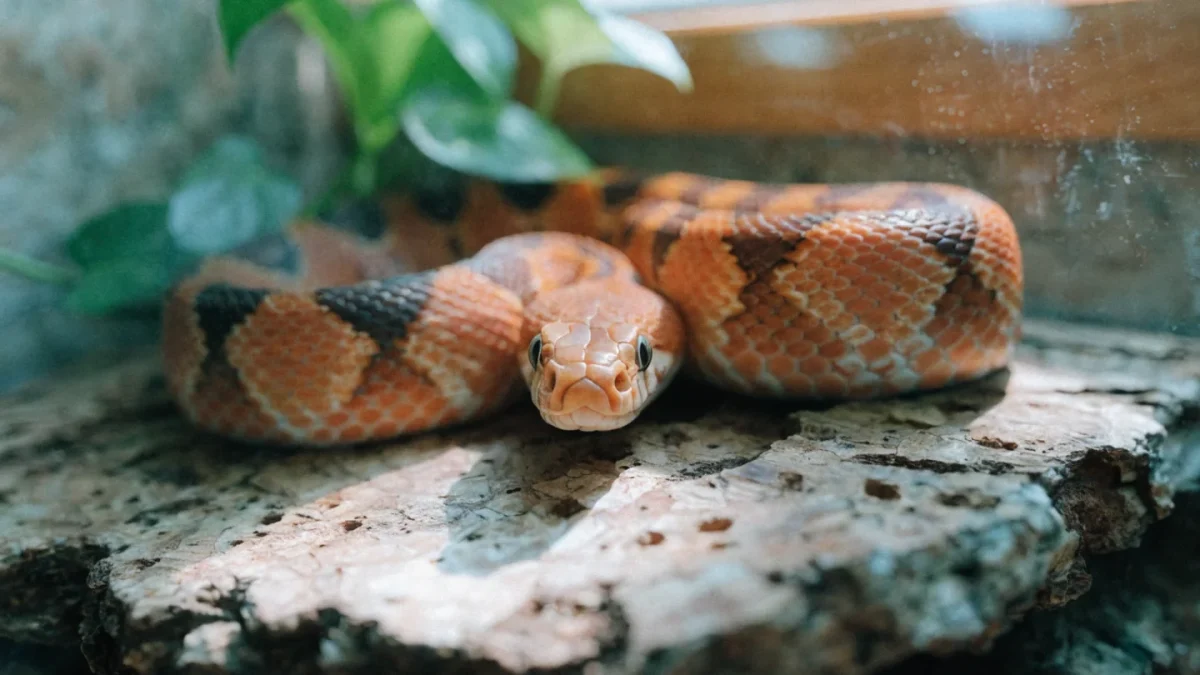
The first corn snake I ever kept ate like clockwork for eight months, then refused food for six straight weeks. I was nineteen, convinced I'd done something fatally wrong, and spent more time refreshing reptile forums at 2 a.m. than sleeping. The snake was fine. She was just being a corn snake — and that refusal taught me more about reading these animals than any care sheet ever did.
Corn snake care guide basics come down to this: provide a secure enclosure with a proper temperature gradient, offer the right-sized prey on a predictable schedule, and give the animal places to hide. Corn snakes (Pantherophis guttatus) tolerate a wider range of conditions than most reptiles, which means small mistakes rarely become emergencies. That forgiveness is exactly why they've earned their reputation as the go-to first snake.
But "beginner-friendly" doesn't mean "no effort required." I've taken in rescues housed in ten-gallon tanks with no heat source and a water bowl growing algae. Those snakes survived, sure. Surviving isn't thriving. The difference between a corn snake that just exists and one that's active, feeding confidently, and showing brilliant color comes down to getting the fundamentals right — and understanding why each one matters.
Choosing Your Corn Snake
Buy captive-bred. Every time. Wild-caught corn snakes carry parasites, stress easily, and have unpredictable temperaments. A captive-bred hatchling from a reputable breeder costs roughly the same as one from a pet store, and you'll know the animal's genetics, hatch date, and feeding history.
Look for clear eyes (unless the snake is in a shed cycle, when they'll appear milky-blue), smooth scales with no stuck shed, and an alert tongue-flick when you approach. A healthy hatchling should feel muscular, not bony along the spine. Ask the seller how many meals the snake has taken — I won't buy a hatchling that hasn't eaten at least four times consecutively. That's the single best indicator that it's established and ready to move to a new home.
Reptile expos are my preferred source. You can talk directly to the breeder, see the parents in some cases, and the price is usually better than retail. Just inspect the animal carefully under the booth lighting and don't let the excitement of a busy expo rush your decision.
Enclosure Essentials
Hatchlings do well in a smaller enclosure — something in the range of a 10- to 20-gallon equivalent. A massive tank makes a tiny snake feel exposed, and you'll watch it hide constantly rather than explore. Adults need at least a 40-gallon breeder or a 36" x 18" x 18" enclosure. Front-opening enclosures make routine maintenance easier, and the snake doesn't associate a hand coming from above with a predator.
The most critical feature of any corn snake enclosure is security. These snakes are escape artists. I once found an adult female in a kitchen drawer two rooms away after she pushed through a screen top I thought was secure. If there's a gap wider than the snake's head, it's a door.
You'll need at minimum two hides — one on the warm end, one on the cool end. The snake should fit snugly inside each. A water bowl large enough for soaking completes the basics. Beyond that, climbing branches and fake plants add enrichment, and I've noticed my corns that have more complex enclosures tend to be more active and visible during the day.
Temperature and Humidity
A temperature gradient is non-negotiable. The warm side should sit around 85°F measured at the floor level where the snake actually rests, and the cool side around 75°F. Night temperatures can drop a few degrees without issue. Use a thermostat-controlled heat source — an under-tank heater or a radiant heat panel both work. Never use a heat source without a thermostat. I've seen burns from unregulated heat mats that required months of veterinary treatment.
Ambient humidity between 40% and 60% works for most of the year. Bump it to 60-70% during shed cycles by adding a damp moss hide. Corn snakes come from the southeastern United States, where humidity fluctuates naturally, so they're more tolerant of variation here than tropical species. That said, sustained humidity below 30% leads to dehydration and bad sheds.
A digital thermometer-hygrometer on each end of the enclosure is the minimum. Analog gauges are unreliable by enough margin to matter.
Feeding Your Corn Snake
Frozen-thawed mice, sized to roughly the width of the snake's body at its widest point. Hatchlings start on pinky mice every five to seven days. Juveniles move up to fuzzies, then hoppers, then adult mice as they grow — roughly every seven to ten days. Adults eat one appropriately sized mouse every ten to fourteen days.
I've kept corn snakes for over a decade and I feed frozen-thawed exclusively. It's safer for the snake (live prey can bite and cause infections), more convenient for the keeper, and the snake doesn't know the difference once it's warmed to body temperature. Thaw in warm water, never a microwave.
Feeding refusals happen. Breeding season, seasonal light changes, shed cycles, or just corn snake moodiness. A healthy adult can safely go weeks without eating. If refusal stretches beyond six weeks and the snake is losing body condition, that's when I start troubleshooting enclosure parameters and considering a vet visit.
Handling
Corn snakes are among the most handleable reptiles you'll find. Wait 48-72 hours after bringing a new snake home before handling, and skip handling for 48 hours after feeding to avoid regurgitation.
Start with short sessions — five to ten minutes — and build up. Support the snake's body, don't grip, and let it move through your hands. Most corn snakes calm down within a few handling sessions. Hatchlings are fast and squirmy. That's normal, not aggression. I've been musked by corns dozens of times (it's a foul-smelling defensive secretion), bitten maybe three times in fifteen years, and none of those bites even drew blood.
The more consistently you handle, the calmer the snake becomes. Two to three times per week is a good rhythm for a well-established animal. Skip handling when the snake is in shed (blue/milky eyes) — they feel vulnerable and are more likely to be defensive.
Common Health Issues
Respiratory infections show up as wheezing, bubbling around the nostrils, or open-mouth breathing. Almost always caused by temperatures too low or humidity too high. Adjust the enclosure first and get to an exotic vet if symptoms don't improve in 48 hours.
Stuck shed is the issue I see most in corn snakes kept by beginners. It's a husbandry problem, not a medical one. Low humidity during the shed cycle leads to pieces of old skin clinging to the tail tip, eyes, or body. A humidity box and proper hydration prevent this entirely. If it happens, a lukewarm soak and gentle assistance with a damp cloth resolves most cases.
Mites appear as tiny black or red dots moving on the snake or sitting in the water bowl. They're a pain to deal with but not difficult to eliminate with proper treatment — though I'd rather not detail specific medications here, as dosing errors cause more harm than the mites themselves. See an exotic vet for treatment options.
Internal parasites are uncommon in captive-bred animals but worth checking for with a fecal exam at your first vet visit.
Lifespan and Long-Term Commitment
Corn snakes live 15-20 years in captivity. Some reach their mid-twenties. That's a real commitment — longer than most dogs — and something every prospective owner needs to sit with before purchasing a $40 hatchling. The snake is cheap. The years of feeding, substrate, and electricity for heating are the actual cost.
I've had the same female corn snake since 2012. She's watched me move three times, go through a career change, and outlasted two relationships. The animal doesn't care about any of that — she wants her mouse every twelve days and her warm hide. There's something genuinely grounding about caring for a creature with such straightforward needs.
Corn Snake Care Quick-Reference
| Parameter | Range |
|---|---|
| Warm side temp | 83-88°F (28-31°C) |
| Cool side temp | 72-78°F (22-25°C) |
| Humidity | 40-60% (60-70% during shed) |
| Hatchling feeding | Pinky mouse every 5-7 days |
| Adult feeding | Adult mouse every 10-14 days |
| Minimum adult enclosure | 40-gallon / 36"x18"x18" |
| Lifespan | 15-20+ years |
| Temperament | Docile, handleable |
Frequently Asked Questions
Do corn snakes need UVB lighting?
They don't strictly require it — corn snakes are crepuscular and can metabolize calcium without UVB in captivity if their diet is adequate. That said, a study published through the American Veterinary Medical Association found that corn snakes given UVB access showed a 211% increase in vitamin D3 levels over 28 days compared to controls — even at very low exposure levels. Higher D3 supports calcium metabolism, immune function, and overall wellness. I've started providing low-level UVB (5-7% output) for my collection and noticed more daytime activity. It's "strongly beneficial, not strictly mandatory" based on the current evidence.
Can I keep two corn snakes together?
Don't. Corn snakes are solitary and don't benefit from company. Cohabitation causes stress, competition for resources, and the risk of one snake eating the other — yes, even between similarly sized individuals. I've taken in rescues where this happened. One enclosure per snake, always.
How often should I clean the enclosure?
Spot-clean waste as soon as you notice it. Full substrate changes every three to four weeks for most setups. Water bowl cleaned and refilled every two to three days, or immediately if soiled. Once a month I do a deeper clean — remove everything, wipe surfaces with a reptile-safe disinfectant, rinse thoroughly, and reassemble.
Are corn snakes nocturnal?
Mostly crepuscular — active at dawn and dusk. Mine tend to emerge in the early evening and again around sunrise. You'll see some daytime movement, especially if the enclosure has good cover that lets the snake feel secure while exploring. Juveniles seem more randomly active throughout the day than adults.
What's the best way to pick up a corn snake that's hiding?
Gently lift the hide and scoop the snake from underneath, supporting its midsection. Don't pull it out by the tail or grab from above. If the snake is in a defensive posture — coiled tightly with its head tucked — give it a few minutes. Tapping the hide gently first so the snake knows something is coming reduces the startle response. Patience matters more than technique.