

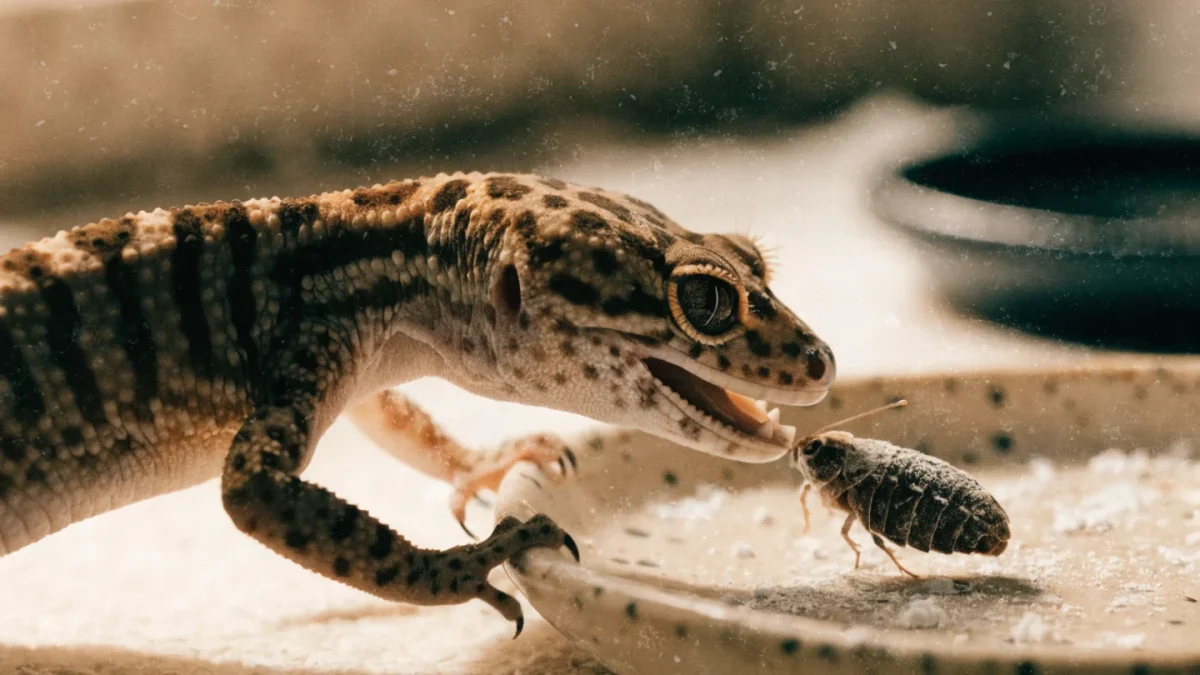
I gut-load my feeder insects better than I feed myself most weekdays. That sounds like a joke, but the reality is that a cricket straight from the shipping container is nutritionally hollow — chitin shell, not much else. What's inside the bug is what feeds your gecko, and that's entirely in your control.
Leopard geckos are strict insectivores. They eat live insects — crickets, dubia roaches, mealworms, black soldier fly larvae — dusted with calcium and vitamin supplements on a rotating schedule. The feeding frequency depends on age, with juveniles eating daily and adults every two to three days. Getting this right is straightforward once you understand the system, but skipping the details causes slow, invisible damage. The complete leopard gecko care guide covers where diet fits into the broader care picture, so I'll go deeper on the specifics here.
Feeder Insects: Ranking the Options
Dubia roaches are my top choice. High in protein, low in fat, soft-bodied compared to mealworms, and they don't chirp at 3 AM. They're easy to gut-load because they'll eat almost anything. The main drawback is availability — they're restricted or banned in some regions due to concerns about feral colonies establishing in warm climates.
Crickets are the classic. Widely available, decent nutrition, and they trigger strong feeding responses because they move erratically. Downsides: they smell, they escape, they die fast if you don't keep them right, and uneaten crickets left in the enclosure overnight can nibble on a sleeping gecko. I remove uneaten crickets within 15 minutes.
Mealworms are convenient — they stay in a dish, they keep for weeks in the fridge, and geckos love them. But they're high in fat relative to protein and have a harder exoskeleton, which means a gecko on an all-mealworm diet can develop weight issues and slower digestion. Fine as part of a rotation. Not ideal as the sole feeder.
Black soldier fly larvae (also called calciworms or phoenix worms) are naturally high in calcium, which makes them a useful addition. They're small, though, and some geckos ignore them because they don't move much.
Treats only: Waxworms and butterworms. High fat, borderline addictive — I've seen geckos refuse everything else after being fed waxworms too frequently. One or two a week maximum, and only for adults.
Hornworms are excellent hydration boosters. High moisture content, soft-bodied, and geckos go wild for them. They grow fast, though, so buy them small and use them within days.
Gut-Loading: The Step People Skip
Gut-loading means feeding your feeder insects a nutritious diet for at least 24 hours before offering them to the gecko. This is not optional. An empty cricket is junk food.
Good gut-load ingredients: dark leafy greens (collard, mustard, dandelion), squash, sweet potato, carrots, and a dry gut-load mix based on grains and calcium-rich ingredients. Avoid citrus, spinach (binds calcium), and anything from the onion family.
I keep a small container of gut-load mix next to my roach colony. Every time I pull feeders for the week, I separate them into a small tub with fresh greens and dry mix for 24-48 hours. It takes five minutes. The payoff is measurable — gut-loaded insects have significantly higher calcium and vitamin A content than unfed ones.
The Supplement Schedule
Three products, rotated:
- Plain calcium powder (no D3) — dusted on feeders at most meals
- Calcium with vitamin D3 — dusted once or twice a week
- Reptile multivitamin — dusted once a week
If your gecko has UVB lighting, you can reduce D3 supplementation slightly, but don't eliminate it entirely. Without UVB, the D3 dusting is the only source — miss it and metabolic bone disease starts silently.
Dusting technique: drop a few insects in a bag or cup with a pinch of powder, give it a gentle shake. You want a light coating, not insects that look like they rolled through a flour mill. Heavy coats make some geckos refuse the food.
A keeper reached out to me through an online forum last year, panicking because her juvenile's back legs were trembling during walks. Classic early MBD. She'd been dusting with calcium — but it was plain calcium, no D3, and the gecko had no UVB. The gecko recovered after six weeks of corrected supplementation and a vet visit, but it was close. D3 matters.
Feeding Frequency by Age
Hatchlings (0-2 months): Daily. Small crickets or small dubia nymphs. Offer as many as the gecko will eat in 10-15 minutes.
Juveniles (2-12 months): Daily to every other day. Increase prey size as the gecko grows — the insect should be no wider than the space between the gecko's eyes.
Adults (12+ months): Every two to three days. Four to eight appropriately sized insects per feeding. Adjust based on body condition — if the tail is plump and the belly isn't dragging, you're in range.
Breeding females: Increase calcium dusting to every feeding and offer food more frequently. Egg production drains calcium reserves fast.
Temperature directly influences appetite and digestion. If your habitat setup and heating is off — warm side too cool, thermostat malfunctioning — the gecko may eat normally but fail to digest properly. Undigested insects in the stool are a heating red flag, not a feeding one.
Feeding Method
Free-range feeding — releasing insects into the enclosure — works for crickets and roaches that move enough to trigger hunting behavior. It's enriching. But remove uneaten insects after 15 minutes to prevent stress and nibbling.
Dish feeding — placing insects in a smooth-sided dish they can't climb out of — is cleaner and prevents substrate ingestion. Mealworms, soldier fly larvae, and waxworms work best in a dish since they don't move far.
I alternate between methods. Dish feeding for mealworms midweek. Free-range dubia on feeding days when I want the gecko to hunt. Variety keeps them engaged. For the broader picture on supplementation, gut-loading rationale, and feeder insect nutrition across species, the exotic pet nutrition guide ties it all together.
When a Gecko Won't Eat
Before panicking, check the calendar. Leopard geckos commonly reduce or stop eating during:
- Winter months (even indoors, they sense photoperiod changes)
- Shedding cycles (a day or two before and after shedding)
- After relocation or enclosure changes
- Breeding season for males
If the gecko is maintaining weight, the tail is plump, and there are no other symptoms, wait it out. A healthy adult can fast for two to three weeks without harm. If weight drops noticeably or other signs appear — lethargy, sunken eyes, abnormal stool — that's a vet visit.
Frequently Asked Questions
Can leopard geckos eat fruits or vegetables?
No. They're obligate insectivores. Their digestive system isn't designed for plant matter. No bananas, no lettuce, no fruit baby food. Just insects.
How do I know if my gecko is overweight?
Look at the tail and the armpit area. A healthy tail is thick and rounded — roughly the width of the gecko's neck. Armpit bubbles (small fat deposits behind the front legs) and a belly that drags are signs of obesity. Cut back on waxworms and reduce portion sizes.
Should I leave a dish of calcium powder in the enclosure?
Some keepers do, and geckos will occasionally lick from it. I leave a small bottle cap of plain calcium in the cool side of every enclosure. It doesn't replace dusting — the amounts they self-supplement are tiny — but it's a harmless safety net.
Are dried insects okay?
No. Leopard geckos are triggered by movement. Dried or freeze-dried insects sit there, lifeless, and most geckos ignore them entirely. Even the ones that do eat them aren't getting the nutritional benefit of a gut-loaded live feeder. Stick to live insects.