

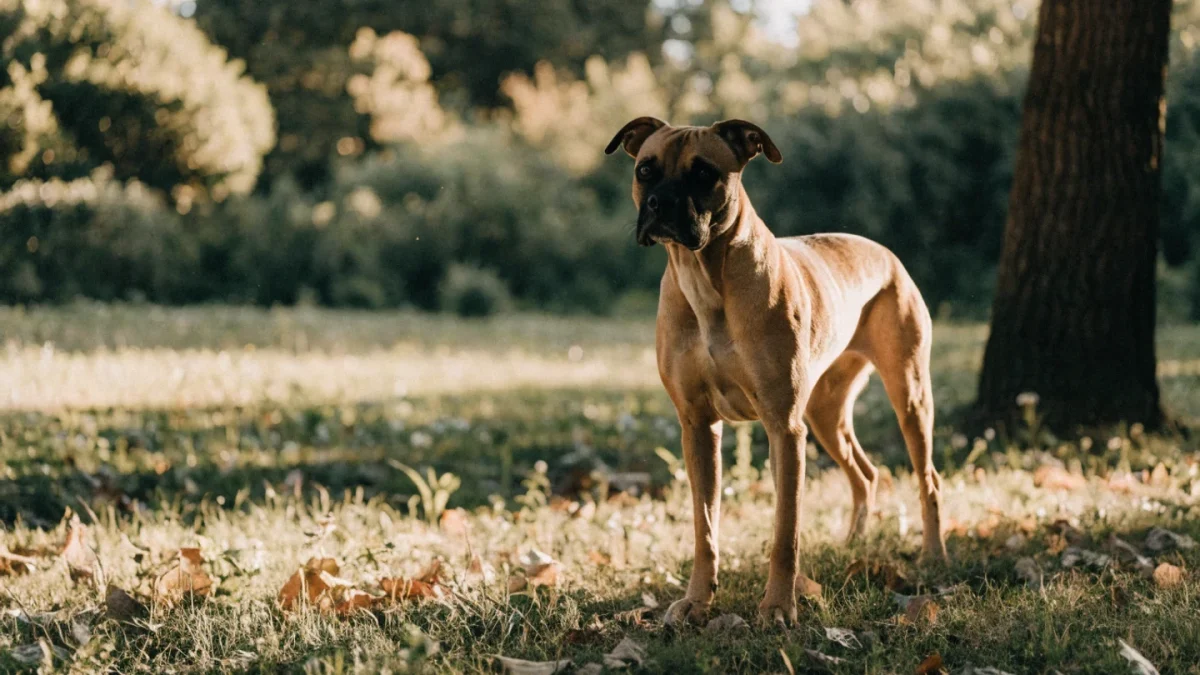
The boxer exists because a Bavarian hunting tradition collided with a dog show craze. In the 1880s, Munich breeders crossed the Bullenbeisser — a heavy-jawed German hunting dog used for centuries to hold down wild boar and deer until the hunter arrived — with smaller English Bulldogs imported for the era's emerging companion-dog market. The Bullenbeisser was already fading from relevance as aristocratic hunting estates shrank across Central Europe. By blending it with the Bulldog, those breeders created something neither breed was on its own: an athletic, people-oriented working dog that could guard, play, and still look imposing enough to discourage strangers.
The German Boxer Club drafted the first breed standard in 1904, and the name itself likely derives from the breed's habit of standing on hind legs and batting with its front paws during play — though etymologists have debated this for over a century without settling the question. What nobody debates is the result. The boxer became one of the most versatile working dogs of the 20th century: military messenger, police dog, guide dog, and eventually one of the most popular family breeds in multiple countries.
This boxer dog breed guide covers what actually matters — the breed's origins, what they're really like to live with, the health problems you need to prepare for, and whether a boxer fits your life. Some of what follows may surprise you, particularly if your image of the breed comes from their goofy reputation rather than their working heritage.
Origins and History
The Bullenbeisser — literally "bull biter" in German — was not a single standardized breed but a type of dog bred across Central Europe for large-game hunting. These dogs had powerful jaws, a shorter muzzle than most hunting breeds, and the tenacity to grip a wild boar by the snout and hold it until the hunter delivered the killing blow. By the mid-1800s, as large-game hunting declined among the German middle class, the smaller Brabant variant of the Bullenbeisser became the primary ancestor of the modern boxer.
The crossbreeding with English Bulldogs in the 1880s and 1890s introduced several traits the Bullenbeisser lacked: a more compact body, a more pronounced underbite, and — crucially — a temperament better suited to domestic life. The first boxer registered in the German studbook was a dog named Flocki in 1895, bred from a Bullenbeisser dam and a white English Bulldog sire.
The breed's development was rapid by historical standards. Within a decade of the first standard in 1904, boxers had established themselves as police and military dogs across Germany. Their intelligence, trainability, and courage made them naturals for Schutzhund work. During both World Wars, boxers served as messenger dogs, pack carriers, and guard dogs for the German military. American and British soldiers brought boxers home after World War II, and the breed's popularity exploded in the English-speaking world during the 1950s.
By 1951, a boxer named Bang Away had won Best in Show at Westminster — the first of the breed to do so. The American Kennel Club has ranked boxers among the top ten most popular breeds for much of the past three decades.
For a deeper look at the breed's journey from Bavarian hunting fields to living rooms worldwide, the history of the boxer traces that transformation in detail.
Physical Characteristics
Size and Build
Male boxers typically stand 57 to 63 cm at the shoulder and weigh between 27 and 32 kg. Females are slightly smaller, ranging from 53 to 59 cm and 25 to 29 kg. The body is square-proportioned — the length from breastbone to rear roughly equals the height at the withers — and heavily muscled without appearing bulky.
The boxer's build communicates function. The deep chest houses large lungs for sustained activity. The short, strong back provides a stable platform for the breed's characteristic bouncing gait. The hindquarters are powerfully angulated, giving boxers explosive acceleration and remarkable jumping ability. A fit boxer can clear a standard garden fence from a near standstill — a fact many new owners discover the hard way.
Head and Expression
The head is the breed's most distinctive feature. The muzzle is broad, blunt, and roughly one-third the length of the skull — brachycephalic, but considerably less extreme than breeds like the English Bulldog or Pug. The underbite is intentional: the lower jaw extends beyond the upper, which historically allowed the dog to grip and breathe simultaneously. The dark eyes are set well apart, the brow slightly furrowed, creating an expression that alternates between intense alertness and almost comical curiosity.
The ears are set high on the skull and naturally fold forward. Historically cropped in many countries, ear cropping is now banned across much of Europe, Australia, and parts of other regions. The natural ear does not affect the dog's hearing or health.
Coat and Color
The coat is short, smooth, tight-fitting, and glossy. Accepted colors are fawn (ranging from light tan to deep mahogany) and brindle (fawn base with black striping). White markings — called "flash" — are common on the chest, face, and paws. Dogs with white covering more than one-third of the body are classified as "white boxers," a topic covered separately in the boxer genetics guide.
The short coat means minimal grooming but zero protection against cold weather. Boxers are indoor dogs in any climate with significant winter temperatures.
Temperament and Behavior
If the Labrador Retriever is the reliable coworker who brings coffee for everyone, and the Golden Retriever is the class president, the boxer is the varsity athlete who's somehow also the funniest person in the room. They combine physical intensity with an almost childlike playfulness that persists well into adulthood — and in many cases, for their entire lives.
What Most People Get Wrong About This Breed
The misconception I encounter most often: "Boxers are hyperactive and hard to control."
They're energetic. That's different. A hyperactive dog is unfocused and frantic. A boxer is intense and engaged. The breed has a remarkably clear off switch that many high-energy breeds lack — they can go from full sprint to couch collapse in minutes, provided they've had adequate physical and mental outlet. The problem isn't that boxers have too much energy. It's that owners who don't channel that energy get a dog that invents its own outlets, and none of those inventions involve sitting quietly.
Young boxers — under about two and a half years — are genuinely a lot. They bounce. Literally. The breed has a distinctive vertical leap during excitement that owners call the "boxer bounce" or "kidney bean" (the full-body wiggle and curved spine that accompanies extreme joy). An adolescent boxer greeting a returning owner looks less like a dog and more like a pogo stick with emotions.
The breed matures slowly. Expecting calm composure from a one-year-old boxer is unreasonable. Expecting it from a three-year-old is realistic. The patience to wait for that transition is the price of admission.
Social Dynamics
Boxers are deeply people-bonded. They don't just want to be near their owner — they want to be on their owner. The breed's tendency toward physical closeness borders on codependency. A boxer left alone for extended periods doesn't just get bored; it gets distressed. Separation anxiety is a genuine issue in this breed, not an exaggeration.
With children, boxers are patient and protective — often positioning themselves between a child and an unfamiliar person instinctively. Their energy level actually matches well with active children, though the sheer physical power of an excited boxer means supervision with small children is essential. An enthusiastic boxer can knock a toddler flat without any aggressive intent.
With other dogs, boxers are more variable. Many are playful and social. Some — particularly intact males — can be assertive or reactive with dogs of the same sex. Early socialization matters enormously. A well-socialized boxer is generally a good canine citizen; an unsocialized one can develop leash reactivity and selective dog aggression that's difficult to reverse.
For a fuller breakdown of the breed's behavioral nuances, the boxer temperament and personality guide covers this in depth.
Guarding Instinct
The boxer's working heritage as a guard dog is still present. They are naturally alert, territorial, and protective of their family without being indiscriminately aggressive. A boxer will bark to announce visitors and place itself between its owner and a perceived threat — but a well-socialized boxer should not be aggressive toward welcome guests.
This guarding instinct means boxers are not the neutral-toward-everyone breed that Golden Retrievers are. They're discerning. They assess situations. This is a feature for owners who want a dog with some protective instinct, and a liability for owners who want a dog that loves everyone equally.
Health Profile
This is where the boxer breed guide becomes uncomfortable, because the health picture is serious and pretending otherwise does no one any favors.
Cancer
Boxers have one of the highest cancer rates of any breed. Mast cell tumors are the most common malignancy, followed by lymphoma, brain tumors, and hemangiosarcoma. Studies have consistently placed cancer among the leading causes of death in the breed. A University of Georgia study examining over 20 years of veterinary records found that 44.3% of Boxers died from some form of cancer, and a Royal Veterinary College VetCompass study identified neoplasia as the most common cause of death at 12.4% of all recorded deaths.
Mast cell tumors in boxers have a distinctive characteristic: they're often — though not always — lower-grade and more responsive to surgical excision than mast cell tumors in many other breeds. This is not a reason for complacency. Early detection and prompt veterinary evaluation of any lump or bump is essential.
Heart Disease
Boxer cardiomyopathy, more precisely called arrhythmogenic right ventricular cardiomyopathy (ARVC), is the breed's signature cardiac condition. It's characterized by abnormal heart rhythms that can cause fainting, exercise intolerance, and in severe cases, sudden death. The condition is hereditary, with variable penetrance — a dog can carry the genetic predisposition without developing clinical disease, and the age of onset varies widely.
A 24-hour Holter monitor evaluation is considered the standard screening tool. Breeding stock should be cardiac-evaluated, though no screening protocol eliminates the risk entirely. Owners should be aware that a boxer that collapses during or after exercise needs immediate veterinary attention.
Hip Dysplasia
Hip dysplasia affects boxers at moderate rates. Responsible breeders screen parent dogs through standardized hip evaluation programs. Environmental factors — growth rate, weight management during puppyhood, exercise on developing joints — also influence whether genetic predisposition progresses to clinical disease.
Other Health Concerns
- Degenerative myelopathy (DM): A progressive spinal cord disease similar to ALS in humans. DNA testing can identify carriers. Onset typically occurs in older dogs (8+ years) and progression is gradual but irreversible.
- Aortic stenosis/subaortic stenosis (AS/SAS): Congenital narrowing of the aortic valve area. Ranges from mild to life-threatening. Cardiac auscultation and echocardiography detect this.
- Hypothyroidism: Common in the breed. Treatable with daily medication but requires ongoing monitoring.
- Bloat (gastric dilatation-volvulus): Boxers, as deep-chested dogs, are at elevated risk. This is a life-threatening emergency requiring immediate surgical intervention.
- Brachycephalic considerations: While less extreme than English Bulldogs or Pugs, boxers do have shortened airways. Some individuals experience breathing difficulty during intense exercise or in hot, humid conditions. The breed's brachycephaly is moderate, but it's not absent.
Lifespan
Average boxer lifespan is approximately 10 to 12 years. Some individuals reach 13 or 14, but expecting that as a baseline isn't realistic given the breed's cancer and cardiac predispositions. Dogs from health-tested lines with proactive veterinary monitoring tend to land on the higher end of that range.
Grooming Requirements
This is the section where the boxer earns back some points after that health discussion. The boxer coat is about as low-maintenance as a dog coat gets.
Coat Care
Weekly brushing with a rubber curry brush or grooming mitt removes loose hair and distributes skin oils. During seasonal shedding shifts (spring and fall), you may want to increase to twice weekly. The short coat doesn't mat, doesn't require professional grooming, and doesn't need trimming.
Boxers do shed — the short hairs embed in upholstery and clothing with annoying persistence — but the volume is moderate compared to double-coated breeds. A lint roller becomes a permanent fixture in your wardrobe, but you won't be vacuuming clouds of undercoat off the floor.
Bathing every six to eight weeks is typically sufficient unless the dog gets into something foul. Boxers don't produce heavy coat odor, though facial wrinkles — particularly the furrow above the nose — need regular cleaning to prevent moisture buildup and skin-fold dermatitis.
Nails, Ears, and Teeth
Nail trimming every two to three weeks keeps nails at a functional length. Active boxers that run on hard surfaces may wear nails down naturally, but check regularly. The ears — whether natural or cropped — need weekly inspection and cleaning. Dental care follows standard recommendations: brushing several times per week reduces periodontal disease risk. Boxers are heavy chewers, which provides some natural dental maintenance but doesn't replace deliberate hygiene.
Wrinkle Care
The facial wrinkles and the flews (the hanging upper lips) trap moisture, food, and debris. Clean the facial folds several times per week with a damp cloth and dry thoroughly. Neglecting this leads to skin-fold pyoderma — bacterial infection in the creases — which is both painful for the dog and entirely preventable.
The drool factor varies by individual. Some boxers are moderate droolers; others produce impressive quantities, particularly after drinking water. The post-drink head shake that flings water across the kitchen is a universal boxer experience.
Exercise and Activity Needs
Boxers need a minimum of 60 to 90 minutes of vigorous exercise daily. This is a working breed with substantial muscle mass and energy reserves. Under-exercised boxers become destructive, reactive, and develop behavioral problems that get misattributed to temperament rather than management failure.
Effective Exercise Options
- Running and jogging: Boxers are excellent running partners for moderate distances. Their muscular build favors sprinting over distance, but most conditioned adults can handle 5 to 8 km without issue. Avoid running in heat — their brachycephalic anatomy limits heat dissipation.
- Structured play: Tug, fetch, and flirt pole work all channel the breed's physical intensity. Boxers play hard and prefer interactive games over solo activities.
- Mental enrichment: Puzzle toys, scent work, and training games. Boxers are more intelligent than their goofy demeanor suggests. They need mental challenges as much as physical ones.
- Dog sports: Agility, rally, and obedience competitions suit the boxer's athleticism and trainability. The breed's natural bounce and body awareness translate well to agility courses.
Puppy Exercise Caution
Puppies and adolescents need exercise calibrated to skeletal development. The standard guideline of five minutes per month of age, twice daily, provides a reasonable framework. Boxers grow rapidly — reaching near-adult height by 12 months — and over-exercising developing joints creates lifelong problems in a breed already predisposed to hip dysplasia.
Free play on soft surfaces is different from forced repetitive exercise on pavement. Let the puppy set its own pace. If a young boxer stops and lies down during activity, it's done. Don't push it.
Heat Sensitivity
Boxers overheat faster than non-brachycephalic breeds of similar size. Exercise during early morning or evening in warm weather. Watch for excessive panting, drooling, and slowed movement — signs that the dog has had enough. Always carry water on walks. Swimming is excellent exercise for boxers, though not all individuals are confident swimmers (the breed's muscular density and relatively short muzzle can make swimming feel awkward initially).
Nutrition Fundamentals
Boxers are food-motivated but not obsessively so — they don't typically display the frantic food drive of retrievers or beagles. They do, however, eat fast, and fast eating in a deep-chested breed increases bloat risk.
Feeding Approach
Feed measured meals — two per day for adults, three for puppies under six months. Use slow-feeder bowls to reduce gulping. Avoid exercise for at least an hour after meals. Some owners elevate food bowls to reduce air swallowing, though a large prospective study published in the Journal of the American Veterinary Medical Association found that raised feeding bowls were actually associated with increased GDV risk in large and giant breeds. No published study has demonstrated that elevated feeding reduces bloat risk.
Caloric needs depend on age, activity, metabolism, and reproductive status. An average adult boxer at healthy weight and moderate activity level typically requires somewhere in the range of 1,400 to 2,000 calories per day, varying considerably by individual. Work with a veterinary professional for precise guidance rather than relying on bag-feeding charts, which tend to overestimate.
Weight Management
A boxer at healthy weight has a visible waist when viewed from above, ribs easily felt but not prominently visible, and a distinct abdominal tuck when viewed from the side. Boxers should look athletic and lean, not bulky. Extra weight stresses joints, compounds cardiac strain, and accelerates every other health risk on the list.
Living Situation Compatibility
Boxers adapt to apartments if — and this is a big if — their exercise needs are fully met. A bored boxer in a small space is a disaster in progress. The variable that matters most is the owner's commitment to daily exercise, not the square footage of the home.
Indoor Life
Boxers are housedogs. Their short coat provides no insulation, and they overheat in sustained warmth. They are not outdoor-only dogs in any climate. They want to be where their people are — ideally touching their people — and relegating a boxer to a backyard is both unkind and counterproductive.
Expect a dog that takes up couch space, follows you from room to room, and has no concept of personal space. Boxers are physically affectionate to a degree that can feel overwhelming if you're not prepared for it.
Climate Considerations
Cold weather is hard on boxers. Below about 5 degrees Celsius, most boxers need a coat for outdoor walks longer than a bathroom break. Heat is equally problematic due to brachycephaly. The ideal climate for a boxer is moderate — temperate regions where extremes are rare. Owners in hot or cold climates need to manage indoor temperature year-round.
Multi-Pet Households
Boxers can coexist well with other dogs, particularly when raised together or introduced properly. Same-sex pairings — especially intact males — can be challenging. With cats, early introduction during puppyhood is ideal. The boxer's prey drive is moderate but present, and their play style (bouncy, physical, in-your-face) can overwhelm cats and smaller dogs if not managed. Individual temperament varies more than breed generalizations capture.
The Right Owner for This Breed
A boxer is the right dog for you if:
- You have 60 to 90 minutes daily for vigorous exercise, not casual walking
- You want a dog that's physically present and emotionally attached — a velcro dog in the truest sense
- You're home enough that the dog isn't alone for more than four to five hours at a stretch
- You can handle a powerful, bouncy dog during its first two to three years of slow maturation
- You're prepared for significant veterinary costs, particularly cardiac screening and cancer treatment
- You want a dog with some protective instinct without being aggressive
- You find the clown-meets-athlete personality genuinely appealing, not just cute in videos
A boxer is the wrong dog for you if:
- You want a calm, low-energy companion from day one
- You're away from home most of the day without dog care
- You're not prepared to manage heat and cold sensitivity year-round
- You want a breed with few serious health predispositions
- You prefer a dog that's affectionate but not clingy
- You're not financially prepared for cardiac screening, potential cancer treatment, and other breed-specific veterinary needs
Boxers don't do anything halfway. Not play, not affection, not loyalty, not illness. The breed gives you everything — the intensity, the joy, the health worries, the couch invasions, the clownish stunts, the steady protective presence. What it asks in return is an owner who gives that same everything back, eyes open and fully committed.
Frequently Asked Questions
How long do boxers typically live?
The average boxer lifespan falls in the 10 to 12 year range. Individual longevity depends heavily on genetics, particularly regarding cancer and cardiac disease predisposition, as well as weight management and overall veterinary care. Dogs from health-tested breeding programs that receive proactive cardiac monitoring tend to have better outcomes, though no screening protocol eliminates the breed's primary health risks.
Are boxers good with children?
Boxers are generally excellent with children — patient, protective, and matched in energy level with active kids. The breed instinctively positions itself between children and perceived threats. However, young boxers are powerful, bouncy, and unaware of their own strength. Supervision is always necessary with small children, and the dog's boisterous adolescent phase (up to about age three) requires management to prevent accidental knockdowns.
Do boxers drool a lot?
It varies by individual. Boxers with looser flews (upper lips) drool more than those with tighter lip structure. Nearly all boxers drool after drinking water — the flews act as scoops, and the subsequent head shake redistributes that water across your kitchen with impressive coverage. Drool increases during exercise, heat, and when food is anticipated. It's manageable, but if any amount of drool is unacceptable, this breed isn't the right fit.
Are boxers aggressive?
No. Boxers are alert, territorial, and protective — which is different from aggressive. A well-socialized boxer is confident with strangers and discerning rather than hostile. The breed's guarding instinct means they'll position themselves between their owner and an unfamiliar situation, but aggression toward people is not a breed characteristic. Dog-directed selectivity (particularly same-sex) can occur, which is why early and ongoing socialization matters. Unsocialized or poorly managed boxers can develop reactivity, but that's a training failure, not a breed trait.
Why do boxers wiggle their whole body when excited?
The full-body wiggle — often called the "kidney bean" because the dog curves its body into a C-shape while simultaneously vibrating with joy — is one of the breed's most distinctive behaviors. It appears to be a breed-specific expression of excitement that involves the entire spine, not just the tail. Most breeds wag their tails; boxers wag their entire bodies. The behavior is present from puppyhood and persists through old age. Theories range from the breed's historically docked tail (requiring full-body expression) to simply a deeply ingrained behavioral trait. Whatever the cause, it's one of the things boxer owners cite most often when explaining why they chose the breed.