

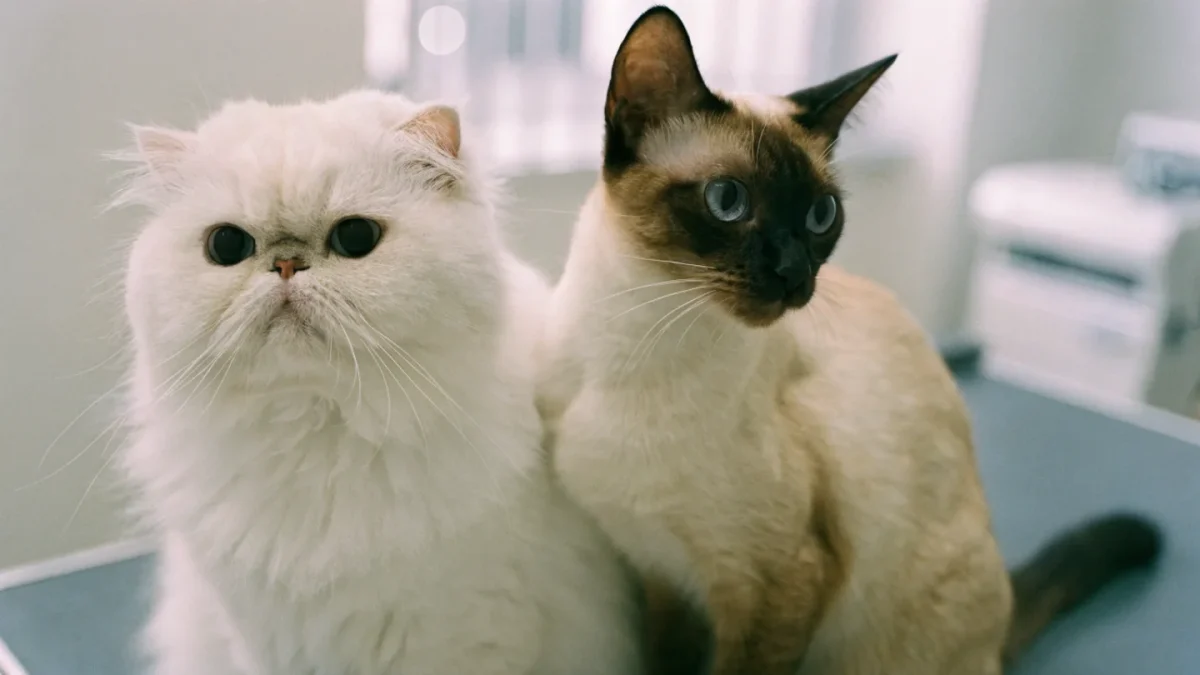
When a breeder brought me a litter of six Scottish Fold kittens for their eight-week checkup, I found myself doing something I've done too many times: examining perfectly cute, apparently healthy kittens while knowing that every single one of them carried a gene that would eventually cause them pain. The gene that folds their ears — the trait people find so charming — is the same gene that causes osteochondrodysplasia, a cartilage disorder that affects joints throughout the body.
Purebred cats carry concentrated genetic health risks shaped by decades of selective breeding. Persians face polycystic kidney disease and respiratory problems, Maine Coons are predisposed to hypertrophic cardiomyopathy, Siamese cats have higher rates of certain cancers and liver disease, and Scottish Folds develop painful cartilage disorders. Genetic testing and annual screening can catch many conditions early, but the risks can't be eliminated entirely.
Cat breeding gets less public scrutiny than dog breeding, which means fewer owners go in informed. That's something I'm trying to change, one conversation at a time.
Why Purebred Cats Face Higher Risks
The principle is identical to dogs: selective breeding narrows the gene pool. To consistently produce cats with specific appearance and personality traits, breeders select from a limited group of related animals. Along with the desired traits come concentrated copies of disease-causing gene variants.
Cat breeding registries are generally less strict about health testing requirements than their canine counterparts, though this is slowly improving. Some breeds have very small founder populations — the entire Burmese breed in certain regions descends from a handful of cats imported decades ago — which amplifies genetic risks even further.
Mixed-breed cats, which represent the vast majority of owned cats, have much broader genetic diversity. They're not immune to inherited conditions, but their risk profile is diluted.
Persian Cats: The Flat-Face Problem
Persians are the feline equivalent of brachycephalic dogs. Modern show-line Persians have faces so flat that the nose sits between or above the eyes. This extreme conformation creates:
Breathing problems — narrowed nasal passages, chronic upper respiratory noise, and difficulty breathing during exertion or heat. Some severely affected Persians are mouth-breathers at rest.
Tear duct overflow — the shortened skull distorts the tear drainage system, causing chronic tearing, staining, and skin irritation around the eyes. Owners wipe their Persian's face daily, sometimes multiple times a day.
Dental malocclusion — the compressed jaw misaligns the teeth, contributing to eating difficulties and accelerated periodontal disease.
Then there's PKD — polycystic kidney disease. This autosomal dominant condition causes fluid-filled cysts to form in the kidneys, gradually destroying functional tissue. Historically, roughly 38% of Persians carried the gene. DNA testing now allows breeders to screen and remove affected cats from breeding programs, and responsible breeders have driven that number down significantly. But backyard breeders and less rigorous programs still produce affected kittens.
Persian cat health issues extend beyond the kidneys and face. Persians also carry elevated rates of hypertrophic cardiomyopathy, ringworm susceptibility (their dense coats trap fungal spores), and progressive retinal atrophy.
A client's Persian once came in with what appeared to be a routine eye infection. The eye culture grew fungal organisms — ringworm had set up in the tear overflow. Treating it meant six weeks of antifungal medication, daily face cleaning, and washing every piece of bedding in the house. The cat, naturally, did not cooperate with the face cleaning.
Maine Coons: Big Hearts, Vulnerable Hearts
Maine Coons are one of my favorite breeds to treat. Massive, gentle, dog-like personalities. But they carry the highest rate of hypertrophic cardiomyopathy (HCM) among cat breeds — the most common heart disease in cats overall, but disproportionately concentrated in this breed.
HCM causes the heart muscle to thicken, reducing the chamber volume and impairing the heart's ability to fill and pump efficiently. Early stages produce no symptoms at all. The first sign might be a heart murmur detected on routine exam — or in some devastating cases, the first sign is sudden death from a heart rhythm disturbance.
A DNA test exists for one of the known HCM-causing mutations in Maine Coons (the MyBPC3 gene). Testing positive means the cat carries the mutation, but it doesn't guarantee the disease will develop — penetrance is variable. And testing negative for this specific mutation doesn't rule out HCM caused by other genes.
I recommend echocardiographic screening annually for Maine Coon health issues starting at age one. It's not cheap. But catching HCM before it progresses to heart failure gives us medication options that can extend both lifespan and quality of life.
Maine Coons also face hip dysplasia at higher rates than other cat breeds (unusual — cats generally aren't hip dysplasia candidates), and spinal muscular atrophy — a genetic condition that causes muscle wasting and weakness in the hindquarters.
Siamese and Oriental Breeds: Cancer and More
The Siamese family — including Orientals, Balinese, and Javanese — carries predispositions that often surprise owners. These are athletic, vocal, seemingly robust cats. But their genetics tell a different story.
Intestinal adenocarcinoma appears at significantly elevated rates in Siamese compared to other breeds. Mammary tumors are also more common, particularly in unspayed females. And systemic amyloidosis — a condition where abnormal protein deposits accumulate in organs, especially the liver — occurs in Siamese and Oriental lines more than in any other breed.
Amyloidosis is insidious. A cat can appear healthy for years while protein deposits gradually compromise liver function. By the time clinical signs appear — weight loss, jaundice, lethargy — the damage is often advanced. There's no cure; management focuses on supporting organ function and slowing progression.
On a lighter note (if anything in this article qualifies), Siamese cats are also more prone to psychogenic alopecia — essentially, stress-induced overgrooming. Whether this is truly a "health problem" or a personality trait taken to an extreme is a debate I have with colleagues regularly. I lean toward treating the underlying anxiety rather than just the bald patches.
Siamese cats also have higher rates of asthma, convergent strabismus (crossed eyes — largely cosmetic in most cats), and certain congenital heart defects.
Scottish Folds: An Ethical Question
I'll state my position clearly: I believe breeding Scottish Folds raises ethical concerns that the cat world hasn't adequately addressed.
The fold gene (Fd) that creates those signature folded ears is the same gene that causes osteochondrodysplasia — abnormal cartilage and bone development throughout the body. Homozygous cats (inheriting the fold gene from both parents) develop severe, progressive arthritis. Heterozygous cats (fold gene from one parent) also develop the condition, just more slowly and with variable severity.
Some Folds live relatively comfortable lives with mild joint stiffness. Others develop painful, debilitating arthritis in their twenties or thirties of months of age. There's no way to predict which outcome a given kitten will have.
Several countries and veterinary organizations have called for bans on Scottish Fold breeding. The breed-specific health risks in dogs parallel here is striking — when a defining breed trait is inseparable from a disease-causing gene, the breeding ethics become complicated.
If you already own a Scottish Fold, joint support matters. Maintain lean body weight, provide accessible resting spots that don't require jumping, and discuss pain management with your vet if you notice stiffness, reluctance to play, or changes in gait.
Bengal, Ragdoll, and Abyssinian Concerns
Bengals carry higher rates of HCM (similar to Maine Coons) and progressive retinal atrophy (PRA), which causes progressive blindness. A DNA test for the Bengal PRA mutation is available and should be standard in breeding programs.
Ragdolls are prone to HCM (there's a breed-specific mutation test for the MyBPC3 gene here too), bladder stones, and a rare condition called feline hyperesthesia syndrome — episodes of skin rippling, frantic grooming, and apparent pain along the back.
Abyssinians and Somalis face familial renal amyloidosis (different from the Siamese/Oriental form), progressive retinal atrophy, pyruvate kinase deficiency (a blood disorder causing anemia), and dental issues including tooth resorption.
Each of these breeds has specific screening tests and monitoring protocols. The availability and cost of testing varies by region.
What Owners and Breeders Can Do
For breeders: test everything that's testable. PKD in Persians, HCM mutations in Maine Coons and Ragdolls, PRA in Bengals and Abyssinians. Remove affected animals from breeding programs. Prioritize health over appearance — a Persian with a slightly longer muzzle that can breathe comfortably is a better cat than a flat-faced show champion that can't.
For owners: know your breed's risk profile before you buy. Ask breeders for test results on the parents — specific tests, not vague assurances. Budget for screening: echocardiograms, kidney ultrasounds, blood work. These aren't luxury add-ons; they're the cost of responsible purebred ownership.
And for everyone: mixed-breed cats deserve the same attentive care. They won't have the concentrated breed-specific risks, but they can still develop any of these conditions. Routine vet visits, dental care, weight management, and paying attention when something seems off — that applies regardless of pedigree.
Frequently Asked Questions
Are mixed breed cats healthier than purebreds?
On average, mixed breed cats have lower rates of the specific conditions concentrated in purebred lines — PKD, breed-associated HCM mutations, osteochondrodysplasia. But they're not immune to genetic disease. HCM occurs in mixed breed cats too, just at lower rates. The broader gene pool dilutes risk rather than eliminating it.
Should I get genetic testing for my purebred cat?
If a test exists for your breed's known mutations, yes. For Maine Coons and Ragdolls, the HCM gene test. For Persians, the PKD gene test. For Bengals and Abyssinians, PRA testing. These are typically one-time tests — cheek swab sent to a laboratory. They don't replace ongoing screening (a negative genetic test doesn't guarantee the absence of the disease), but they're a valuable piece of the puzzle.
My Scottish Fold seems happy and active. Should I still worry about joint problems?
Yes — monitor, even if your cat seems fine. Osteochondrodysplasia can be subclinical for years before becoming apparent. Watch for subtle signs: reluctance to jump as high as they used to, stiffness after sleeping, decreased playfulness. Radiographs can detect joint changes before clinical signs appear. Annual vet checks with attention to mobility are a good practice.
How can I find a cat breeder who prioritizes health?
Look for breeders who voluntarily share health test results (not just claim they test — actual documentation), who can discuss their breed's health risks honestly, who don't breed cats with known health conditions, and who offer health guarantees. Breeders who get defensive when asked about genetic testing are telling you something. The ones who welcome the questions are the ones you want to work with.