
Here's a number that reframes the entire conversation about bulldog exercise needs: a 2020 study published in Scientific Reports found that brachycephalic breeds like the bulldog face roughly fourteen times the risk of heat-related illness compared to breeds like the Labrador Retriever. That single statistic explains why exercising a bulldog is less about how much and more about how carefully.
Bulldogs need physical activity. The myth that they're purely sedentary dogs does them a disservice — a bulldog with zero exercise gains weight, loses muscle tone, and develops joint problems faster. But the type, timing, and duration of that activity matter more for this breed than for almost any other.
The Baseline Routine
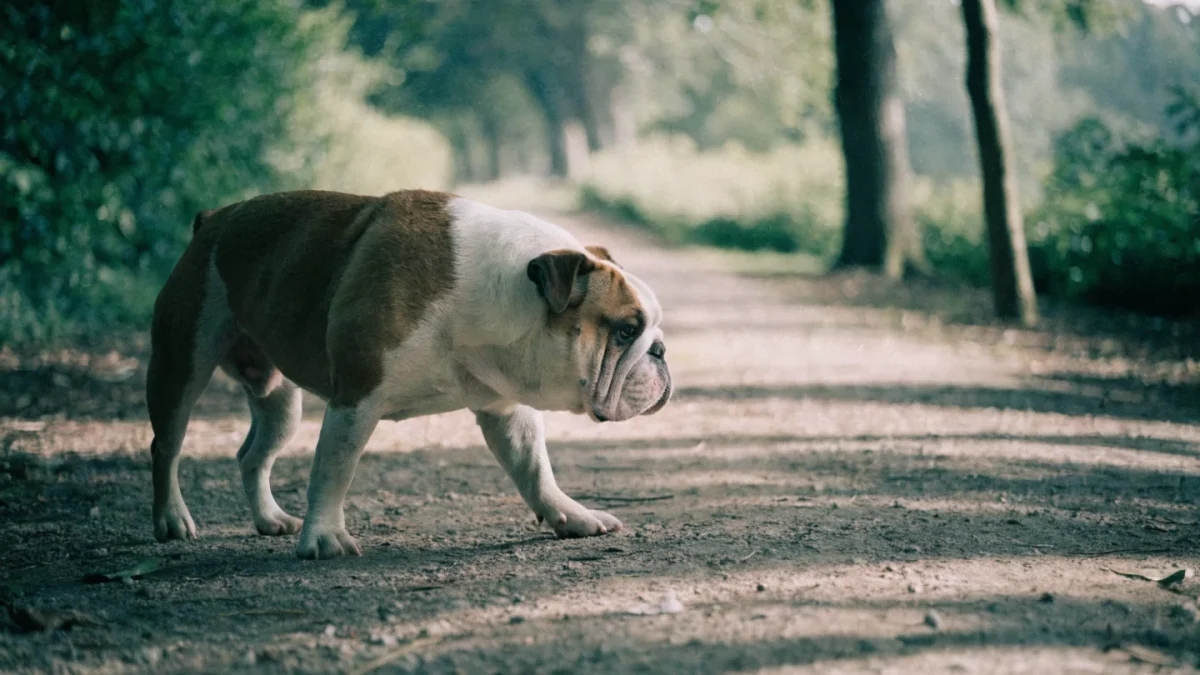
For a healthy adult bulldog at proper weight, two walks per day of fifteen to twenty minutes each provides adequate physical and mental stimulation. That's the baseline. Some individuals tolerate slightly more; others — particularly dogs with more severe brachycephalic airway compromise — need less.
Puppies have more energy but less heat tolerance, which seems contradictory until you understand the mechanics. A puppy's higher metabolic rate generates more internal heat, but its smaller body mass and still-developing respiratory system can't dissipate that heat efficiently. Shorter, more frequent sessions — three or four ten-minute outings rather than two longer walks — work better for bulldogs under twelve months.
Senior bulldogs often self-regulate naturally, slowing their pace and shortening their own walks. Follow their lead. A bulldog that stops and sits during a walk is communicating something. Respect it.
The Heat Management Protocol
This is the section that separates responsible bulldog ownership from casual dog ownership. Bulldogs cool themselves primarily through panting, and their restricted airways make panting inefficient. When ambient temperature rises, the dog's ability to regulate its core temperature drops — fast.
Temperature threshold. When the air temperature exceeds roughly 25 degrees Celsius (77 degrees Fahrenheit), shift outdoor exercise to early morning or late evening. Above 30 degrees Celsius, limit outdoor time to bathroom breaks only.
Humidity compounds the problem. High humidity reduces the evaporative cooling effect of panting. A 24-degree day with 80% humidity can be more dangerous for a bulldog than a 28-degree day with low humidity. Watch both numbers.
Warning signs of overheating. Excessive, labored panting. Thick ropy drool. A glazed or unfocused expression. Stumbling or reluctance to move. Bright red or blue-tinged gums. Any of these signals means stop immediately, move to shade or air conditioning, apply lukewarm (not ice-cold) water to the belly and paw pads, and contact a veterinarian.
Carry water. Every walk, every time. A portable bowl and fresh water are non-negotiable equipment for bulldog walks in any weather above mild.
Indoor Alternatives
When outdoor conditions are unfavorable — which, depending on your climate, may be several months of the year — indoor activity fills the gap. Bulldogs respond well to:
Puzzle feeders and scent work. Scatter a portion of the dog's daily kibble across a room and let it search. This engages the brain without taxing the respiratory system. Puzzle toys that require manipulation to release food provide similar low-impact stimulation.
Short play sessions. Tug games, gentle fetch in a hallway, or even just rolling a ball across a hard floor keeps a bulldog moving without the sustained effort that triggers overheating. Keep sessions to five or ten minutes.
Training as exercise. Short obedience or trick-training sessions — three to five minutes of focused work — provide mental exercise that tires a bulldog more effectively than physical exertion. And bulldogs respond well to training that involves food motivation, which makes it mutually enjoyable.
For context on how exercise fits into the breed's full care requirements, the bulldog complete breed guide covers health, grooming, and daily maintenance alongside activity needs.
Weight and Exercise Are Connected
A bulldog carrying extra weight needs more exercise to stay healthy but can tolerate less exercise before overheating. This is the central paradox of bulldog fitness. The solution isn't to push through longer walks — it's to address weight through diet first, then gradually increase activity as the dog sheds excess mass.
An adult bulldog at ideal weight shows a visible waist when viewed from above. You should be able to feel ribs without pressing hard. If the ribs are buried under a layer of padding, reduce portions before increasing walks.
What Swimming Is Not
Bulldogs cannot swim. Their front-heavy build and short legs create a weight distribution that pulls their anterior end underwater. Some owners attempt life vests, which can allow brief supervised water play, but the pool should never be treated as an exercise option. It's a hazard.
The Right Owner Mindset
Managing bulldog exercise needs requires a mindset shift from most other breeds. You're not trying to tire this dog out — you're trying to keep it moderately active within a narrow safe window. If you're considering whether this breed fits your life, the honest ownership assessment covers the full picture of what daily bulldog care demands.
The bulldog rewards consistent, careful exercise habits with better joint health, more manageable weight, and — somewhat counterintuitively — more energy and engagement. A well-exercised bulldog within its limits is a happier, more interactive companion than one that never leaves the couch. Owners who find this approach useful and are curious how the same brachycephalic constraints apply to a smaller relative will find the French Bulldog exercise needs guide directly comparable in method and philosophy.