

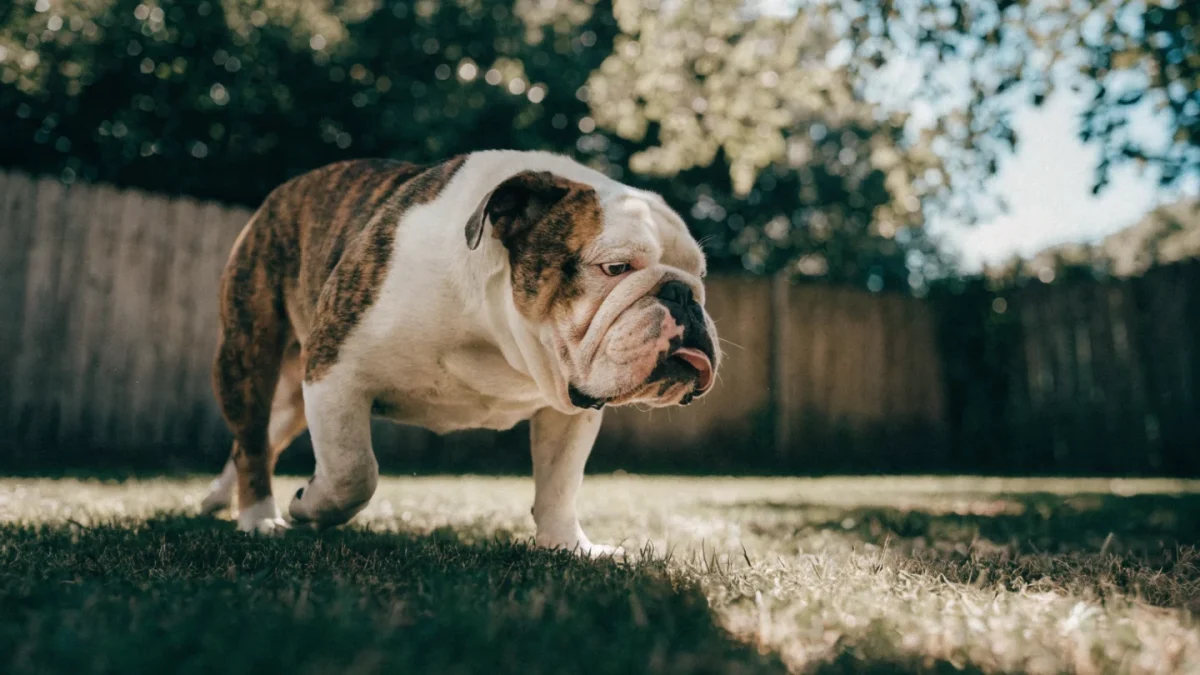
The English Bulldog has lost so much genetic diversity that researchers have concluded — in print, in a peer-reviewed journal — that the breed cannot fix its health problems through conventional selective breeding alone. Not "faces some challenges." Not "may benefit from expanded gene pool consideration." Cannot fix them. The 2016 UC Davis study analyzed 102 registered English Bulldogs and found the breed's effective population size so constrained that the variation needed to select meaningfully away from its worst health expressions barely exists anymore.
That's not a fringe opinion from an animal rights group. It's the conclusion of population geneticists looking at the actual data. The bulldog's gene pool closed too early, popular sires propagated their problems at scale, and decades of selecting for increasingly extreme physical traits compressed whatever diversity remained. The result is a breed where brachycephaly, hip dysplasia, skin fold infections, and airway obstruction aren't aberrations — they're statistical expectations.
This overview covers what's happening at the genetic level, which conditions are heritable, and what testing protocols responsible breeders should follow.
The Genetics of Brachycephaly
Brachycephaly — the shortened skull that defines the bulldog's flat face — is a polygenic trait, meaning multiple genes contribute to its expression. The primary genetic mechanisms involve mutations that affect bone growth in the skull, specifically shortening the maxilla (upper jaw) while leaving the soft tissue structures (palate, tongue, pharyngeal tissue) closer to their original size.
This mismatch is the core problem. The skull gets shorter, but the soft tissue doesn't shrink proportionally. The result: an elongated soft palate that partially blocks the airway, stenotic (narrowed) nares, a hypoplastic (underdeveloped) trachea, and everted laryngeal saccules — the constellation of abnormalities known as Brachycephalic Obstructive Airway Syndrome, or BOAS.
The degree of brachycephaly varies between individuals. Some bulldogs have relatively more open nares and less extreme skull shortening; others are profoundly flat-faced with severely compromised airways. This variation is partly genetic — puppies from parents with better respiratory function tend to breathe more easily — and partly influenced by individual anatomical variation even within the same litter.
The important point for breeding: brachycephaly's severity is heritable. Selecting parents with less extreme skull proportions and better BOAS grades produces, on average, puppies with less severe airway compromise. This is the single most impactful genetic selection a breeder can make.
Heritable Health Conditions Beyond the Airway
Brachycephaly gets the most attention, but the bulldog's genetic health profile extends well beyond its face.
Hip dysplasia. The Orthopedic Foundation for Animals reports that over 72% of evaluated bulldogs show dysplasia — the highest rate among commonly screened breeds. The condition is polygenic and influenced by environment (weight, exercise, nutrition), but the genetic component is significant. Breeding dogs with better hip scores incrementally improves outcomes in offspring.
Patellar luxation. Kneecap dislocation is common in the breed and heritable. The combination of bowed legs, heavy body mass, and lax joint structures creates an environment where the patella tracks improperly. Grading both parents before breeding reduces incidence.
Hyperuricosuria (HUU). A mutation in the SLC2A9 gene causes elevated uric acid levels in urine, predisposing affected dogs to urate bladder and kidney stones. The mutation is autosomal recessive — a DNA test can identify carriers, affected dogs, and clear individuals. There's no excuse for not testing, as the DNA test is inexpensive and widely available.
Cystinuria. Another inherited stone-forming condition involving amino acid transport defects. A DNA test for Cystinuria Type 3 in Bulldogs is commercially available through laboratories including PennGen at the University of Pennsylvania, though it covers only one of the known genetic types — two other forms still lack a definitive test.
Degenerative myelopathy. Progressive spinal cord disease caused by a mutation in the SOD1 gene. DNA testing identifies at-risk dogs. While not as prevalent in bulldogs as in some other breeds, it appears in the population and is testable.
Cardiac conditions. Pulmonic stenosis (narrowing of the pulmonary valve) occurs at elevated rates in bulldogs. A cardiac screening by a veterinary cardiologist assesses risk, though the genetic inheritance pattern for cardiac conditions in the breed is not fully mapped.
The Gene Pool Problem
Closed studbooks and popular sire effects have compressed the bulldog's genetic diversity over generations. When a small number of males disproportionately contribute to the breeding population — because they win shows, because their puppies sell well — the effective population size shrinks even if the total number of registered bulldogs grows.
Reduced genetic diversity limits the ability to breed away from health problems without introducing new issues. When the gene pool is narrow, fixing one problem through selection can inadvertently increase the prevalence of another. It's a constraint that doesn't apply to breeds with broader genetic foundations. Breeders in related brachycephalic breeds face compounding versions of this problem when they pursue color traits — the French Bulldog color genetics and rare-color health risks article documents how dilution gene selection in that breed layered additional health consequences onto an already compromised foundation.
Some breed conservation programs have explored outcrossing — introducing genetic material from related but distinct breeds — to widen the bulldog's genetic base. The Leavitt Bulldog (Olde English Bulldogge) program, begun in the 1970s using crosses with American Bulldogs and Bullmastiffs, is one such effort, and the UC Davis study itself suggested the Olde English Bulldogge as a "viable candidate" outcross breed. These programs remain controversial within the traditional breed community, and long-term results are still being evaluated.
For context on how the bulldog's physical traits and health profile connect in practice, the bulldog complete breed guide covers the clinical picture comprehensively.
What Responsible Breeders Should Test
A responsible bulldog breeding program incorporates multiple screening layers:
Mandatory DNA tests. HUU (SLC2A9 mutation), degenerative myelopathy (SOD1), cystinuria where tests are available. These are single-gene tests with clear results: clear, carrier, or affected. At minimum, no two carriers should be bred together.
BOAS functional grading. An exercise tolerance test performed by a trained veterinarian, grading the dog's breathing from unaffected to severely affected. Both parents should be graded, and dogs with moderate or severe BOAS should not be bred.
Hip and patella evaluation. Radiographic hip scoring through a recognized scheme, plus patellar luxation grading by a veterinary orthopedist. Breeding from the better end of the available range.
Cardiac auscultation. Examination by a veterinary cardiologist to screen for structural heart defects.
Eye examination. Veterinary ophthalmologist screening for cherry eye, entropion, ectropion, and other heritable ocular conditions.
The compound effect of these screenings, applied consistently across generations, produces measurable improvement. No single test eliminates a condition, but selective pressure based on documented results shifts the breed's health trajectory incrementally forward.
Why Buyers Should Care About Genetics
You don't need a genetics degree to benefit from this information. The practical application is straightforward: when evaluating a litter, ask what tests the parents have undergone and request the documentation. The misconceptions people hold about the breed include the belief that health problems are inevitable and unimprovable — but genetics tells us they're partly a product of selection, and better selection produces better outcomes.
A puppy from health-tested parents won't be guaranteed a problem-free life. But the probabilities shift meaningfully. In a breed where the baseline health burden is already high, every percentage point of improvement in genetic risk translates to fewer veterinary interventions, less suffering, and a longer, more comfortable life for the individual dog.
The Right Owner for This Breed
Understanding bulldog genetics doesn't require expertise — it requires willingness to ask questions and insist on evidence. The buyer who demands documented health test results, understands why those tests matter, and accepts the higher upfront cost of a well-bred puppy is investing in outcomes rather than hoping for luck. For a breed with the bulldog's genetic burden, that investment is the most consequential decision a prospective owner can make.