

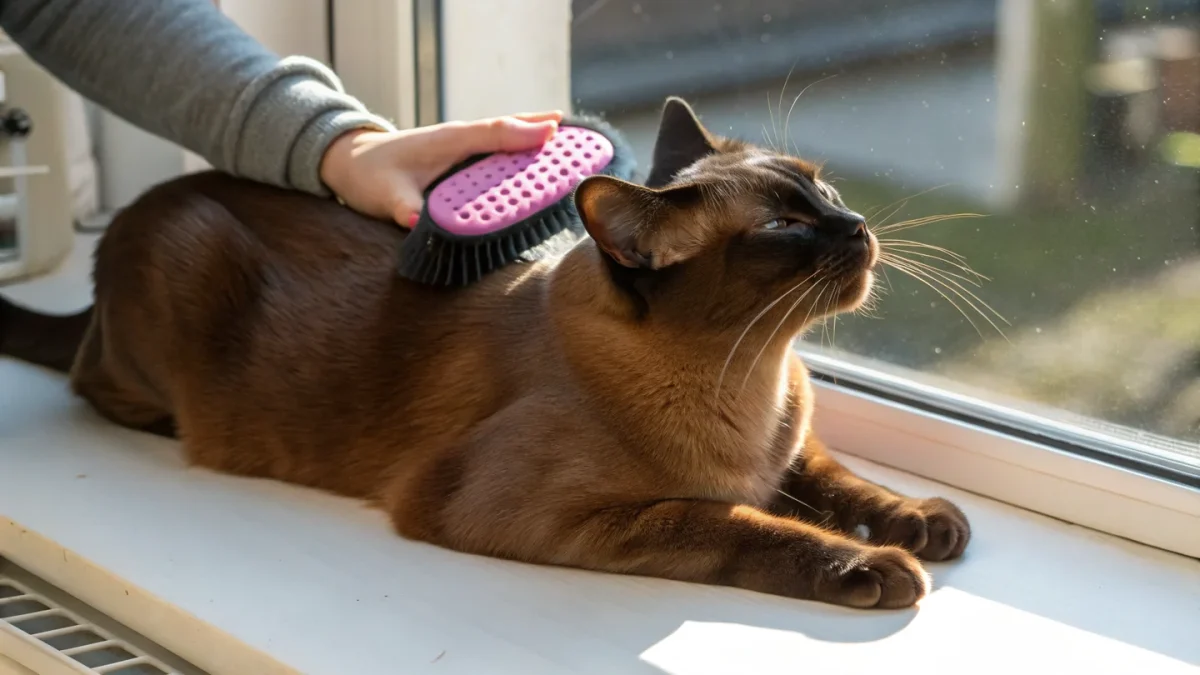
The Burmese coat is one of the genuine low-maintenance coats in the pedigree cat world, and this is worth saying directly: if grooming convenience was part of your reason for considering the Burmese, that calculation is accurate. The short, single-layered satin coat does not mat. It sheds moderately. It maintains itself well between human interventions.
What the Burmese requires in the grooming department takes less time per week than almost any other aspect of owning one. The social and attention requirements — discussed in the Burmese cat breed guide — are the real commitment. The coat is the easy part.
The Coat Structure
The Burmese coat is short, lying flat and very close to the body. There is no significant undercoat — this is a single-layered coat with a naturally lustrous quality often compared to satin or fine silk. Run your hand along a well-maintained Burmese coat and it responds like a smooth surface rather than a textile.
This structure is why the coat does not mat: without an undercoat to tangle, and with individual hairs lying flat rather than curling or fluffing, the conditions for mat formation simply aren't present. The coat also stays relatively clean under the Burmese's own intensive self-grooming habits.
Weekly Maintenance
A weekly session is all the Burmese coat requires for most of the year.
Options for weekly grooming:
- Soft rubber brush or grooming mitt: Very effective for the Burmese coat. The rubber nubs capture loose hair and the gentle contact is typically well-tolerated.
- Soft bristle brush: Works well for a finishing pass, distributing skin oils along the coat and adding the natural shine.
- Chamois cloth: A slightly damp chamois drawn along the coat removes loose hair and produces an impressive polish on the satin coat. Many Burmese owners finish their grooming sessions this way.
The entire session should take 10 minutes or less for most cats. The Burmese typically enjoys grooming sessions — the physical contact is exactly the kind of interaction this breed seeks, and many cats will actively lean into a grooming mitt.
Shedding Management
The Burmese sheds moderately year-round, with a somewhat heavier period in spring. The short individual hairs are fine enough that they can work into upholstery and fabric. Regular weekly brushing removes most of the loose coat before it lands on your furniture.
During heavier shedding periods, increasing to twice-weekly sessions manages the increase without dramatic effort.
Lint rollers and upholstery brushes remain useful regardless of grooming frequency — the Burmese's preference for your lap and your bed means hair sharing is inevitable.
Eye and Ear Care
The Burmese's large, prominent eyes may produce visible discharge at the inner corners — a normal cat occurrence. A gentle daily wipe with a soft damp cloth removes this before it accumulates. Persistent discharge, discharge of unusual color or consistency, or any signs of eye irritation warrant veterinary assessment.
Ear cleaning as needed: check weekly for wax accumulation and clean with an appropriate cleaner if buildup is visible.
Dental Hygiene
Worth emphasizing again because it's genuinely important and consistently underperformed: regular tooth brushing significantly reduces the risk of periodontal disease, which affects a high proportion of domestic cats. A small cat-appropriate brush, cat-specific enzymatic toothpaste, and a routine established from kittenhood makes this manageable. Starting the routine with an adult cat takes more patience but is achievable with gradual desensitization.
What You Won't Need
No deshedding tools, no mat-removal sprays, no detangling conditioners, no professional grooming appointments under normal circumstances. The Burmese is genuinely the cat for someone who wants a low-grooming-overhead companion. The time you save on coat maintenance can be redirected to the interactive play and social engagement the Burmese actually needs. Whether the overall commitment suits your lifestyle is a different question — is a Burmese right for you? addresses that honestly.