

When a pet owner tells me their dog or cat is anxious, the next question is almost always "what can I buy to fix it?" I get it. The desire for a quick solution when your pet is suffering makes total sense. And there are products that help — genuinely help, with research to back them up. But there are also a lot of products that don't do much beyond lightening your wallet.
I've spent years sorting through what the evidence actually shows versus what marketing claims suggest, and the picture is more nuanced than any single product label will tell you.
Start With the Environment, Not the Product
This isn't the exciting answer, but it's the most important one. No supplement, pheromone, or pressure wrap will overcome an environment that's generating the anxiety in the first place.
Before I recommend any product, I ask clients to evaluate: Does the pet have a safe retreat space where no one bothers them? Is the daily routine reasonably predictable? In multi-pet households, does each animal have separate access to food, water, litter boxes, and resting spots? Is there adequate physical and mental stimulation?
A border collie mix I treated named Rosie had been through three different calming supplements with no improvement. When I visited the home (something I rarely get to do), the issue was immediately apparent — Rosie's crate was in the laundry room next to the washer and dryer. Every spin cycle was a noise event for a noise-sensitive dog. We moved the crate to a quiet bedroom corner, added a white noise machine, and Rosie's baseline anxiety dropped noticeably within a week. No supplements required.
Fix the foundation first. Then layer in products where they add value.
Pheromone Products
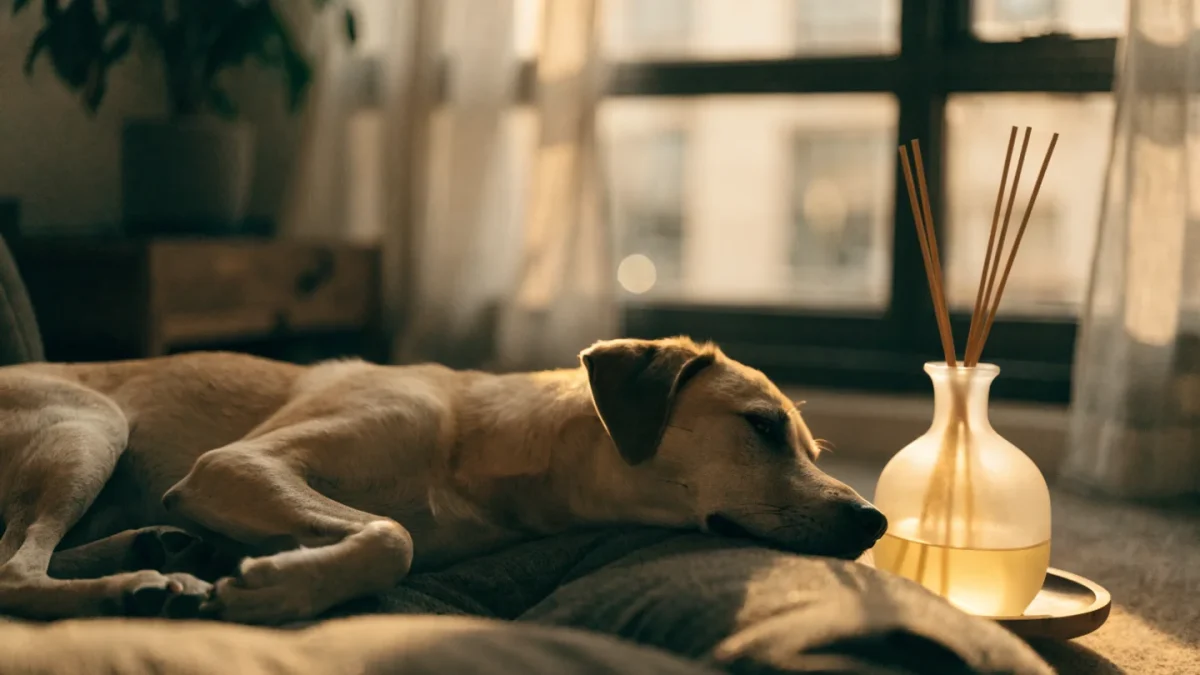
Synthetic pheromones are probably the most widely available calming products, and the evidence is better for some formulations than others.
For cats: synthetic feline facial pheromone (the kind that mimics the scent cats deposit when they rub their cheek on furniture) has the strongest evidence base. Multiple controlled studies show reductions in feline stress signals — particularly spraying, scratching, and hiding — in situations like multi-cat households, moves, and veterinary visits. It's not dramatic, but it's consistent. I recommend diffusers placed in the rooms where the cat spends the most time.
For dogs: the evidence is more mixed. Dog-appeasing pheromone (which mimics the pheromone nursing mothers produce) has shown some benefit in studies for puppies and for dogs with noise phobias, but the effect sizes are modest. I've had owners report clear improvement and others who saw nothing.
My take: pheromone products are low-risk and reasonably priced for a month-long trial. They're worth trying as part of a broader approach. They're not sufficient as standalone treatment for significant anxiety types in dogs.
Pressure Wraps and Anxiety Garments
The concept is simple: gentle, sustained pressure on the torso calms the nervous system. It's the same principle behind weighted blankets in humans and swaddling in infants.
I see the best results with pressure wraps during specific, predictable anxiety events — thunderstorms, fireworks, car rides. For dogs who pace and pant during storms, a well-fitted wrap sometimes produces a visible shift within minutes: slower breathing, less pacing, willingness to lie down.
That said, not every dog responds. And the research, while promising, includes studies with small sample sizes and variable methodologies. A 2014 study found that about 80% of owners reported improvement with a pressure garment for thunderstorm anxiety, but studies relying on owner reports always carry some placebo effect.
Worth trying? Yes. Guaranteed to work? No. I tell owners to test it during a mild storm or a practice session with recorded sounds before relying on it for a major fireworks event.
For cats, pressure wraps are harder to apply (good luck getting a cooperative fitting on most cats) and the evidence is thinner.
Supplements
This is where it gets murky, because the supplement industry for pets has minimal regulatory oversight compared to pharmaceuticals.
L-theanine (an amino acid from green tea) has the most research support among common calming supplements. Several studies show modest anxiolytic effects in dogs at appropriate doses, with a good safety profile. I use it as a low-risk option for mild anxiety, though the effect isn't dramatic enough for severe cases.
Alpha-casozepine (derived from milk protein) has shown calming effects in both dogs and cats in a handful of controlled studies. It appears to work through GABA receptor modulation. Again, modest effect — helpful for mild to moderate anxiety, not a replacement for medication in severe cases.
Melatonin gets recommended frequently for noise phobia. The evidence in pets is limited — mostly extrapolated from human use — but it has a good safety profile and I've seen anecdotal success. Dosing varies significantly by body weight, so consult your vet rather than guessing.
CBD products: I go back and forth on these. The research in dogs is still early. A few studies show promise for osteoarthritis pain, and there's preliminary data on anxiety reduction, but we don't yet have the large-scale clinical trials that would let me recommend it confidently. Product quality is wildly inconsistent across manufacturers, and dosing guidelines are still being established. If you're interested, work with a veterinarian who's familiar with the current evidence.
What I'm skeptical about: valerian root, chamomile, passionflower, and most herbal blends marketed for pet anxiety. Individual studies are few, methodology is weak, and the active compound concentrations in commercial products vary enormously.
Music and Sound Therapy
There's actually decent research here, which surprised me when I first looked into it. Studies on shelter dogs have shown that classical music and specifically designed "psychoacoustic" music can reduce stress behaviors (barking, pacing) and increase resting behavior. The effects are moderate and seem to diminish with continuous exposure (the dogs habituate), so intermittent use during high-stress periods works better than leaving it on all day.
For cats, the data is thinner, but a 2019 study published in the Journal of Feline Medicine and Surgery (Hampton et al.) found that species-specific music designed around purring frequencies and suckling sounds significantly reduced cat stress scores and handling scores during veterinary exams compared to silence and classical human music.
White noise machines serve a different purpose — they mask environmental sounds that trigger anxiety rather than providing direct calming stimulation. For noise-phobic dogs, this can be surprisingly effective.
When Products Aren't Enough
I want to be honest about the limits of over-the-counter calming products. If your pet has moderate to severe anxiety — destroying property, harming themselves, unable to eat or function normally — supplements and pheromones alone aren't going to resolve it.
Prescription medication, prescribed and monitored by a veterinarian, combined with structured behavioral modification is the evidence-based standard for significant anxiety disorders. It's not a failure to reach that point. It's appropriate care for a medical condition.
I think of calming products as the middle tier: above environmental management (which everyone should do), below understanding pet anxiety at the pharmaceutical level. For mild anxiety, they might be enough. For moderate cases, they're useful adjuncts. For severe cases, they're not the answer.
FAQ
Can I use multiple calming products at the same time?
Yes, and layering is often more effective than any single product. A pheromone diffuser plus a calming supplement plus a pressure wrap during storms is a reasonable combination. Just avoid giving multiple supplements without veterinary guidance, as some can interact with prescription medications.
How long should I trial a calming product before deciding it doesn't work?
Give most products two to four weeks of consistent use. Pheromone diffusers need about a week to saturate a room. Supplements like L-theanine and alpha-casozepine work best with daily dosing over several weeks rather than one-off use. Pressure wraps you'll know about within one or two exposures to the triggering event.
Are calming products safe for puppies and kittens?
Most pheromone products are safe for animals of all ages. Supplements vary — some have been tested only in adult animals, and dosing for small or growing animals is less established. Prescription medications have specific age and weight guidelines. Always check with your vet before giving any calming product to a very young animal.