

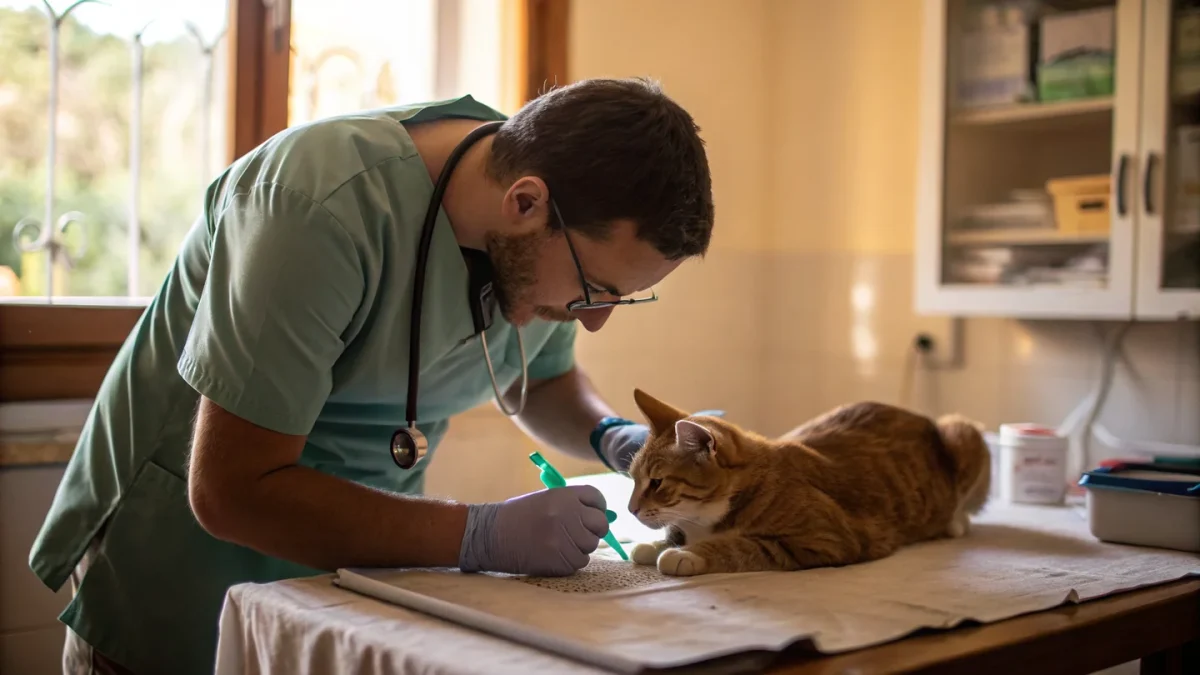
Most cat owners never think about their cat's blood type, and for most of a cat's life, this is fine. But in two situations — a blood transfusion and a breeding decision — blood type becomes critically important. The genetics of feline blood type are interesting in their own right, and the breed distributions reveal something about the genetic history of specific cat populations.
For broader context on cat genetics, the cat breed categories guide and cat genetics overview are useful background.
The Feline Blood Type System
Cats have three blood types determined by the AB blood group system:
Type A: The most common type in most domestic cat populations and most breeds. In randomly bred domestic cats, Type A typically represents somewhere in the 90-96% range depending on region — Canadian studies have found it as high as 94-96%, while a Central Italian population came in closer to 90%. "Around 95% or more" is a reasonable global approximation, but it does shift by geography.
Type B: Less common overall, but significantly elevated in certain breeds. Prevalence in breeds like British Shorthair, Persian, Exotic Shorthair, and Devon Rex is substantially higher than in the random-bred population. The largest dataset to date — a 2022 genetic epidemiology study spanning more than 11,000 cats — put Type B at 20.3% in British Shorthairs and 30.3% in Devon Rex. Older, smaller regional surveys had reported wilder, less consistent ranges; this is the current best estimate.
Type AB: Very rare. Found in a small percentage of cats across breeds — generally under 1% in most surveyed populations, though a handful of regional studies (Central Italy, the Canary Islands, Portugal) have found it running as high as 3-6%.
The blood type is inherited through a relatively simple genetic system: Type A is dominant over Type B. A cat with Type B must have inherited the Type B allele from both parents (homozygous). Type AB appears to involve a separate allele at the same locus — though the molecular reality is a bit messier than the classic three-allele textbook picture. The gene in question is CMAH, which converts one sialic acid form into another on the red blood cell surface; Type B cats carry two loss-of-function CMAH mutations, and Type AB cats turn out to carry specific combinations of CMAH haplotypes at that same locus rather than a cleanly separate third allele. Same neighborhood, more complicated wiring than the simplified model suggests.
Why Blood Type B Is More Common in Certain Breeds
The elevated frequency of Type B in some pedigree breeds reflects founder effects — the limited number of cats that founded each breed. If the founding cats included a meaningful proportion of Type B individuals, that frequency persists through subsequent generations, sometimes at higher levels than in the wider random-bred population.
British Shorthairs, Persians, and related breeds appear to have had Type B individuals in their founding populations at significant rates, and the closed gene pool of pedigree breeding maintains this.
Neonatal Isoerythrolysis: The Critical Breeding Issue
This is where blood type moves from interesting to urgent. When a Type B queen (female cat) mates with a Type A tom, some or all kittens may be Type A. Type B cats naturally produce anti-Type A antibodies. In the first 24-48 hours of life, neonates absorb antibodies from their mother's colostrum (first milk). A Type A kitten nursing from a Type B mother absorbs the anti-Type A antibodies — antibodies that then attack and destroy the kitten's red blood cells.
This condition is called neonatal isoerythrolysis (NI). Affected kittens may appear healthy at birth and then deteriorate rapidly, showing weakness, hemolytic anemia, and often death within the first days of life. Kittens that survive may have persistent health problems.
NI is preventable with blood typing. Responsible breeders in breeds with significant Type B prevalence type all breeding cats. A Type B queen should not be mated with a Type A tom if the goal is producing healthy Type A kittens — or if such a mating occurs, kittens must be removed from the mother for the first 24-48 hours and fed alternative nutrition, then returned after the colostrum window closes.
Blood Transfusion Considerations
Cats should be blood-typed before any transfusion. Mixing blood types in a transfusion can cause severe transfusion reactions, and the direction of the mismatch matters enormously: Type B cats given Type A blood invariably develop rapid, potentially fatal reactions, because Type B cats naturally carry high titers of anti-A antibody. Type A cats given Type B blood generally get off much easier — a mild reaction that's often not even clinically obvious, since Type A cats carry only low levels of natural anti-B antibody. Same mistake, very different consequences depending on which way it happens.
In emergency situations, blood typing may not be possible. Cross-matching (testing donor and recipient blood for compatibility before transfusion) is an alternative where rapid typing isn't available.
FAQ
Should I know my cat's blood type?
It's useful information to have, particularly if your cat is a breed with elevated Type B frequency or if you're involved in breeding. For pet-only cats without breeding intentions, it's less urgent — but knowing it in advance of any potential emergency surgery or transfusion is valuable. Your veterinarian can blood-type your cat.
Is there a universal donor blood type for cats?
Type A blood is closest to "universal" in the sense that it's most compatible for most cats (since most cats are Type A), but strict compatibility matching remains the appropriate approach. There is no true universal donor blood type for cats as there is sometimes described for humans.