

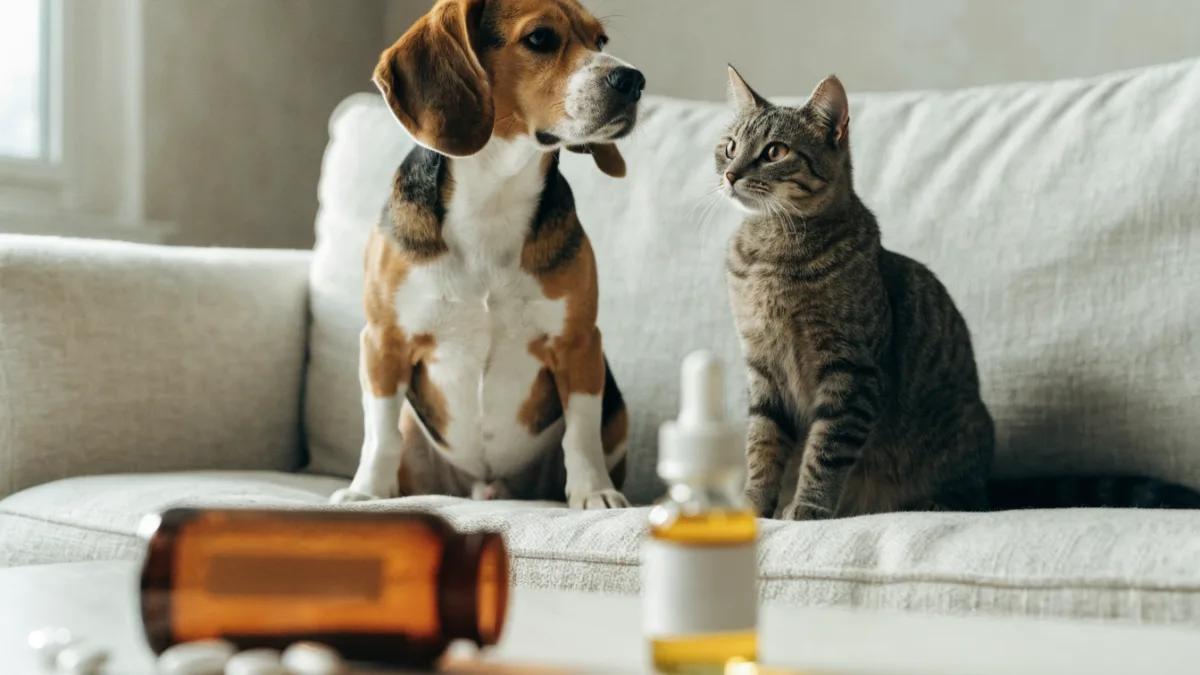
Picture a March appointment: a woman named Karen sits in the exam room looking exhausted. Her nine-year-old tabby cat, Miso, had been on fluoxetine—the generic name for Prozac—since 2020 after a cross-country move triggered severe territorial spraying and aggressive episodes. The medication had worked well for years, but lately Moso was having flare-ups during construction next door. Karen had started giving him CBD oil on top of the Prozac, something a friend recommended, and she wanted to know if it was safe. “I just want him to be comfortable,” she said, “and I didn’t think a little natural supplement could hurt.”
She’s not alone in thinking that. Every week, I have some version of this conversation. Pet owners are navigating what I’ve started calling the calming conundrum—trying to figure out whether to reach for CBD oil, a gabapentin pill, a long-term fluoxetine prescription, or some combination of all three. And honestly? The answer is more complicated than most people realize, especially when you start mixing them.
Three Drugs, Three Very Different Jobs
Before we talk about combining anything, let’s get clear on what each of these actually does, because they’re not interchangeable.
Fluoxetine (Prozac): The Long Game
Fluoxetine is an SSRI—selective serotonin reuptake inhibitor. In plain terms, it keeps more serotonin hanging around in your pet’s brain, which over time helps stabilize mood. I prescribe it for dogs and cats with chronic, severe anxiety or behavioral disorders: separation anxiety that destroys crates, obsessive tail-chasing, territorial aggression, storm phobia that doesn’t respond to training alone.
It’s not a quick fix. Fluoxetine takes four to six weeks to reach full effect, and it’s meant for long-term use. I had a Border Collie patient named Chester who would literally chew through drywall when left alone. After eight weeks on fluoxetine combined with behavior modification, his owner sent me a video of him sleeping peacefully on the couch while she was at the grocery store. That’s what this medication does when it works.
But it’s not without downsides. Side effects can include digestive upset, decreased appetite, lethargy, and in rare cases, increased anxiety during the first few weeks. It requires monitoring—bloodwork periodically, check-ins to assess whether the dose needs adjusting.
Gabapentin: The Situational Standby
Gabapentin was originally developed as an anti-seizure medication for humans, but in veterinary medicine it’s used primarily for pain management and situational anxiety. I prescribe it constantly for vet visits, car rides, thunderstorms, fireworks—the stuff that’s predictable and short-term. It works relatively quickly, often within one to two hours, and lasts about eight to twelve hours in dogs and cats.
A siamese mix named Pepper who comes to our clinic would turn into a furry weapon the moment she saw her carrier. Her owner now gives her a gabapentin dose two hours before appointments, and Pepper walks in like she owns the place—still alert, just not terrified. That’s the sweet spot we’re aiming for: calm but not sedated.
CBD: The Newcomer Still Finding Its Feet
This is where things get interesting. CBD—cannabidiol, a compound derived from hemp—is showing real promise in developing research for anxiety, pain, and seizure management in companion animals. A growing body of studies suggests it may help with mild to moderate anxiety, and many owners report noticeable improvements in their pets’ stress levels.
But here’s what I have to be honest about: as of a 2025 study by Rideout and colleagues, there are zero licensed veterinary CBD products on the market. Zero. That doesn’t mean CBD doesn’t work or that I dismiss it—I’ve changed my mind on this over the past five years as the research has evolved. But it does mean we’re in uncharted territory regarding quality control, standardization, and dosing consistency.
The P450 Problem: Why Mixing Isn’t Always Safe
This is the part of the conversation where I sit up straighter in my chair, because it’s where well-meaning pet owners can accidentally create problems.
Here’s the deal: both fluoxetine and gabapentin are metabolized in the liver by a family of enzymes called the cytochrome P450 system. These enzymes are essentially your pet’s chemical processing plant—they break down medications so they can be cleared from the body safely. CBD also interacts with these exact same enzymes. It can inhibit them, meaning it slows down the processing line.
So picture this: your cat is on fluoxetine, processed by the P450 enzymes. You add CBD, which tells those enzymes to slow down. Now the fluoxetine isn’t being cleared as quickly, and it starts building up in the bloodstream. What was a safe, therapeutic dose can potentially creep toward toxic levels. The same dynamic can happen with gabapentin.
Does this mean you can never combine them? Not necessarily. But it means you absolutely shouldn’t do it without veterinary guidance. When Karen brought Miso in, we ran bloodwork, adjusted his fluoxetine timing, found a CBD product with a certificate of analysis from a third-party lab, and monitored him closely. It worked out fine—but it was managed, not casual.
It’s also worth noting that cats can be more sensitive to drug interactions than dogs. Their livers process certain compounds differently, and they’re notoriously difficult to medicate in the first place. I’ve spent thirty minutes with a cat owner trying to pill a cooperative cat—add stress to the equation and it becomes nearly impossible. This is one reason CBD oil appeals to cat owners: it’s easier to administer. But ease of administration doesn’t override metabolic sensitivity.
Dogs vs. Cats: Different Animals, Different Approaches
While the P450 concern applies to both species, dogs and cats present different challenges when it comes to calming strategies.
Dogs tend to be more straightforward patients. They’re often food-motivated enough to take medication wrapped in cheese or a treat, and they generally show their anxiety outwardly—panting, pacing, destructive behavior. You know what you’re dealing with. I’ve had great success with fluoxetine for dogs with separation anxiety, and gabapentin works well for situational stressors in most breeds.
Cats are a different story. They mask anxiety brilliantly, often until it manifests as inappropriate urination, overgrooming, or sudden aggression. They pick up on environmental stress in ways dogs often don’t—a new cat in the neighborhood, a changed furniture arrangement, construction noise three houses down. And they will absolutely refuse medication if they decide to, which makes long-term fluoxetine administration a genuine challenge for some households.
This is why I understand the appeal of CBD for cats. A few drops on food is infinitely easier than pilling a cat twice daily. But that convenience can’t override the need for caution, especially if your cat is already on other medications.
Navigating an Unregulated Market
If you’re considering CBD for your pet—and I’m not telling you not to—please understand what you’re buying. The lack of licensed veterinary products means quality assurance falls entirely on the manufacturer. I’ve seen products labeled as “CBD” that contained almost none of the active compound. I’ve seen others with inconsistent concentrations batch to batch.
Here’s what to look for:
- Third-party lab testing with a certificate of analysis available—this confirms what’s actually in the bottle
- Clear concentration information in milligrams of CBD per milliliter, not vague “servings”
- Products formulated specifically for pets, without additives like xylitol or certain essential oils that can be toxic
- Hemp-derived CBD with less than 0.3% THC, since THC can be toxic to dogs and cats
I’ll admit I was dismissive of CBD early in my career. The research wasn’t there yet, and I didn’t want to recommend something untested. But the studies emerging now—on pain management, on situational anxiety, on seizure frequency—are legitimate and encouraging. Cautious optimism is where I’ve landed.
What I Actually Recommend
So what do I tell Karen and the dozens of owners like her? It depends on the pet and the situation, but here’s my general framework:
For severe, chronic behavioral issues—separation anxiety that puts the dog at risk of injury, aggression that threatens safety, compulsive behaviors—fluoxetine remains the evidence-based choice. It’s been studied extensively. We understand its safety profile. It works.
For situational anxiety—vet visits, travel, predictable stressors—gabapentin is often the right tool. Fast-acting, well-tolerated, and predictable.
For mild everyday anxiety or as supplementary support, CBD may have a role, particularly for pets who don’t tolerate pharmaceuticals well or for owners who want to start with a gentler option. But it should be discussed with your veterinarian, especially if your pet is on other medications.
And please: never adjust or stop a prescription medication without consulting your vet. I’ve seen owners abruptly discontinue fluoxetine because they wanted to try CBD instead, and the rebound anxiety was worse than the original problem. These medications need to be tapered properly.
The calming conundrum doesn’t have a single answer. Miso is doing well now—his construction anxiety managed with a carefully coordinated combination of fluoxetine, environmental modification, and yes, a vetted CBD product. But that success came from teamwork between Karen and our clinic, not guesswork.
Your pet’s mental health deserves the same thoughtful, evidence-based approach as their physical health. Whether that means a prescription, a supplement, or something in between, make the decision with your veterinarian—not the internet. The research is evolving, and so are we. But some things don’t change: when in doubt, ask before you act.