

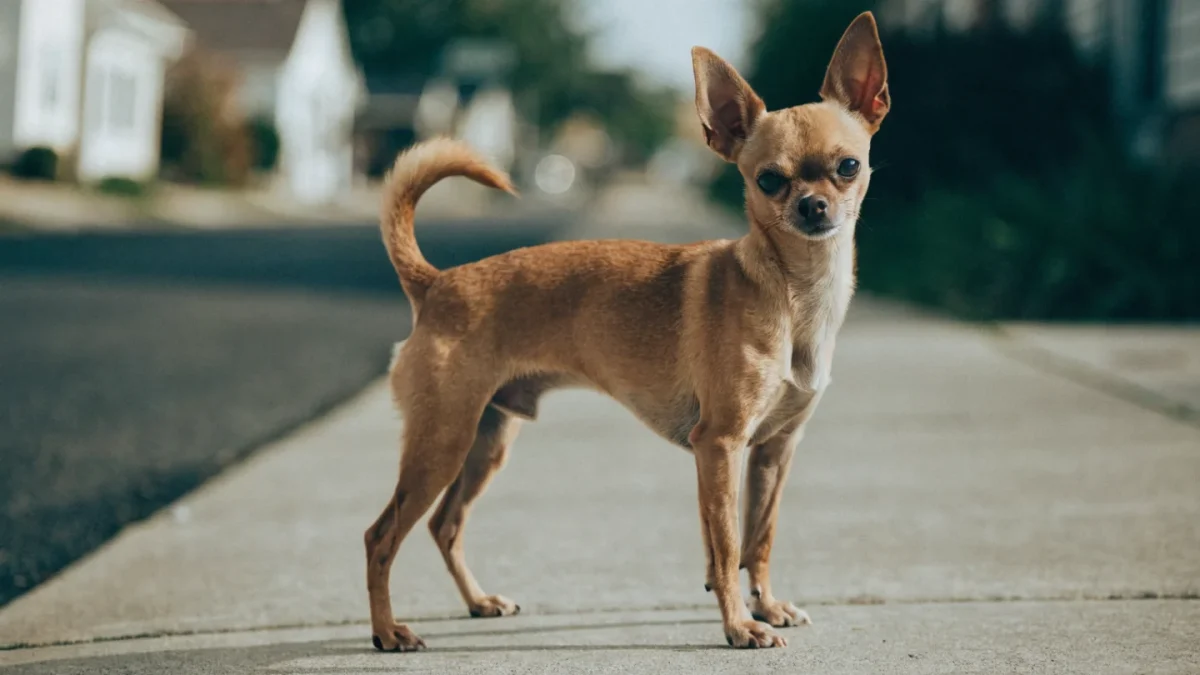
Chihuahuas have an image problem. Decades of pop culture caricature, social media comedy clips, and well-meaning but misguided ownership have created a public perception of the breed that bears limited resemblance to what a properly raised chihuahua actually looks like. The stereotypes are persistent, widely believed, and directly responsible for mismatched adoptions that end with dogs surrendered to shelters and owners convinced the breed is fundamentally flawed.
Here are five misconceptions that cause the most real-world damage.
1. Chihuahuas Are Inherently Aggressive
This is the myth that does the most harm, because it lets owners off the hook for a problem they created.
Chihuahuas are naturally wary of strangers. That wariness is a breed trait — the chihuahua temperament article traces it to thousands of years of selection for close-bonded companionship rather than indiscriminate friendliness. Wariness is not aggression. It's a starting point that, with proper socialization, produces a cautious but confident adult dog.
The aggressive chihuahua — the one that lunges, snarls, and bites — is almost always a product of three specific failures. The owner didn't socialize the puppy during the critical 3-to-14-week window. The owner carried the dog instead of letting it walk through the world on its own feet. And the owner treated aggressive displays as cute or funny rather than as behavioral problems requiring intervention.
A German Shepherd raised with the same approach would develop identical behavioral problems. The difference is that nobody laughs at a reactive German Shepherd. The chihuahua's small size turns a serious behavioral deficit into a comedy clip, and the dog pays the price.
2. Small Dogs Don't Need Training
This misconception cuts across small breeds generally, but chihuahuas suffer from it disproportionately because their small stature makes the consequences of poor behavior seem trivial.
The logic goes: a chihuahua can't knock down a child, can't pull you off your feet on a leash, and can't cause serious damage if it bites. Therefore, training is optional.
Every part of that logic is wrong. An untrained chihuahua barks incessantly, resource-guards its owner against family members and other pets, refuses house training, and develops escalating anxiety behaviors that worsen over the breed's 14-to-16-year lifespan. The "damage" isn't measured in physical injury — it's measured in a decade and a half of behavioral conflict between dog and owner.
Training a chihuahua requires the same fundamentals as training any breed: consistent rules, positive reinforcement, early socialization, and clear communication. The sessions are shorter (five to ten minutes suits the attention span), the treats are smaller, and the physical dynamics differ, but the behavioral principles are identical. As the chihuahua breed guide details, the breed is intelligent enough to learn complex behaviors — the question is whether the owner invests the time to teach them.
3. Teacup Chihuahuas Are a Legitimate Variety
They are not. No major breed registry recognizes "teacup," "micro," "miniature," or "pocket" as a chihuahua variety or size category. These terms are marketing language used to sell extremely small puppies — typically projected at under 1.4 kg adult weight — at premium prices.
The health consequences of extreme miniaturization are specific and documented. Hydrocephalus, open fontanelles that leave the brain exposed to trauma, chronic hypoglycemia, liver shunts, fragile bones, and severe dental crowding all occur at elevated rates in extremely small chihuahuas. A dog bred to weigh under 1.4 kg is not a refined version of the breed — it's a dog whose structural integrity has been compromised for aesthetic and commercial reasons.
The standard chihuahua, at 1.8 to 2.7 kg, is already the smallest recognized dog breed in the world. There is no functional or health-related reason to push smaller. When someone markets a "teacup" chihuahua at a premium, they're charging more for a dog that will cost more in veterinary care and have a lower quality of life. The economics run in exactly the wrong direction.
4. Chihuahuas Are Fashion Accessories, Not Real Dogs
The purse-dog image is the chihuahua's cultural curse. Decades of celebrity photos, movie appearances, and social media content featuring chihuahuas in bags, strollers, and outfits have created the impression that these are decorative objects rather than living animals with behavioral, physical, and psychological needs.
A chihuahua that is perpetually carried is a chihuahua that never learns to navigate its environment independently. It doesn't develop leash skills. It doesn't learn to walk on varied surfaces. It doesn't build the physical confidence that comes from exploring the world at ground level. The result is a dog that trembles when placed on the floor, panics in new environments, and becomes completely dependent on being held — which reinforces the owner's belief that the dog "needs" to be carried.
Chihuahuas are active, alert, intelligent animals that need to walk on their own feet, explore scent marks, interact with their environment, and develop the physical and behavioral independence that allows them to function as dogs. They are legitimate dogs in every sense. Treating them otherwise is how their worst stereotypical behaviors develop.
The cold-weather sweater is the exception to the fashion-accessory criticism. Smooth-coat chihuahuas genuinely lose heat rapidly, and a functional garment in cold weather is appropriate care, not dress-up. The distinction is between clothing that serves a thermoregulatory purpose and clothing that serves the owner's aesthetic preferences at the dog's expense.
5. Chihuahuas Can't Live with Other Pets
This myth has a grain of truth buried under a heap of overgeneralization.
Chihuahuas raised with other animals from puppyhood — cats, small dogs, even larger dogs with gentle temperaments — frequently coexist without problems. The breed's social tendencies lean toward their own kind and their primary person, but social preferences are not hard boundaries. A chihuahua that grows up alongside a cat treats the cat as part of its social group. A chihuahua introduced to a well-mannered larger dog under controlled conditions can develop a functional relationship.
The problems arise in specific scenarios. An adult chihuahua with no prior animal socialization introduced suddenly to a large, energetic dog is a recipe for defensive aggression on the chihuahua's part and potential physical injury from the size mismatch. An unsupervised chihuahua with a rough-playing large breed is a risk that no amount of socialization fully mitigates — because the size differential creates a physical danger that good behavior alone can't eliminate.
The answer isn't that chihuahuas can't live with other pets. It's that multi-pet households work when introductions are gradual, size differences are managed, and supervision is proportional to the risk. That's true for every breed, but the chihuahua's size makes the consequences of mismanagement more severe.
The Common Thread
Every one of these misconceptions traces back to the same error: treating a chihuahua differently from other breeds because of its size. Less socialization, less training, less exercise, less independence, less accountability for problem behaviors. The breed's small stature doesn't reduce its behavioral, social, and physical needs — it just makes it easier for owners to ignore them.
The chihuahuas that defy every stereotype on this list are the ones whose owners treated them like dogs from day one. Full socialization, consistent training, ground-level independence, appropriate exercise, and behavioral boundaries. The formula isn't complicated. It just requires taking a two-kilogram animal seriously.