

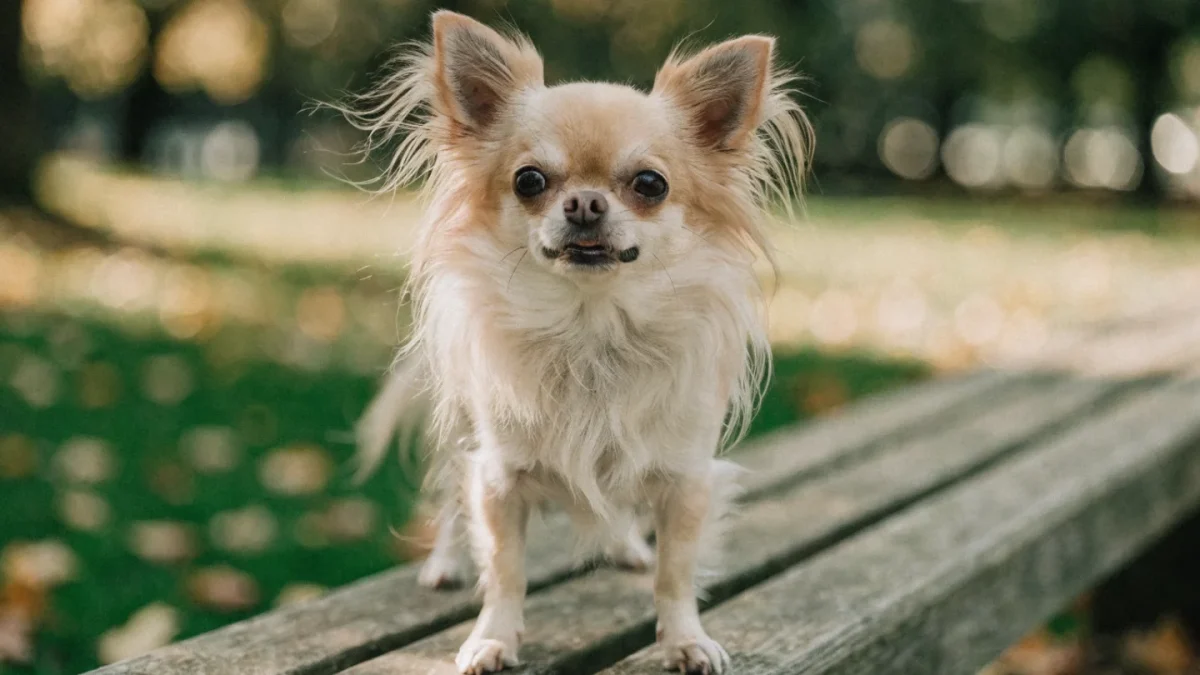
A University of Pennsylvania study published in Applied Animal Behaviour Science (2008), surveying thousands of dog owners using the C-BARQ behavioral assessment, found that chihuahuas scored among the highest of all breeds for owner-directed aggression, stranger-directed aggression, and dog-directed aggression. The study made headlines and cemented a narrative that chihuahuas are inherently angry little animals. What the headlines rarely mentioned was the researchers' own discussion: small-breed aggression is overwhelmingly a product of how owners socialize and manage the dog, not an intrinsic temperament defect. The chihuahua's personality is far more complex than its reputation suggests.
Understanding chihuahua temperament personality means separating the breed's actual behavioral tendencies from the management failures that produce the stereotypical aggressive purse dog. The difference between a well-socialized chihuahua and a poorly managed one is dramatic — and the management piece falls entirely on the owner.
The One-Person Dog
Chihuahuas are often described as one-person dogs, and the label fits more accurately than it does for most breeds. A chihuahua typically selects a primary person — sometimes within days of arriving in a home — and organizes its entire emotional life around that individual. The bond isn't casual affection. It's focused, possessive, and intense in a way that surprises people accustomed to breeds that distribute their loyalty more evenly.
This doesn't mean a chihuahua ignores everyone else in the household. Most develop functional relationships with other family members. But the primary attachment is visible and unmistakable: the dog follows that person from room to room, sleeps touching them, positions itself between them and perceived threats, and shows measurable distress — vocalization, trembling, refusal to eat — during separation.
If the golden retriever is the social butterfly that wants the entire party to love it, the chihuahua is the devoted partner who chose you specifically and is only politely tolerating everyone else. It's a flattering dynamic until the dog starts resource-guarding you against your spouse, your children, or your other pets. That escalation is where the one-person tendency becomes a management challenge rather than a charming quirk.
Wariness of Strangers
Chihuahuas are naturally cautious around unfamiliar people. The degree ranges from polite disinterest to active defensiveness, depending on the individual dog and — critically — on how thoroughly it was socialized during the first four months of life.
A chihuahua that was exposed to diverse people, environments, handling styles, and situations during the critical socialization window of approximately 3 to 14 weeks tends toward watchfulness without reactivity. It notices strangers, assesses them, and either approaches with curiosity or maintains a comfortable distance. This is the breed's natural temperament operating within normal parameters.
A chihuahua that was carried everywhere, shielded from novel experiences, or kept in an environment with minimal social exposure develops a different response: fear-based reactivity. Barking, lunging, snapping, and biting directed at strangers aren't dominance or toughness. They're a frightened animal in a two-kilogram body doing the only thing it knows to create distance from something it perceives as threatening.
The chihuahua breed guide addresses the socialization piece in detail. The core point is worth repeating here: the breed's wariness is a starting point, not a destiny. What the owner does with that starting point determines the outcome.
Confidence Versus Aggression
Here's the distinction most people miss. Chihuahuas are genuinely confident dogs. Within their social unit, they carry themselves with a self-assurance that borders on arrogance — they hold eye contact, they claim space on furniture, they position themselves at the center of household activity. This confidence is part of the breed's appeal. It's why chihuahua owners often describe their dogs as having "big dog" personalities.
Confidence and aggression are different things. A confident chihuahua walks past a stranger on the sidewalk without reacting. An aggressive chihuahua lunges at the stranger's ankles. The confident version had socialization experiences that taught it the world isn't a threat. The aggressive version didn't.
The problem compounds because most people find small-dog aggression funny rather than concerning. A chihuahua barking furiously at a Great Dane gets posted to social media with a laughing emoji. A German Shepherd doing the same thing would prompt a conversation about behavior modification and possibly a muzzle. The double standard is how chihuahuas end up undertrained, oversheltered, and increasingly reactive — because nobody treats the behavior seriously until someone gets bitten.
With Other Dogs
Chihuahuas have a well-earned reputation for preferring their own breed. Multi-chihuahua households often develop a noticeable pack dynamic: the dogs sleep together, play together, and present a somewhat unified front toward non-chihuahua dogs in the household. Breed researchers have speculated that the preference may relate to size-matched play styles — chihuahuas can engage in full-speed roughhousing with each other without the injury risk that comes from mismatched sizes.
With other breeds, results vary considerably. A chihuahua raised from puppyhood alongside a larger dog often develops a normal, functional relationship with that individual. Introducing an adult chihuahua to a new dog — particularly a larger one — requires more careful management. The chihuahua's instinct is to escalate defensively when it feels physically outmatched, and a defensive chihuahua can provoke a response from a larger dog that ends in serious injury.
The safest multi-dog arrangements involve dogs of similar size or large dogs with confirmed gentle temperaments. Even in the best pairings, unsupervised interaction between a 2 kg chihuahua and a 25 kg Labrador is a risk that responsible owners don't take.
Vocalization
Chihuahuas are vocal. Extremely vocal. The breed uses barking, yapping, whining, growling, and an array of intermediate sounds to communicate everything from excitement to displeasure to boredom to the observation that a leaf moved in the yard.
The barking is the temperament trait that causes the most friction in daily life, particularly in shared-wall living situations. A chihuahua's alert threshold is remarkably low — footsteps in a hallway, a car door closing outside, a voice in an adjacent room — and each event triggers a vocal response. This is the breed's ancient watchdog function operating as designed. It served a genuine purpose in Mesoamerican households and small Mexican homesteads. In a modern apartment building, it serves as a noise complaint generator.
Managing chihuahua vocalization is possible but requires consistent effort. The goal isn't silence — you will never eliminate alert barking from this breed entirely. The goal is teaching the dog to bark, then disengage when acknowledged. A chihuahua that alerts once or twice and then settles is a well-managed chihuahua. One that barks continuously for five minutes at every stimulus is a dog whose owner hasn't invested in the training.
Emotional Expressiveness
One trait that consistently surprises first-time chihuahua owners is the breed's emotional transparency. Chihuahuas wear their feelings on their face and body in ways that are startlingly readable. Joy produces full-body wiggling, rapid tail movement, and what can only be described as grinning. Displeasure produces ear pinning, whale eye, lip curling, and a stiffened body posture that escalates in obvious stages. Fear produces trembling, tucked tail, and attempts to burrow against the primary person.
This expressiveness makes chihuahuas easier to read than many breeds — but it also means owners see more emotional range than they might expect from a dog. A chihuahua can look genuinely offended when denied a spot on the couch, visibly jealous when its person gives attention to another animal, and unmistakably pleased when it gets what it wants. Whether these states represent the same emotional complexity as the human emotions they resemble is a question for canine cognition researchers. What's certain is that the behavioral expressions are clear enough that most owners learn to read their chihuahua's mood accurately within weeks.
The Chihuahua-Terrier Comparison
People who have lived with both chihuahuas and terrier breeds often remark on the similarities — and the comparison is instructive. Both share high alertness, territorial confidence, a willingness to confront challenges that outsize them, and a stubborn independence that makes training a negotiation rather than a command-and-comply exercise.
The comparison breaks down in social structure. Terriers are generally more independent in their attachments, more interested in pursuing prey drive, and more tolerant of rough physical play. Chihuahuas are more socially dependent, more focused on their human relationships, and more emotionally reactive to changes in their environment. If the chihuahua's history points to an animal bred for companionship and spiritual significance, the terrier's history points to an animal bred to work independently in pursuit of vermin. The behavioral differences follow logically from those different selection pressures. Owners drawn to the chihuahua's bold small-dog temperament but seeking a breed with a slightly wider social disposition may find the Pomeranian a useful comparison — another small, alert spitz-type that carries similar confidence in a similarly compact frame.
The Right Temperament Match
Not every temperament suits every owner, and chihuahua temperament is specific enough to warrant honest assessment. This breed is ideal for someone who wants an intense, loyal, emotionally connected companion and is willing to invest in socialization, training, and behavioral management. It's poorly suited for someone who wants an easy, universally friendly dog that requires minimal behavioral investment.
The owners who thrive with chihuahuas are the ones who respect the breed's complexity rather than dismissing it because of the dog's size. A 2 kg dog with poor socialization, no training, and no behavioral boundaries causes exactly the same categories of problems as a 40 kg dog — the only difference is the scale of the physical consequences. The behavioral work is identical.