

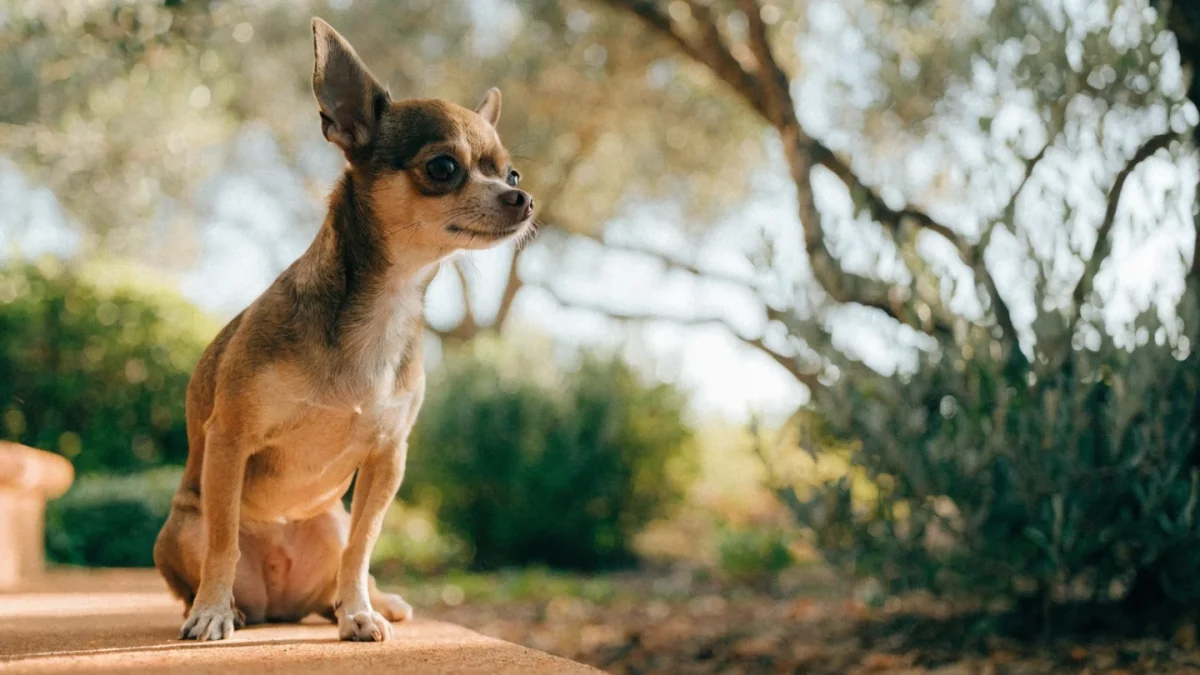
The chihuahua's ancestors were buried with the dead. In pre-Columbian Mesoamerica, small dogs resembling today's chihuahuas were interred alongside human remains — not as pets in the modern sense, but as spiritual guides believed to lead souls through the underworld. Archaeologists have recovered dog remains from burial sites across central Mexico dating to 300 BC and earlier, and the skeletal proportions match no other known breed lineage. The dog you can carry in one hand traces its origins to one of the oldest and most spiritually significant canine roles in the Americas.
Chihuahuas are the world's smallest recognized dog breed, typically weighing between 1.8 and 2.7 kg and standing 15 to 23 cm at the shoulder. They come in two coat varieties — smooth and long — with virtually every color and pattern combination the canine genome can produce. Their lifespan of 14 to 16 years makes them one of the longest-lived breeds, but that longevity comes packaged with breed-specific health vulnerabilities that responsible owners need to understand before bringing one home.
This breed has been wildly popular for decades, and that popularity has produced a distorted public image. The purse-dog stereotype, the aggressive-ankle-biter jokes, the assumption that a small dog means an easy dog — all of it misses what the chihuahua actually is. I've spent years researching this breed's history, genetics, and temperament, and most of what the general public believes about chihuahuas is either incomplete or outright wrong.
Origins and History
The chihuahua's ancestral line runs through the Techichi, a small companion dog kept by the Toltec civilization in central Mexico as early as the 9th century AD. Toltec carvings and pottery depict small dogs with large, rounded ears and proportionally large heads — descriptions that align closely with the modern chihuahua's physical profile. When the Aztec empire absorbed Toltec territories in the 12th century, the Techichi continued as both a companion animal and a figure of religious significance.
Spanish conquistadors documented small dogs throughout Mexico in the 16th century, but the breed's modern history begins in the Mexican state of Chihuahua in the mid-1800s. American travelers purchased small dogs from local merchants in the region, and these dogs — initially called "Texas dogs" or "Arizona dogs" by some early breeders — became the foundation of the breed we know today. The American Kennel Club registered its first chihuahuas in 1904 — five dogs owned by H. Raynor of El Paso, Texas, including a dog named Midget.
The breed's popularity surged in waves — the 1940s through 1960s saw steady growth, and another spike came in the early 2000s driven largely by media exposure. That media-driven surge brought consequences. Breeding volume increased rapidly, and not all of it was responsible. The breed's current health profile reflects both its ancient genetic heritage and the pressures of modern commercial breeding.
Physical Characteristics
Size and Build
Chihuahuas are the smallest breed by height and among the smallest by weight. The breed standard specifies a maximum weight of approximately 2.7 kg, though many pet chihuahuas fall outside this range — dogs of 3.5 to 4.5 kg are common and not inherently unhealthy. The body is slightly longer than tall, with a well-sprung ribcage and a level topline.
The head shape is one of the breed's most distinctive features: a rounded, apple-dome skull with a well-defined stop. Some chihuahuas have a deer-head conformation — a flatter skull, longer muzzle, and more angular features. The apple-head conformation is what breed standards describe, but deer-head chihuahuas are common in pet populations and often have fewer respiratory and dental issues due to their longer muzzles.
What most people get wrong about chihuahua size is assuming smaller is better. The trend toward breeding the smallest possible chihuahuas — dogs under 1.4 kg marketed as "teacup" or "micro" — has produced animals with disproportionately severe health problems. Hydrocephalus, open fontanelles that never close, fragile bones, and chronic hypoglycemia are significantly more common in extremely small individuals. No major breed registry recognizes "teacup" as a legitimate variety.
Coat Varieties
Smooth-coat chihuahuas have a short, close-lying coat that can range from very fine to slightly dense. Long-coat chihuahuas have a soft, flat or slightly wavy coat with feathering on the ears, legs, chest, and tail. Both varieties come in virtually every color: fawn, black, white, chocolate, cream, blue, red, merle, brindle, sable, and combinations thereof.
The two coat types can appear in the same litter when both parents carry the recessive long-coat gene. Smooth coat is dominant, which is why smooth-coat chihuahuas are more common in the general population.
Distinguishing Features
The ears are large and erect — proportionally among the largest of any breed relative to head size. They're set at roughly a 45-degree angle from the skull and are one of the breed's most expressive features. The eyes are full, round, and set well apart, giving the chihuahua that characteristic alert, slightly luminous expression. The tail is moderately long and carried in a sickle curve or a loop over the back.
Temperament and Behavior
If the golden retriever is the perpetually agreeable diplomat, the chihuahua is the territorial intelligence officer who trusts exactly three people and views everyone else with suspicion. This is not a breed that loves indiscriminately. Chihuahuas form profound, sometimes exclusive bonds with their chosen person and can be reserved, wary, or outright hostile toward unfamiliar people and animals.
What Most People Get Wrong About This Breed
The biggest misconception about chihuahuas is that their aggression is cute or harmless because they're small.
It isn't either of those things. A chihuahua that lunges, snaps, and barks at strangers is experiencing genuine stress, and a frightened or defensive dog of any size deserves to have its behavior addressed rather than laughed off. The reason chihuahuas develop reactive behaviors at higher rates than many breeds isn't because they're inherently aggressive — it's because their size leads owners to skip the socialization and training they'd never skip with a larger dog.
A properly socialized chihuahua can be confident, calm, and perfectly civil with strangers. The problem is that "properly socialized" requires the same deliberate effort it takes with a German Shepherd or a Rottweiler, and too many chihuahua owners never put in that work because the consequences of skipping it don't involve 40 kg of dog.
The chihuahua temperament article goes deeper into the behavioral dynamics that drive this breed's personality. The short version: the chihuahua's reputation for aggression is a management failure, not a breed inevitability.
Bonding and Attachment
Chihuahuas are sometimes described as "clannish" — a word that captures their tendency to prefer familiar people and their own kind. Many chihuahua owners with multiple dogs report that their chihuahuas form a distinct social unit, preferring to sleep together, play together, and coordinate their responses to household events.
The attachment to their primary person can be intense to the point of possessiveness. A chihuahua may physically position itself between its owner and other people or animals, vocalize when others approach, or become visibly distressed when separated. This isn't charming devotion — when it escalates, it's resource guarding, and it needs management before it becomes entrenched.
Energy and Alertness
Despite their size, chihuahuas are surprisingly active and alert. They are perpetual watchdogs — nothing moves in their environment without comment. Mail carrier, squirrel, leaf — all receive vocal announcements at a volume that belies a 2 kg body. This alertness made their ancestors useful in Mesoamerican households, and it makes modern chihuahuas simultaneously entertaining and, in apartment settings, occasionally problematic.
Health Profile
Chihuahuas live a long time. That's the good news, and it's genuine — 14 to 16 years is typical, with some individuals reaching 18 to 20. The extended lifespan means that chronic health conditions have more years to develop and more years of management, which is the part prospective owners need to understand clearly.
Patellar Luxation
Patellar luxation — the kneecap sliding out of its normal groove — is the most common orthopedic issue in chihuahuas. A Swedish Kennel Club screening study found a prevalence of 23 percent in chihuahuas, and a U.K. primary-care veterinary study found a diagnosis rate of roughly 5 percent with an odds ratio of 5.9 compared to crossbred dogs. The condition ranges from grade I (occasional slipping that self-corrects) to grade IV (permanent dislocation requiring surgical intervention). Mild cases are manageable; severe cases cause chronic pain and progressive joint degeneration.
Heart Disease
Mitral valve disease is the leading cardiac concern in chihuahuas and small breeds generally. The mitral valve degenerates over time, allowing blood to flow backward through the heart. Early stages produce a heart murmur detectable on routine examination. Progressive disease leads to congestive heart failure. Regular cardiac screening — at minimum, auscultation at every veterinary visit — is recommended throughout the dog's life.
Patent ductus arteriosus (PDA), a congenital defect where a fetal blood vessel fails to close after birth, also occurs in the breed at higher-than-average rates — the chihuahua is among the breeds most commonly affected, and research has documented hereditary PDA within chihuahua families.
Dental Disease
This is the health issue that affects the most chihuahuas and gets the least attention. The chihuahua's small jaw creates crowding that traps food particles, accelerates plaque buildup, and creates conditions for periodontal disease to develop rapidly. Many chihuahuas begin losing teeth by middle age. Professional dental cleanings under anesthesia are not a luxury for this breed — they're a medical necessity, typically starting by age two or three and recurring annually.
Home dental care — daily brushing with a canine toothbrush and enzymatic toothpaste — slows the progression but rarely prevents it entirely in a breed with this degree of jaw compression.
Hypoglycemia
Low blood sugar is a serious and sometimes life-threatening risk in chihuahua puppies and very small adults. A chihuahua puppy's tiny body has minimal glycogen reserves, and skipping even one meal can trigger a hypoglycemic episode — symptoms include lethargy, trembling, disorientation, and in severe cases, seizures and collapse. Frequent small meals and careful monitoring are essential during the first year.
Other Concerns
- Hydrocephalus: Fluid accumulation in the brain, more common in apple-head chihuahuas and extremely small individuals. Signs include a domed skull, neurological symptoms, and seizures.
- Tracheal collapse: The tracheal rings weaken over time, causing a characteristic honking cough. A harness rather than a collar is standard advice for this breed.
- Molera: A soft spot on the skull similar to a human infant's fontanelle. Most chihuahuas are born with one, and it typically closes or reduces significantly by adulthood. A persistently open molera increases vulnerability to head trauma.
Lifespan
Average chihuahua lifespan is 14 to 16 years, making them one of the longest-lived breeds. The correlation between small body size and longer lifespan is well-established across dog breeds, and chihuahuas sit at the extreme end of both axes. Individual dogs reaching 18 to 20 years are documented, though not typical.
Grooming Requirements
Chihuahua grooming demands depend heavily on coat type, but neither variety is as low-maintenance as the breed's size might suggest.
Smooth-Coat Care
Smooth-coat chihuahuas shed moderately year-round with seasonal increases. Weekly brushing with a soft bristle brush or grooming mitt removes loose hair and distributes skin oils. Bathing every three to four weeks is typically sufficient unless the dog gets dirty.
The short coat provides minimal insulation. Smooth-coat chihuahuas are genuinely cold-sensitive — this is not a fashion statement when you see a chihuahua in a sweater. Dogs under 2.5 kg in particular lose body heat rapidly and benefit from a coat or sweater in cold weather and heated sleeping areas year-round.
Long-Coat Care
Long-coat chihuahuas require brushing two to three times per week to prevent matting, particularly behind the ears, in the armpits, and along the tail feathering. A pin brush and fine-toothed comb handle most tangles. Bathing every three to four weeks with a mild conditioner keeps the coat manageable.
The feathering on the ears, chest, and legs may need occasional trimming to maintain a tidy appearance, but chihuahuas are not a heavily trimmed breed. The coat takes up to two years to reach its full adult length and texture.
Dental, Nail, and Ear Care
Daily tooth brushing is not optional — it's the single most important grooming task for a chihuahua. Nail trimming every two weeks prevents overgrowth, which is especially important because chihuahuas are light enough that normal walking doesn't always wear nails down naturally. Ear cleaning weekly prevents wax buildup, particularly in long-coat dogs where ear feathering can trap moisture.
Exercise and Activity Needs
Chihuahuas need 20 to 30 minutes of daily exercise — less than most breeds, but more than many owners provide. Short walks, indoor play sessions, and interactive toys satisfy the physical requirement. Mental stimulation — puzzle toys, training games, novel experiences — matters as much as physical movement for a breed this alert and intelligent.
Puppies should not be over-exercised. Their small joints and developing bones are vulnerable, and walks should be brief. Many chihuahua puppies get adequate exercise through indoor play alone during their first six months.
The breed's cold sensitivity limits outdoor exercise in low temperatures. A chihuahua standing on frozen ground is losing heat rapidly through its paw pads, and walks in winter weather should be kept short with protective gear as needed.
Nutrition Fundamentals
Chihuahuas have fast metabolisms relative to their size and need calorie-dense food in small, frequent portions. Two to three meals per day for adults — never free-feeding, as it makes portion control impossible and weight tracking unreliable.
Caloric needs are modest in absolute terms but critical to get right. A 2.3 kg chihuahua at healthy weight needs roughly 150 to 200 calories per day, depending on activity level and age. The margin of error is small — an extra 50 calories daily leads to meaningful weight gain on a frame this small.
Obesity in chihuahuas stresses already-vulnerable joints, accelerates heart disease progression, and worsens tracheal collapse. At the other extreme, underfeeding risks hypoglycemia, particularly in puppies and small adults. Precise portioning and regular weight checks matter more with this breed than with almost any other.
Training
Chihuahuas are intelligent and capable of learning complex behaviors. They are also stubborn, selectively compliant, and perfectly willing to ignore a command they find inconvenient. Training a chihuahua successfully requires the same consistency, patience, and structure you'd apply to any breed — the only difference is that the consequences of skipping training are a 2 kg menace rather than a 30 kg one.
Positive reinforcement works. Harsh corrections do not — chihuahuas respond to forceful handling with anxiety, avoidance, or escalated defensiveness. Short training sessions of five to ten minutes suit the breed's attention span. Early socialization is the single most important training investment: exposure to diverse people, animals, environments, and handling during the critical period of 3 to 14 weeks shapes the dog's lifelong behavioral baseline.
House training is often cited as challenging in chihuahuas. The difficulty is real but frequently owner-created: small bladders require more frequent opportunities to eliminate, and owners who carry their chihuahuas everywhere rather than teaching them to walk on-leash to a designated spot inadvertently prevent the dog from learning the routine.
Living Situation Compatibility
Chihuahuas adapt well to apartments, condos, and small living spaces — their exercise needs are modest, and they don't require a yard. The primary environmental concern is temperature: these dogs need a warm home and sleeping area, and they struggle in cold or damp conditions.
They are not ideal for households with very young children. The chihuahua's small size makes it physically vulnerable to rough handling, and a dog that feels threatened by grabbing hands will defend itself. Families with children under seven or eight should consider whether they can reliably supervise every interaction — because the consequences of a dropped or squeezed chihuahua include broken bones and, for the child, a bite from a scared animal.
Multi-dog households work well when the other dogs are similar in size or have gentle temperaments. Chihuahuas and large-breed dogs together require careful management — not because chihuahuas can't coexist with larger dogs, but because even playful roughhousing with a 30 kg dog can injure a 2 kg chihuahua.
The Right Owner for This Breed
A chihuahua is the right dog for you if:
- You want a deeply bonded companion who will be intensely loyal to you personally
- You live in a small space and can provide a warm, consistent indoor environment
- You're committed to dental care, including daily brushing and professional cleanings
- You understand that socialization and training are non-negotiable, not optional extras
- You can handle a dog that will alert-bark at everything and manage that behavior constructively
- You're financially prepared for dental work, patellar luxation screening, and cardiac monitoring over a 14-to-16-year lifespan
A chihuahua is the wrong dog for you if:
- You want a dog that loves everyone and tolerates anything
- You have young children who haven't learned gentle handling
- You think training a small dog doesn't matter because "what's the worst it can do"
- You plan to carry the dog everywhere rather than letting it walk, explore, and develop confidence on its own feet
- You're looking for a dog that can handle cold climates without daily environmental management
If you're still weighing the decision, the honest assessment guide breaks down the lifestyle fit in more detail.
The chihuahua has survived for centuries because it offers something no other breed does in the same combination: fierce loyalty, startling intelligence, and a personality that fills a room despite fitting in a handbag. The breed deserves owners who see past the size and take the dog seriously. Every chihuahua behavior problem I've ever encountered traces back to an owner who didn't.
Frequently Asked Questions
How long do chihuahuas typically live?
Chihuahuas are one of the longest-lived dog breeds, with a typical lifespan of 14 to 16 years. Some individuals reach 18 to 20 years with good care. Their longevity means a long-term commitment to dental maintenance, cardiac monitoring, and joint care — health needs that accumulate over a lifespan that can span nearly two decades.
Are chihuahuas good apartment dogs?
Chihuahuas are among the most apartment-compatible breeds due to their small size and modest exercise requirements. The primary apartment challenge is barking — chihuahuas are vocal watchdogs that react to every hallway noise and passing visitor. Consistent training to manage alert barking, combined with adequate mental stimulation, makes the difference between a good apartment dog and a noise complaint waiting to happen.
Do chihuahuas get along with other dogs?
It depends entirely on socialization. A chihuahua raised with early, positive exposure to other dogs can be perfectly social. A chihuahua that was carried past other dogs or shielded from interaction often develops reactivity and fear-based aggression. Size-appropriate playmates are safest — a chihuahua playing with dogs of similar size faces far less injury risk than one roughhousing with a large breed.
What's the difference between apple-head and deer-head chihuahuas?
Apple-head chihuahuas have the rounded, dome-shaped skull that breed standards describe, with a pronounced stop (the angle between the forehead and muzzle). Deer-head chihuahuas have a flatter skull, longer muzzle, and more angular profile. Apple-head is the conformation-standard type. Deer-head chihuahuas often have fewer dental and respiratory issues due to their longer muzzles but don't conform to breed-standard expectations. Neither type is inherently healthier overall — both carry the breed's genetic predispositions.
Why do chihuahuas shake so much?
Chihuahuas shake for three main reasons: cold (their small bodies lose heat rapidly and the smooth-coat variety has minimal insulation), excitement or anxiety (the breed's high-strung temperament produces visible trembling during emotional arousal), and hypoglycemia (low blood sugar, particularly in puppies and very small adults, causes trembling as an early symptom). If shaking is persistent and accompanied by lethargy or disorientation, hypoglycemia should be ruled out immediately — it's a medical emergency in this breed.