

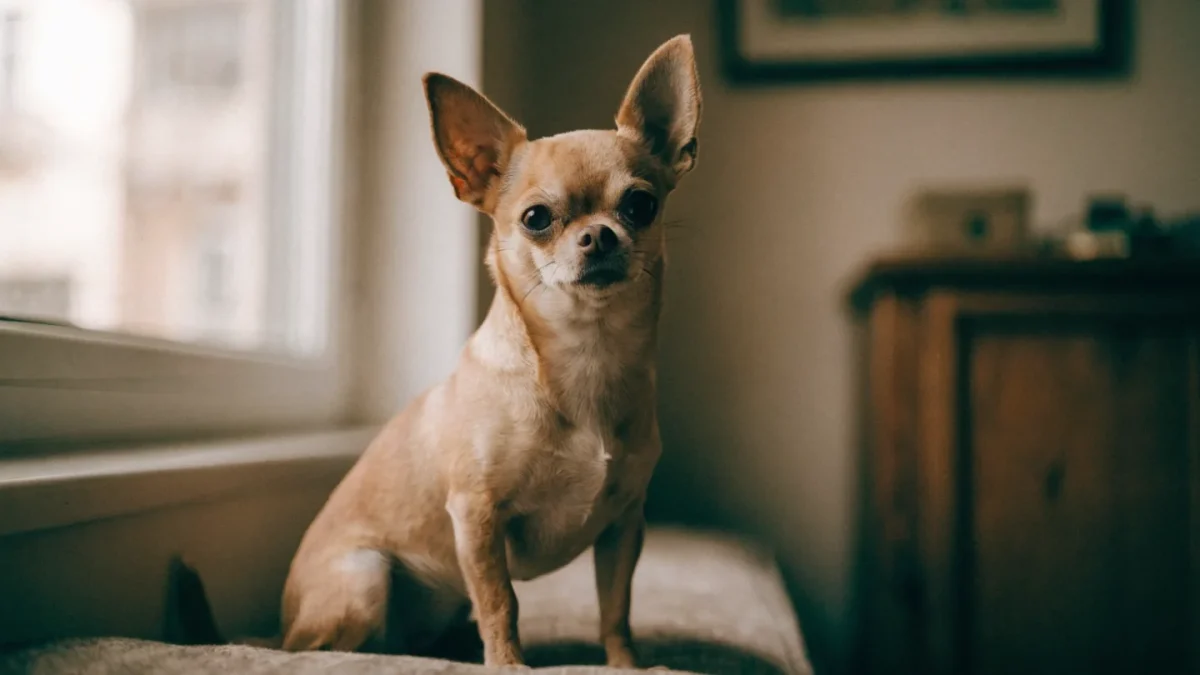
Every year, chihuahuas rank among the breeds most frequently surrendered to shelters. The reason is almost always the same: the owner didn't know what they were getting into. The dog barked too much, snapped at the kids, refused to be house-trained, or "just wasn't what I expected." In every one of those cases, the dog was behaving like a chihuahua. The problem was a mismatch between expectations and reality.
This guide exists to prevent that mismatch. If you're considering a chihuahua, you deserve an honest accounting of what the breed requires — not the marketing version, not the social media version, but the lived-daily-for-sixteen-years version.
The Commitment Is Longer Than You Think
Chihuahuas live 14 to 16 years on average. Some reach 18 to 20. That lifespan is a genuine selling point — and a genuine commitment. When you bring home a chihuahua puppy, you are making a decision that will shape your living situation, your travel logistics, your daily schedule, and your veterinary budget for potentially the next two decades.
Think about where you were sixteen years ago. Think about how much your life has changed since then. A chihuahua acquired at 25 will still be alive when you're 40. One acquired at 35 may still be with you past 50. The breed's longevity is a feature, but it requires the kind of long-term planning that most dog owners don't fully consider.
What Actually Costs Money
The purchase price or adoption fee is the smallest financial commitment involved in chihuahua ownership. The ongoing costs are where the reality sets in.
Dental care is the big one. The chihuahua breed guide details why: small jaws, crowded teeth, accelerated periodontal disease. Professional dental cleanings under anesthesia are typically needed annually starting around age two or three. Each cleaning involves pre-anesthetic bloodwork, anesthesia monitoring, and sometimes extractions. Over a 14-to-16-year lifespan, dental care alone represents a substantial cumulative expense.
Patellar luxation screening and potential surgical correction is the second major cost. Not every chihuahua will need surgery, but the breed's predisposition is high enough that budgeting for the possibility is responsible planning rather than pessimism.
Regular veterinary care, quality food appropriate for a tiny-breed metabolism, harnesses (not collars, due to tracheal collapse risk), temperature management gear for cold weather, and the occasional emergency visit for hypoglycemia or injury round out the financial picture. None of these are exotic expenses — they're the baseline cost of keeping a chihuahua healthy.
The Socialization Non-Negotiable
This is the point where the largest number of prospective chihuahua owners underestimate the breed's requirements.
A chihuahua that receives thorough socialization between 3 and 14 weeks of age — exposure to diverse people, animals, environments, surfaces, sounds, and handling experiences — becomes a confident, manageable adult dog. A chihuahua that misses this window becomes the ankle-biting, stranger-lunging stereotype that gives the breed its reputation.
The work is identical to what a responsible German Shepherd owner does. The only difference is that most people take socialization seriously when the dog will eventually weigh 35 kg and skip it when the dog will weigh 2 kg. The resulting behavioral problems are the same in kind, differing only in the severity of physical consequences.
If you're not prepared to dedicate the first four months to systematic socialization — puppy classes, controlled introductions to strangers, exposure to novel environments, positive handling exercises — you're not prepared for a chihuahua. The breed's natural wariness toward strangers will fill any socialization vacuum with fear-based reactivity.
Household Compatibility
Chihuahuas work well in several household configurations and poorly in others. Be honest about which category yours falls into.
Single adults or couples without young children are the most natural fit. The chihuahua's one-person bonding tendency, its low exercise requirements, and its adaptability to small spaces all align with this demographic. The breed thrives with owners who are home frequently — remote workers, retirees, or anyone with a flexible schedule.
Families with children under seven or eight should think carefully. Chihuahuas are physically fragile — a dropped or stepped-on chihuahua can break bones, and the dog knows it's vulnerable. A chihuahua that feels threatened by unpredictable small hands will defend itself with its teeth. This isn't aggression — it's a survival response from an animal that weighs less than a newborn baby.
Families with older, gentle children can make it work, particularly if the chihuahua is raised with the children from puppyhood. But the supervision requirement is ongoing, and the child must understand that this is not a stuffed animal.
Multi-pet households function when the other animals are similar in size or genuinely gentle. A chihuahua paired with a cat or another small dog often does fine. A chihuahua paired with a boisterous large-breed dog is an injury risk that requires constant vigilance.
The Barking Question
Be honest with yourself about noise tolerance. Chihuahuas bark. They bark at the door, at the mail, at passing pedestrians, at other dogs, at birds, at sounds you can't identify, and occasionally at nothing perceptible. This is the breed's watchdog heritage in action, and while training can reduce the volume and duration, it will never eliminate alert barking entirely.
If you live in a shared-wall apartment or condominium, your neighbors will hear your chihuahua. If you work from home and take video calls, your colleagues will hear your chihuahua. If noise sensitivity is a genuine concern for you, this breed will test your patience.
Owners who manage barking effectively use a combination of early training (teaching a "quiet" command with consistent reinforcement), adequate mental stimulation (a bored chihuahua barks more), and environmental management (blocking visual triggers, providing white noise). It's manageable. It's not effortless.
Travel and Portability
One genuine advantage of chihuahua ownership: portability. A 2 kg dog fits in an airline-approved carrier under the seat. It travels in a car without requiring an SUV-sized crate. It can accompany you to dog-friendly restaurants, shops, and hotels with minimal logistical friction.
This portability becomes a trap when owners use it as a substitute for socialization. Carrying a chihuahua past every new experience rather than letting the dog walk through it on its own feet produces a dog that never learns to navigate the world independently. The dog should be portable because it's small, not because it can't function on the ground.
If You've Decided Yes
If you've read this far and still want a chihuahua — not in spite of the challenges but with full awareness of them — you're starting from the right place. Owners who want a similarly bold, portable small dog with broader social tendencies and a somewhat more outgoing default may find the Pomeranian worth comparing before committing. The next step is finding the right dog. The chihuahua puppy buying guide covers what to evaluate in a breeding program or adoption organization, what health testing matters for this breed, and what red flags should end your interest immediately.
The chihuahua, for the right owner, is an extraordinary companion. Loyal to the point of devotion, alert, expressive, and capable of a bond intensity that larger, more socially distributed breeds rarely match. The key word in that sentence is "right." The breed's qualities become problems in the wrong household and virtues in the correct one. Making sure you're the latter before you commit is the most responsible thing a prospective chihuahua owner can do.