

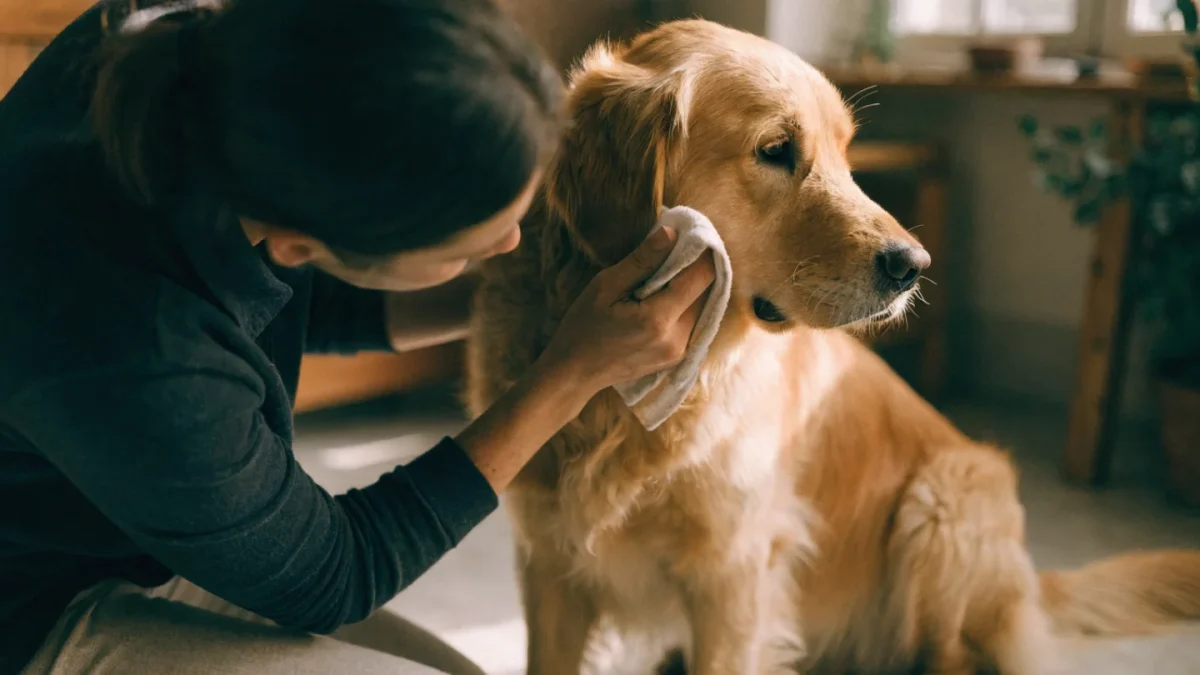
A client once came in asking what she should be doing to keep her dogs' ears and eyes healthy at home. Learn more about home dental care for here. I told her: mostly nothing, and occasionally something, and knowing the difference is the whole skill.
That's genuinely how I approach it. The goal of home care for eyes and ears is not to substitute for veterinary treatment — it's to maintain cleanliness in a way that doesn't interfere with normal function, and to catch problems early enough that they don't escalate. Most healthy animals need very little active intervention.
Eye Cleaning
What's Normal and What Isn't
Most dogs and cats accumulate a small amount of discharge in the inner corners of their eyes — this is normal. The material is typically rust-colored or slightly brown (from porphyrin pigments in tears) and forms a soft or slightly crusty deposit.
What's not normal, and doesn't belong in the "routine cleaning" category:
- Yellow, green, or white discharge
- Discharge that's thick, sticky, or copious
- One eye discharging while the other is clear (asymmetry suggests a localized problem)
- Any discharge accompanied by squinting, redness, swelling, or the pet rubbing the eye
If you're seeing those signs, cleaning the discharge isn't the intervention needed — a vet visit is.
How to Clean Eye Discharge
For routine removal of normal corner discharge:
- Use a clean, soft cloth or cotton pad dampened with sterile saline or warm water.
- Gently wipe outward from the inner corner. Don't rub directly on the eye.
- Use a fresh cloth or pad for each eye to avoid transferring anything between them.
- Never use the same cloth for multiple wipes without refreshing it — you're just moving material around.
Commercially available pet eye wipes are fine for this purpose if they're fragrance-free and ophthalmically safe. Check the ingredient list for anything potentially irritating.
What to avoid:
- Baby wipes or human facial wipes (often contain fragrance or preservatives that irritate animal eyes)
- Cotton balls directly on the eye surface (fibers can lodge under the eyelid)
- Any human eye drop not specifically approved by your vet for use in your pet
- Wiping inside the eye itself
For breeds with excessive tear staining (Shih Tzus, Bichons, Maltese, Persians), the staining reflects ongoing tear overflow rather than a cleaning deficit. Cleaning removes the visible deposit but doesn't solve the underlying production or drainage issue — that's a conversation for your vet.
Ear Cleaning
Ear cleaning is more involved than eye cleaning, and the stakes for doing it incorrectly are higher.
When to Clean — and When Not To
Not all ears need routine cleaning. A healthy ear that looks clean, smells neutral, and isn't bothering the dog should mostly be left alone. Routine cleaning of a healthy ear removes protective wax, disrupts normal flora, and can cause irritation.
Clean the ears more actively when:
- Your dog has a history of ear infections and the vet has recommended preventive cleaning
- The dog has swum or been bathed (moisture in the canal is a risk factor)
- You can see a moderate amount of light brown waxy material at the canal entrance
- The ear smells slightly musty (mild early odor, not the obvious smell of active infection)
Do NOT attempt home cleaning if:
- There is visible redness, swelling, or pain
- The discharge is discolored (yellow, green) or heavy
- The dog is shaking its head constantly or the ear is obviously tender
- You suspect an active infection or ear mites
An infected ear needs treatment, not cleaning. Putting a cleaning solution into an infected or potentially perforated ear can cause significant harm.
Products: What to Use
Use only products formulated specifically for veterinary ear cleaning. These are pH-buffered to match the ear canal environment and contain drying and antimicrobial agents appropriate for regular use.
Look for products containing ceruminolytic (wax-dissolving) agents for dogs with waxy buildup, or gentle drying agents for dogs prone to moisture-related infections. Your vet can recommend a specific formulation based on your dog's history.
What not to use:
- Water alone (doesn't dry adequately)
- Human ear cleaning products
- Vinegar solutions (can be irritating to inflamed or sensitive canal tissue)
- Hydrogen peroxide (caustic and potentially harmful)
- Cotton-tipped applicators inserted into the canal — these push material deeper and risk eardrum damage
Step-by-Step Ear Cleaning
-
Gather your supplies: veterinary ear cleaning solution, cotton balls or gauze squares. Have treats ready.
-
Position your dog somewhere comfortable — on a non-slip surface or lap for small dogs.
-
Apply the solution: lift the ear flap gently and apply the cleaner according to the product's instructions — generally enough to fill the canal.
-
Massage the base of the ear: with the ear flap still held up, gently massage the ear at the base for 20-30 seconds. You should hear a squelching sound as the solution moves through the canal. This is correct.
-
Let the dog shake: step back. They will shake their head vigorously, and this is actually helpful — it brings loosened debris out of the canal.
-
Wipe the visible canal entrance and ear flap: using cotton balls or gauze, gently wipe out the loosened material from the parts you can see. Never insert your finger or any implement beyond what you can clearly see.
-
Reward: treat, praise, brief break.
If your dog is very resistant, cleaning is more easily done in two or three sessions rather than forcing a complete clean in one go. Many dogs become more tolerant with gradual, positive association.
Cat Ear Cleaning
Most cats with healthy ears need no routine cleaning. Cats are fastidious self-groomers and tend to maintain clean outer ears themselves.
When cleaning is needed (following vet guidance for ear mite treatment, or to remove visible waxy buildup), the approach is the same as for dogs — but requires more patience. Cats are generally less tolerant of ear manipulation. Using a towel wrap for restraint and working quickly and confidently helps. For step-by-step guidance specific to cats, a dedicated guide covers the approach in detail.
Recognizing When Professional Cleaning Is Needed
Some situations require veterinary cleaning rather than home cleaning:
- Significant wax impaction or debris buildup deep in the canal
- Any active infection or inflammation
- Pain response when touching the ear
- Ears that haven't been cleaned in a long time and are heavily loaded with material
- Any dog where you're uncertain what's normal vs. pathological
A professional ear cleaning (often done under sedation to allow thorough, comfortable access) followed by a clear baseline is often the best starting point before establishing a home maintenance routine.
For a broader understanding of ear conditions and when they need treatment rather than maintenance, see ear problems in dogs and cats and the full eye and ear health in dogs and cats guide.
Frequently Asked Questions
Can I use cotton-tipped applicators to clean my dog's ears?
Only on the visible outer surfaces of the ear — never inserted into the canal. Cotton-tipped applicators pushed into the ear canal push debris further down rather than removing it, and carry a risk of causing trauma to the ear canal or eardrum. Limit their use to wiping the external ear flap and the visible entrance of the canal.
How often should I clean my dog's ears?
For dogs with no history of ear problems: only after water exposure (swimming, bathing) or when visible wax accumulation is apparent. For dogs with a history of infections: follow your vet's guidance, which may be every one to two weeks. For dogs currently being treated for an infection: follow the medication schedule rather than adding extra cleaning unless specifically directed.
Is it normal for my cat to have brown material in their ears?
A small amount of light brown waxy material at the outer entrance of a cat's ears can be normal. Dark, coffee-ground-like material in larger quantities, combined with scratching or head shaking, is the classic presentation of ear mites and warrants veterinary attention. Any material that's discolored, has an odor, or is causing visible discomfort is not normal.