

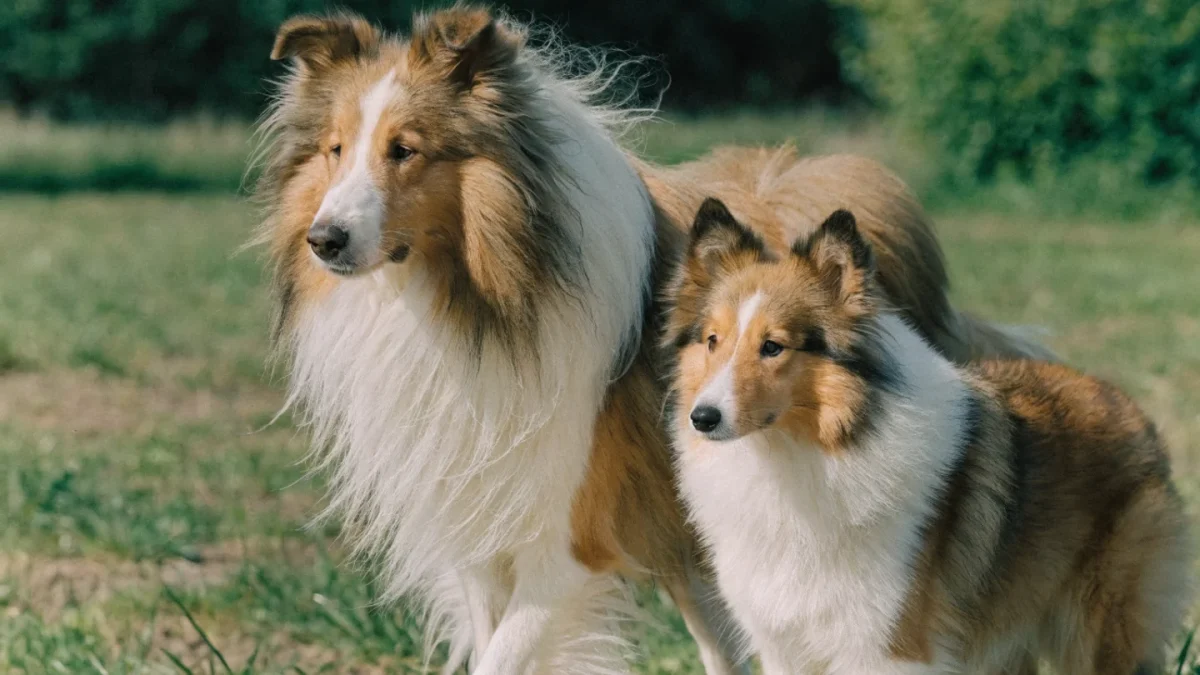
The Shetland Sheepdog is not a miniature Collie. I start here because it's the most persistent misconception about either breed, and it leads directly to disappointed owners who expected one dog and got another. The Sheltie developed on the Shetland Islands off Scotland's northern coast, where harsh conditions favored small, efficient herding dogs. Rough Collies were crossbred into the Sheltie's ancestry during breed development in the early 1900s — which explains the visual similarity — but Shelties also carry genetics from Pomeranians, Papillons, and the small Shetland working dogs that preceded them.
The Rough Collie, meanwhile, was a Scottish Highland herding dog made internationally famous by Queen Victoria's patronage in the 1860s and later cemented in popular culture by a fictional dog named Lassie. The breeds share a job description and a general silhouette, but the resemblance runs less deep than it appears.
Size and Build
| Trait | Rough Collie | Shetland Sheepdog |
|---|---|---|
| Height | 56-66 cm | 33-41 cm |
| Weight | 20-34 kg | 6-12 kg |
| Build | Elegant, balanced, wedge-shaped head | Smaller, proportionate, refined head |
| Coat | Abundant double coat, heavy mane | Dense double coat, full mane and frill |
The size difference is substantial. A Collie is a medium-large dog. A Sheltie fits comfortably in spaces where a Collie cannot. This matters for apartment living, travel, and daily logistics — but it also affects exercise capacity, fragility around children, and veterinary costs.
Temperament
Collies are among the gentlest herding breeds. They're sensitive, devoted, and remarkably patient — qualities that made them cultural symbols of the ideal family dog. A Collie in a well-run household tends toward calm reliability. They read emotional cues accurately and often position themselves near family members who are upset or unwell. Their herding instinct is present but moderate; most Collies don't obsessively chase or nip.
Shelties run at a higher RPM. They're alert, reactive, and intensely responsive to their environment. Shelties notice everything — sounds, movements, changes in routine — and they respond vocally. The Sheltie bark is frequent, piercing, and difficult to train out because it's wired into their alert-and-notify herding style. On the Shetland Islands, a small dog needed a big voice to move livestock.
Shelties also herd more actively than Collies in a domestic setting. Children, other pets, and even adults may find themselves gently nipped at the heels or circled during moments of excitement. This isn't aggression — it's a working dog doing what it was built to do. But it requires management.
Both breeds are sensitive to harsh correction. Raised voices and physical discipline produce anxiety, not compliance. Positive reinforcement works dramatically well with both — they want to cooperate, they just need to feel safe doing it.
Grooming
Both breeds demand substantial coat maintenance. There's no shortcut.
Collies have a profuse double coat with a heavy mane and abundant feathering on the legs and tail. Brushing three to four times weekly prevents matting. During seasonal shedding (twice yearly), daily brushing is necessary to manage the volume of loose undercoat. A full grooming session on a Rough Collie takes 30 to 45 minutes.
Shelties have proportionally as much coat as Collies — the mane, frill, and leg feathering are all dense. Brushing three to four times weekly is the minimum. The area behind the ears and under the forelegs mat quickly if neglected. Shedding is heavy and year-round, with the same seasonal blowouts.
Smooth Collies exist and require far less grooming, but the vast majority of Collies in companion homes are Rough Collies.
Health Concerns
Both breeds share several genetic predispositions, which makes sense given their related heritage.
Collies are predisposed to Collie eye anomaly (a congenital condition affecting the retina and surrounding tissue; DNA-testable), progressive retinal atrophy, dermatomyositis (an inflammatory disease of skin and muscle), and MDR1 gene sensitivity, which causes dangerous reactions to certain common medications including ivermectin. Bloat is a risk in the deep-chested Collie. Average lifespan: 12 to 14 years.
Shelties share the MDR1 sensitivity and Collie eye anomaly risk. They additionally face hip dysplasia (at rates that surprise people given the breed's small size), thyroid disease, von Willebrand's disease, and patent ductus arteriosus. Dermatomyositis also occurs in Shelties. Average lifespan: 12 to 14 years.
The MDR1 gene mutation deserves emphasis for both breeds. Before administering any medication — including common heartworm preventives — both Collies and Shelties should be tested for MDR1 status. An adverse drug reaction from this mutation can be fatal.
Exercise Needs
Collies need 45 to 60 minutes of daily exercise. They enjoy walks, moderate play, and gentle training sessions. They're not high-intensity athletes — most Collies are content with steady moderate activity rather than sprinting or endurance challenges.
Shelties need 45 to 60 minutes as well, but with higher intensity. They excel in agility, flyball, and obedience competition — their combination of speed, intelligence, and eagerness to work makes them natural competitors. A Sheltie with insufficient mental and physical stimulation becomes a noisy, anxious, shadow of the dog it should be.
Living Situation
Collies adapt well to suburban and rural homes with yard access. They can manage apartment living but prefer space to patrol — herding dogs like having a territory to oversee.
Shelties fit apartments better due to size, but the barking is a significant concern for shared-wall living. If noise complaints worry you, the Sheltie may create exactly that problem. Collies are quieter and more compatible with close-quartered neighbors.
Both breeds do well with children. Collies are more tolerant of unpredictable child behavior. Shelties may attempt to herd young children, which means nipping at moving feet — not harmful but startling for kids and parents alike.
Who's the Right Fit
Choose the Collie if you want a gentle, calm, moderately active family dog with a beautiful coat you're willing to maintain. Collies are forgiving of novice owners and patient with household chaos. They're the breed equivalent of a steady, reliable friend.
Choose the Sheltie if you want a compact, high-drive herding dog that excels in training and sport, and you can tolerate vocal expression as a permanent feature of your household. Shelties reward invested, active owners with a level of responsiveness and partnership that's genuinely impressive.
For more breed matchups, visit our breed comparisons guide. For dedicated breed profiles, the Collie complete breed guide covers the Rough Collie's Scottish Highland origins and the Shetland Sheepdog complete breed guide details the Sheltie's Shetland Islands development and its mixed ancestry.