

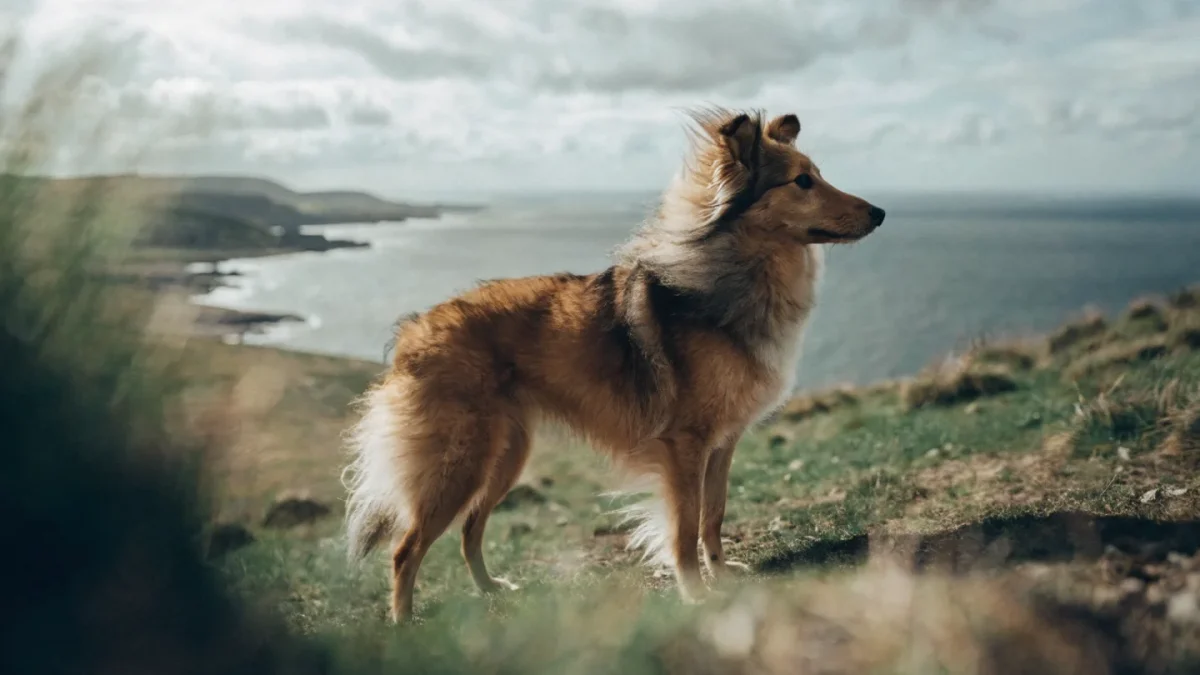
The Shetland Sheepdog did not start as a miniature Collie. That misconception has dogged the breed — no pun intended — for over a century, and it gets the origin story almost entirely backward. Shelties descend from small, spitz-type working dogs that roamed the Shetland Islands long before anyone thought to cross them with Rough Collies. The Collie influence came later, layered on top of an existing population of scrappy island herders that had been managing sheep, poultry, and ponies in some of the most unforgiving terrain in the British Isles.
This shetland sheepdog breed guide covers the breed as it actually is — not the Collie-in-miniature caricature, not the "easy small dog" stereotype, and not the show-ring ornament that some breeding programs have turned it into. If you're considering a Sheltie, you need to understand what centuries of island life selected for: a dog that's sensitive, watchful, vocally expressive, physically hardy, and far more complex than its pretty face suggests.
Origins and History
The Shetland Islands sit roughly 170 kilometers north of mainland Scotland, closer to Norway than to London. The climate is harsh — persistent wind, horizontal rain, short growing seasons, and limited grazing land. Everything on the islands evolved smaller. Shetland ponies, Shetland sheep, Shetland cattle. The dogs followed the same pattern.
The original island dogs were a mixed population: small, rough-coated herders with probable contributions from Scandinavian spitz breeds brought by Norse settlers, the King Charles Spaniel, and various working collies from the Scottish mainland. These weren't refined breeds. They were functional animals that survived because they could manage livestock in conditions that would exhaust a larger dog. The small body size was an adaptation — smaller dogs needed fewer calories on islands where food was scarce.
By the late 1800s, tourists visiting the Shetlands began buying these appealing small dogs as souvenirs. Local farmers, sensing economic opportunity, started crossing the island dogs with Rough Collies to produce something more visually striking and marketable. The Collie crosses gave the breed its current appearance — the refined head, the abundant coat, the elegant silhouette — but they also pushed the breed away from its working roots.
The breed was first recognized by the Kennel Club in Britain in 1909 as "Shetland Collies," a name that enraged Collie breeders. The name changed to "Shetland Sheepdog" by 1914. The breed standard has been revised multiple times since, with persistent tension between those who wanted a miniature show Collie and those who prioritized the breed's herding function and distinct island heritage.
For a deeper exploration of this history, the full history of the Shetland Sheepdog traces the breed's journey from working island dog to the companion we know today.
Physical Characteristics
Size and Build
The breed standard calls for a height of 33 to 41 cm (13 to 16 inches) at the shoulder. Weight isn't specified in most standards but typically falls between 6 and 12 kg, depending on height and build. Males tend toward the upper end of the range, females toward the lower.
Shelties should look like small, agile herding dogs — not fragile miniatures. The body is slightly longer than tall, with a level topline and moderate bone. The chest is deep enough to reach the elbows, providing the lung capacity for sustained trotting. Feet are compact and oval, built for rough terrain rather than groomed show rings.
What most people get wrong about Sheltie size is expecting uniformity. There is significant variation. Some breeding lines produce dogs closer to 33 cm that barely break 6 kg; others produce dogs near the top of the standard at 40-plus cm and 11 to 12 kg. Both are correct Shetland Sheepdogs. Oversized Shelties — those exceeding the standard by more than a couple of centimeters — are common and perfectly healthy; they simply don't conform to show requirements.
Coat
The Shetland Sheepdog coat is the breed's most visually striking feature and its most demanding maintenance requirement. It's a double coat — a long, harsh, straight outer coat over a dense, short undercoat that provides insulation against wind and cold.
The mane and frill around the neck and chest are particularly abundant, especially in males. Feathering on the legs, a generous tail plume, and profuse hair behind the ears complete the picture. The coat is weather-resistant by design, developed on islands where wind chill and driving rain were daily realities.
Recognized colors include sable (ranging from golden to deep mahogany), tricolor (black with tan and white markings), blue merle (silvery blue mottled with black, plus tan and white), bi-black (black and white), and bi-blue (blue merle and white). Color-headed white (mostly white with colored head markings) also occurs but is not accepted in all breed standards.
Head and Expression
The head is the feature that most clearly distinguishes a Sheltie from a small Rough Collie to an experienced eye. The Sheltie head should appear refined and wedge-shaped, with a slight but definite stop — the transition between skull and muzzle is less flat than a Collie's. The ears are small, set high, and carried semi-erect with the tips folding forward. That ear carriage — alert but not pricked — contributes to the breed's characteristically attentive expression.
The almond-shaped eyes are dark in sable and tricolor dogs, but blue merles may have one or both eyes blue or partially blue. The overall expression should convey intelligence, alertness, and a gentle watchfulness.
Temperament and Behavior
If the Border Collie is the overachieving workaholic who can't stop moving, the Shetland Sheepdog is the equally intelligent colleague who reads every person in the room before deciding how to respond. Shelties are acutely perceptive dogs. They notice everything — changes in your tone, your posture, your routine, your emotional state — and they respond to all of it.
What Most People Get Wrong About This Breed
The biggest misconception about Shetland Sheepdogs is that they're small, quiet, easygoing companion dogs. They are emphatically none of those things. Well — they're small. But quiet and easygoing? Not remotely.
Shelties bark. They bark at visitors. They bark at delivery trucks. They bark at birds in the yard, at changes in the weather, and at sounds you can't hear. This is herding behavior — the bark was the primary tool island Shelties used to move livestock and alert farmers to predators or straying animals. It's hardwired, not a training failure. You can manage it, redirect it, teach a "quiet" cue — but you cannot train it out of a breed that was selected for vocal responsiveness over hundreds of years.
And easygoing? Shelties are sensitive. Remarkably, sometimes problematically sensitive. Harsh corrections, raised voices, household tension, or even just a disrupted routine can send a Sheltie into anxious withdrawal. This is not a breed that shrugs off a bad day. If you're stressed, your Sheltie knows. If you're arguing, your Sheltie is absorbing it. This sensitivity is the flip side of their responsiveness — you can't have one without the other.
To understand this temperament in depth, the Shetland Sheepdog temperament profile examines sensitivity, intelligence, and working drive as interconnected traits rather than separate bullet points.
Intelligence and Trainability
Shelties are consistently ranked among the top ten most trainable breeds across multiple working intelligence assessments. In obedience and agility competitions, they regularly outperform dogs twice their size. Their learning speed is remarkable — many Shelties master new commands in fewer than five repetitions and execute them reliably on the first request.
That intelligence comes with a caveat. Smart dogs get bored. A Sheltie with nothing to do will create its own entertainment, and that entertainment often involves barking at phantom threats, obsessively circling, or developing repetitive behaviors. Mental stimulation isn't optional for this breed — it's structural maintenance.
Social Dynamics
Shelties tend to be reserved with strangers. "Reserved" is the diplomatic term — some Shelties are flat-out shy, flinching away from unfamiliar hands and retreating to a safe distance until they've assessed whether the new person is acceptable. Early, thorough socialization mitigates this tendency but rarely eliminates it entirely. This is a breed that bonds intensely with its household and extends trust slowly.
With their own people, Shelties are affectionate to the point of being Velcro dogs. They follow their person from room to room, monitor household activity from a chosen vantage point, and many develop a specific bond with one family member that's noticeably stronger than their attachment to others.
With other dogs, Shelties are generally social but sometimes bossy. The herding instinct can manifest as nipping at the heels of other dogs, chasing running children, or circling and barking to control movement. None of this is aggressive — it's occupational behavior from a dog whose ancestors spent centuries managing the movements of other animals.
Health Profile
Shetland Sheepdogs are broadly healthy for a purebred dog, with an average lifespan of 12 to 14 years. Several individuals have been documented living to 15 or 16. But the breed carries specific genetic predispositions that every potential owner needs to understand before committing.
MDR1 Drug Sensitivity
The MDR1 (Multi-Drug Resistance 1) gene mutation affects approximately 15% of Shetland Sheepdogs as homozygous (two copies of the mutation), with an estimated additional 35% carrying one copy — meaning roughly half the breed carries at least one copy of the mutation. This mutation impairs the function of P-glycoprotein, a protein that acts as a gatekeeper at the blood-brain barrier. Dogs with two copies of the mutation cannot properly pump certain drugs out of the brain, leading to potentially fatal neurotoxicity from medications that are perfectly safe for other breeds.
The drugs involved include ivermectin (a common antiparasitic), loperamide, and several chemotherapy agents and sedatives. Any veterinarian treating a Sheltie should be aware of its MDR1 status before prescribing medication. A simple DNA test identifies carriers, and there is no reason not to test.
Collie Eye Anomaly (CEA)
CEA is a congenital condition affecting the development of the choroid and retina. It ranges from mild (small areas of choroidal hypoplasia that don't affect vision) to severe (retinal detachment and blindness). The condition is present at birth and does not progress after the eye finishes developing, though the severe form causes permanent vision loss.
CEA is inherited as an autosomal recessive trait, and a DNA test identifies carriers. Screening breeding stock is straightforward, and the prevalence has decreased in well-managed breeding programs. However, the mutation remains common enough in the general Sheltie population that testing matters.
Other Health Concerns
- Hip dysplasia: Less common than in larger breeds but documented in Shelties. Breeding stock should be evaluated.
- Von Willebrand's disease (Type III): A bleeding disorder caused by deficient clotting factor. The severe form (Type III) occurs in Shelties and can be life-threatening during surgery or trauma. DNA testing identifies carriers.
- Thyroid disease: Hypothyroidism is relatively common and presents as weight gain, coat changes, and lethargy. Treatable with daily medication.
- Dermatomyositis: An inflammatory disease affecting the skin and sometimes the muscles. It has a hereditary component in Shelties and Collies. Severity varies widely — some cases are mild and self-limiting, others require ongoing management.
- Patent ductus arteriosus (PDA): A congenital heart defect that occurs at higher rates in Shelties than in many other breeds. Surgical correction is usually successful if detected early.
- Progressive retinal atrophy (PRA): Gradual vision loss leading to blindness. DNA testing available for some forms.
Lifespan Context
The 12-to-14-year average puts Shelties in good territory for a breed of their size. Smaller dogs generally live longer than larger ones, and Shelties benefit from that trend. The primary threats to longevity are cancer (as in most breeds), autoimmune conditions, and the consequences of unscreened genetic issues.
Grooming Requirements
Sheltie grooming is a serious commitment. If regular coat maintenance sounds tedious rather than therapeutic, reconsider this breed.
Coat Care
The double coat requires thorough brushing at least two to three times per week, working all the way down to the skin rather than just skating over the surface. Behind the ears, under the front legs, and in the "pants" (the thick fur on the back of the thighs) are mat-prone zones that demand special attention. A pin brush handles the outer coat, a slicker brush works through tangles, and a metal comb verifies that no mats were missed.
Twice a year — roughly in spring and fall — Shelties blow their undercoat. During these periods, daily brushing with an undercoat rake is necessary to manage the sheer volume of loose fur. The amount of hair a 9 kg dog produces during a coat blow is genuinely startling. It comes out in handfuls, it drifts into corners, it weaves itself into your clothing.
Bathing every four to six weeks is typical. A thorough rinse-and-dry after bathing is essential — damp undercoat invites skin problems and hot spots. Some owners prefer to line-dry with a forced-air dryer to ensure the dense undercoat is completely dry.
Trimming
Shelties are not a heavily trimmed breed. Tidying the fur around the feet, trimming between the paw pads, and neatening the hock feathering keeps the dog looking clean without altering the natural coat silhouette. Never shave a Sheltie's double coat — it disrupts the insulation system and the coat often regrows with an altered, woolly texture.
Nails, Ears, and Teeth
Nail trimming every two to three weeks. Weekly ear checks — the semi-erect ears allow decent air circulation but still warrant inspection for wax buildup or debris. Dental care several times per week reduces periodontal disease risk.
Exercise and Activity Needs
Shelties need 45 to 60 minutes of daily exercise, split between physical activity and mental engagement. They don't require marathon distances, but they do need purposeful movement and brain work.
Agility is the sport most closely associated with Shelties, and for good reason — the combination of speed, responsiveness, and handler focus makes them natural competitors. Obedience, rally, herding trials, and flyball are also excellent outlets. These are dogs that want a job. Any job. Give them one, or they'll appoint themselves household security coordinator and bark at everything that moves.
Puppies need exercise calibrated to their developmental stage. Short, frequent play sessions rather than sustained runs protect growing joints. The general guideline of five minutes per month of age, twice daily, is a reasonable framework for structured exercise.
Senior Shelties remain more active than many breeds well into their later years. A 10-year-old Sheltie that's been kept fit and lean will still want meaningful daily activity.
Nutrition Fundamentals
Shelties are a small breed with moderate caloric needs, but they vary individually. An active 9 kg adult might need 400 to 600 calories per day, while a less active or neutered dog of the same size will need less. Measured meals — two per day for adults — prevent the gradual weight creep that's easy to miss under a heavy coat.
The coat can mask weight gain effectively. Run your hands over the ribs regularly — you should feel them without pressing hard. If you can't, the dog is carrying excess weight. Even a kilogram of extra weight on a 9 kg dog represents a substantial percentage of body mass and puts disproportionate strain on joints.
Shelties are generally less food-obsessed than retrievers or beagles, but individual dogs vary. Some are picky; some will inhale anything available. Adjust accordingly, and factor treat calories into daily totals during training periods.
Living Situation Compatibility
Shelties adapt well to various living situations as long as their exercise and mental stimulation needs are met. They're small enough for apartments but vocal enough to generate noise complaints if the barking isn't managed.
A yard is helpful but not essential. What's essential is an owner who's present, engaged, and consistent. Shelties that are left alone for extended hours develop anxiety-driven behaviors — excessive barking, destructive chewing, self-directed licking. This is not a breed that tolerates prolonged isolation well.
They're excellent with children who've been taught to interact gently. The herding instinct may lead to heel-nipping with running children, which requires early redirection. With household cats, most Shelties coexist peacefully, especially when raised together. Small pocket pets may trigger herding or prey responses depending on the individual dog.
Climate-wise, the double coat provides solid cold-weather tolerance. Shelties handle moderate heat reasonably well but shouldn't be exercised hard in high heat and humidity. The coat insulates against both cold and warmth, but there are limits.
The Right Owner for This Breed
A Shetland Sheepdog is a strong match if:
- You enjoy training and want a dog that learns quickly and eagerly
- You can commit to regular grooming — the coat isn't optional maintenance
- You work from home or have a schedule that doesn't leave the dog alone for eight-plus hours daily
- You understand that barking is managed, not eliminated, in this breed
- You want a responsive, bonded companion that pays attention to you as closely as you pay attention to it
- You're prepared to screen for breed-specific genetic conditions before purchasing
A Sheltie is the wrong choice if:
- You want a quiet, independent dog that self-entertains
- You live in close quarters with noise-sensitive neighbors and no plan for bark management
- You dislike grooming or consider it a chore rather than bonding time
- You prefer a dog that greets every stranger with enthusiasm — Shelties are selective
- You're heavy-handed in corrections or run a chaotic, loud household
- You want a low-maintenance dog that requires minimal daily engagement
Shelties give you everything they have — their attention, their loyalty, their eagerness to learn, their full emotional range. What they ask in return is a calm, consistent environment and an owner perceptive enough to meet them halfway. Not everyone is built for that relationship. The people who are tend to never choose another breed.
Frequently Asked Questions
Are Shetland Sheepdogs just miniature Collies?
No. While Rough Collies were crossed into the breed during the early 1900s to refine appearance, Shetland Sheepdogs originated from small working dogs on the Shetland Islands with distinct spitz-type and spaniel ancestry. The two breeds share visual similarities but differ in size, temperament nuance, and genetic profile. Shelties are a separate breed with their own history, not a scaled-down version of another.
How much do Shetland Sheepdogs bark?
Substantially. Shelties are among the most vocal herding breeds. Barking was a functional tool for managing livestock on the Shetland Islands, and the instinct persists. They bark at visitors, at unusual sounds, at perceived changes in their environment, and sometimes for no reason an owner can identify. Consistent training with a "quiet" cue can reduce the volume and duration, but expecting a silent Sheltie is unrealistic.
Are Shelties good apartment dogs?
They can be, with caveats. Their small size is apartment-compatible, but their barking is not — unless actively managed. A Sheltie that receives adequate exercise, mental stimulation, and isn't left alone for long periods can live contentedly in an apartment. The determining factor isn't square footage but rather the owner's commitment to meeting the dog's needs and managing vocalization in a shared-wall environment.
What health tests should Shetland Sheepdog breeding stock have?
At minimum: MDR1 gene status, CEA (Collie Eye Anomaly) DNA test or ophthalmologist evaluation, von Willebrand's disease screening, and hip evaluation. PRA (progressive retinal atrophy) testing is also recommended. Any breeding program that cannot or will not provide documentation of these screenings should be avoided. The breed's genetic predispositions are well-characterized and testable — there's no excuse for not screening.
Do Shetland Sheepdogs get along with cats?
Most Shelties coexist peacefully with cats, especially when raised together or properly introduced. The herding instinct may manifest as chasing or circling a running cat, but this is typically control behavior rather than predatory intent. Individual temperament varies. A well-socialized Sheltie introduced gradually to a confident cat usually establishes a workable household dynamic within a few weeks.