

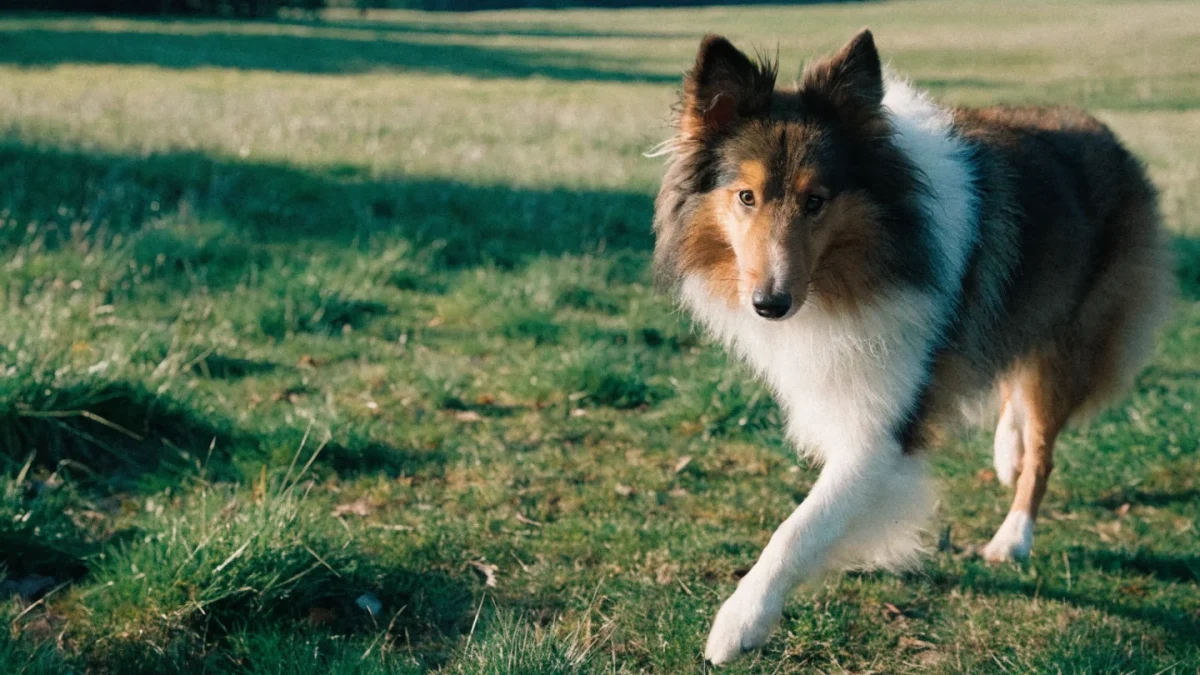
There's a gene in a significant portion of Shetland Sheepdogs that turns common veterinary drugs into potential killers. Not rare drugs. Not experimental treatments. Ivermectin — the antiparasitic in countless heartworm preventatives. Loperamide — the active ingredient in Imodium, which people sometimes give their dogs for diarrhea. Acepromazine, butorphanol, several chemotherapy agents. The MDR1 mutation, a four-base-pair deletion in the ABCB1 gene, disables the blood-brain barrier pump that keeps these drugs out of the central nervous system. Without that pump, neurotoxic concentrations build. Tremors, blindness, seizures, coma, death — from a routine dose that would be completely safe in most other dogs.
Roughly 15% of Shelties are homozygous for this mutation, meaning both copies of the gene are affected and they have essentially no functional protection. Another 35% carry one copy. So about half the breed carries a gene that makes standard drug protocols dangerous — and the test to find out costs less than a routine office visit.
This article covers the three areas of Sheltie genetics every owner needs to understand: the MDR1 drug sensitivity mutation, Collie Eye Anomaly, and the coat color inheritance patterns that drive so many breeding decisions.
MDR1: The Drug Sensitivity Gene
The ABCB1 gene encodes P-glycoprotein, a transport protein that functions as a molecular pump in the blood-brain barrier, intestinal lining, liver, and kidneys. Its primary role is preventing certain molecules — including many common drugs — from accumulating in the central nervous system. When the gene is mutated, the pump doesn't work.
In Shetland Sheepdogs, the MDR1 mutation is a four-base-pair deletion that produces a nonfunctional, truncated version of P-glycoprotein. Dogs with two copies of the mutation (homozygous mutant/mutant) have no functional P-glycoprotein at the blood-brain barrier. Dogs with one copy (heterozygous mutant/normal) produce reduced but partially functional levels.
The consequence: drugs that P-glycoprotein normally excludes from the brain reach neurotoxic concentrations. Ivermectin is the most historically notorious example — a standard antiparasitic dose that's safe for most dogs can cause tremors, blindness, seizures, coma, and death in homozygous MDR1-affected dogs. But the risk extends to numerous other medications, including loperamide, acepromazine, butorphanol, several chemotherapy drugs, and certain anesthetic agents.
Approximately 15% of Shetland Sheepdogs are estimated to be homozygous for the mutation, with an additional 35% carrying a single copy, based on population screening data from Washington State University's Veterinary Clinical Pharmacology Laboratory. That means roughly half the breed carries at least one copy of a gene that makes standard drug protocols potentially dangerous.
The complete breed guide identifies MDR1 testing as non-negotiable baseline care. The test is a cheek swab, results are permanent, and the information should be on file with every veterinarian who ever treats the dog. There is no reasonable argument against testing.
Collie Eye Anomaly (CEA)
CEA is a congenital developmental defect of the choroid — the blood vessel layer behind the retina — caused by a mutation in the NHEJ1 gene on chromosome 37. Despite the name, it affects Shetland Sheepdogs at comparable rates to Rough and Smooth Collies.
The condition's expression varies dramatically between individuals, even within the same litter. At the mild end, a dog may have small areas of choroidal hypoplasia (underdevelopment) visible only on ophthalmoscopic examination, with no functional vision impairment. At the severe end, colobomas (structural defects in the eye), retinal detachment, and intraocular hemorrhage can cause partial or complete blindness.
A complicating factor is the "go-normal" phenomenon: some puppies with mild choroidal hypoplasia visible at six to eight weeks of age appear ophthalmoscopically normal by twelve weeks as retinal pigmentation develops and covers the affected area. The underlying defect is still present, and the dog is still genetically affected. It simply becomes invisible to physical examination. This is why DNA testing, rather than ophthalmoscopic screening alone, is necessary for accurate identification.
CEA follows autosomal recessive inheritance. A dog needs two copies of the mutant allele to be affected. Carriers (one copy) are clinically normal but pass the gene to roughly half their offspring. The history of the breed helps explain why the mutation is common — the Shetland Islands' small, isolated population concentrated recessive alleles through founder effects.
The DNA test identifies affected dogs, carriers, and clear dogs with certainty. Responsible breeding programs use it to avoid producing affected puppies — either by breeding only clear dogs or by never crossing two carriers.
Coat Color Genetics
Shetland Sheepdog coat colors are governed by interactions between several gene loci, and the breed's color genetics are among the more interesting in the herding group.
Sable
Sable — ranging from golden to deep mahogany — is the most common Sheltie color and the one most people picture. It's produced by the Ay (sable) allele at the A (agouti) locus. Sable is dominant over the tricolor pattern, meaning a dog with one Ay allele and one at (tan point) allele is still visually sable. This creates "sable-factored" dogs that look sable but carry tricolor genetically and can produce tricolor offspring when bred to another tricolor carrier.
Sable intensity varies substantially. Some sables are pale gold with minimal dark shading; others carry heavy black overlay (shaded sables) where the dark tipping is so extensive the dog appears almost dark brown. Modifiers that control sable shading intensity are not yet fully mapped.
Tricolor and Bi-Black
The tricolor pattern — black body with tan points on the face, legs, and chest, plus white markings — is produced by the at/at genotype at the A locus. It's recessive to sable, so both parents must carry at least one at allele to produce tricolor puppies.
Bi-black Shelties are genetically tricolor dogs with minimal or absent tan points, likely influenced by modifiers at the A locus or intensity genes that suppress phaeomelanin expression. They appear black and white without the tan markings.
Merle
The merle pattern in Shelties follows the same PMEL17 SINE insertion genetics as in Australian Shepherds and other merle breeds. A single copy of the merle allele (Mm) dilutes random patches of eumelanin, creating the characteristic marbled appearance — blue merle on a tricolor base, sable merle on a sable base.
The double-merle risk applies identically: breeding two merle dogs produces a statistical 25% chance of homozygous merle offspring with severe hearing and vision deficits. Cryptic merles — dogs carrying a shorter SINE insertion with minimal visible merling — can pass the gene without looking merle. DNA testing resolves the ambiguity. The Border Collie genetics article covering merle and CEA examines these same two conditions in a closely related herding breed, providing useful comparative context.
Sable merle deserves specific mention. Because the merle gene dilutes eumelanin (black pigment) but has less visible effect on phaeomelanin (red/yellow pigment), sable merles can be nearly indistinguishable from pure sables by visual inspection. This makes them a breeding hazard if misidentified as non-merle.
What Testing Means in Practice
Shetland Sheepdog genetics create three non-negotiable testing priorities for any owner or breeder:
- MDR1 status. Test every Sheltie. Share results with all veterinary providers. This test directly affects drug safety for life.
- CEA status. Test breeding stock. Ophthalmoscopic exams in puppies between six and eight weeks complement but do not replace DNA testing due to the go-normal phenomenon.
- Merle status. Test any dog whose merle genotype isn't confirmed, especially sables that could be cryptic sable merles.
The breed's genetic complexity is not a flaw — it's the consequence of centuries of selection on an isolated island chain where recessive alleles concentrated in a small population. Understanding that complexity is the minimum standard for responsible ownership.