

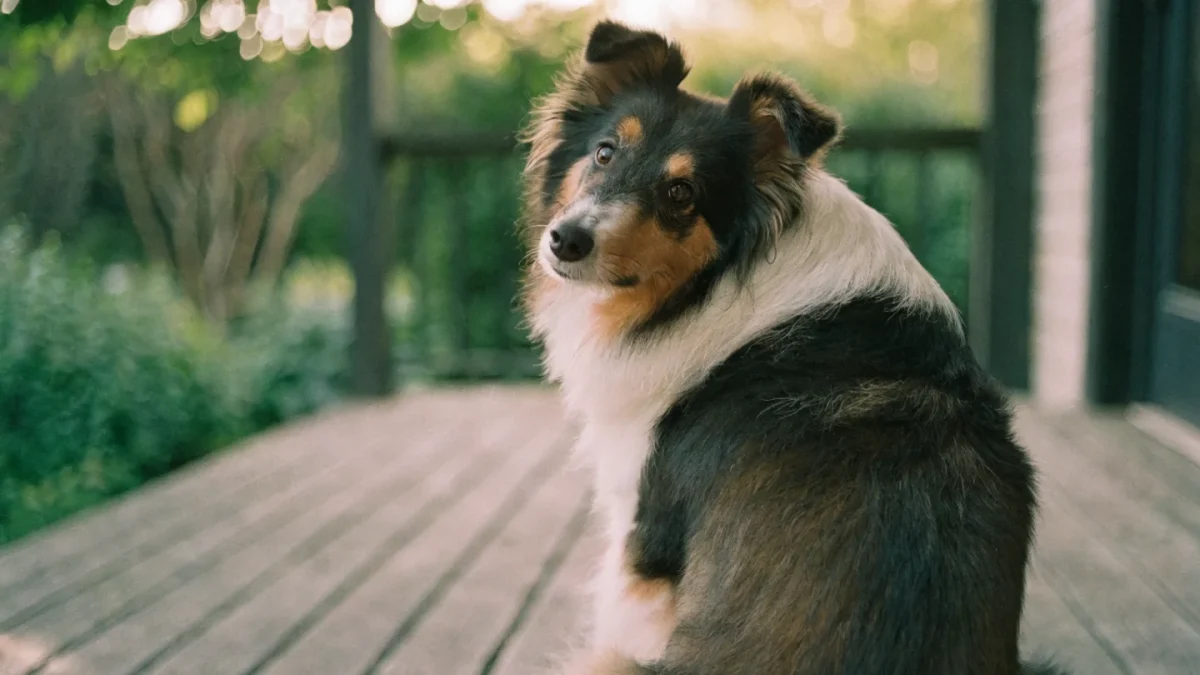
Multiple Shetland Sheepdogs have earned both OTCH (Obedience Trial Championship) titles and herding titles — a rare dual achievement that few breeds accomplish. That dual achievement captures something essential about Sheltie temperament personality — this is a breed that combines precision obedience with functional working instinct, and it does both with an intensity that startles people who expected a pretty, passive companion.
Understanding Shetland Sheepdog temperament means understanding three interconnected traits: sensitivity, intelligence, and drive. You cannot separate them. The sensitivity fuels the responsiveness that makes Shelties brilliant training partners. The intelligence creates a dog that's always processing, always reading the room. The drive — inherited from generations of working dogs that managed livestock without constant human direction — means that processing power needs somewhere to go. When it doesn't have a productive outlet, it goes somewhere you won't like.
The Sensitivity Question
Shelties are emotionally porous. That's the most honest way I can describe it. They absorb the emotional state of their household the way a sponge absorbs water, and they respond to it with their behavior.
A Sheltie in a calm, consistent home is a calm, confident dog. A Sheltie in a household with frequent arguments, chaotic schedules, or an owner who swings between warmth and impatience is a nervous, reactive dog. This isn't learned behavior in the way most people think about it. It's a temperament predisposition that's been documented across the breed for decades. Shelties were developed on small island farms where close cooperation with a single handler was the norm. That tight working bond selected for dogs that were exquisitely attuned to human emotional cues.
The practical implications are significant. Shelties respond poorly to leash corrections, raised voices, and physical intimidation. Not just "poorly" in the sense of being ineffective — poorly in the sense of causing genuine psychological damage. I've seen Shelties shut down after a single harsh correction, refusing to engage in training for days afterward. The correction taught them nothing except that their handler is unpredictable.
Positive methods work remarkably well with this breed precisely because of the sensitivity. A Sheltie that understands what you want and receives clear, consistent feedback for doing it will work tirelessly to earn that approval. The handler relationship is the Sheltie's primary motivator — more than food, more than toys, more than anything else in its environment.
Shyness Versus Reserve
Not every cautious Sheltie is a shy Sheltie, and the distinction matters.
Breed-typical reserve means a dog that assesses unfamiliar people before engaging. It hangs back, watches, reads body language, and approaches on its own timeline. This is normal, functional behavior that's consistent with the breed's heritage as a watchful herding dog. A reserved Sheltie that's been well-socialized will eventually warm up to new people — it just doesn't rush the process.
Problematic shyness is different. A truly shy Sheltie trembles, hides, attempts to flee, or may eventually snap if cornered. This level of fearfulness is not breed-typical — it's the product of inadequate socialization, genetic fearfulness from poorly selected breeding stock, or early traumatic experience. The complete Shetland Sheepdog breed guide covers socialization windows and the importance of screening breeding dogs for stable temperament.
The line between reserve and shyness gets blurred in dogs that missed critical socialization windows. Puppies that weren't exposed to varied people, environments, and stimuli between roughly 3 and 14 weeks old are significantly more likely to develop fear-based responses that look like extreme shyness. With Shelties, this window is especially critical because the breed already leans toward caution.
Intelligence in Practice
Shelties rank in the top six breeds for working intelligence in multiple standardized assessments. They typically learn new commands in fewer than five repetitions and comply on the first request more than 95% of the time in structured settings. In obedience competition, Shelties punch well above their weight class — sometimes literally, competing against much larger breeds and finishing higher.
But working intelligence in a testing environment and living with a smart dog are different experiences.
A Sheltie's intelligence is always running. It's not something you switch on during training sessions and switch off when you want the dog to relax. The same cognitive machinery that makes them brilliant obedience dogs also makes them relentless pattern detectors. Your Sheltie knows what time you usually get up, which shoes mean a walk, what your car engine sounds like from a block away, and the exact sequence of movements that precedes dinner preparation.
This pattern detection is endearing until it becomes anxiety. Shelties that detect a disruption in established patterns can spiral into stress responses — pacing, vocalizing, destructive behavior — that seem disproportionate to the triggering event. Your flight was delayed and you came home two hours late? Your Sheltie noticed the deviation from the pattern at exactly the expected time and has been escalating since.
The antidote is structured mental work. Puzzle feeders. New tricks. Scent games. Varied walking routes. Anything that gives the dog novel problems to solve redirects that cognitive energy into productive channels. Agility training is particularly effective because it combines physical exercise with rapid decision-making — the dog has to read the handler's body language, process the next obstacle, and execute in real time.
The Barking
There is no diplomatic way to address this. Shelties bark. A lot.
The Shetland Sheepdog's history on the islands explains why: the bark was the primary working tool. Island Shelties used vocalization to move sheep, deter predators from poultry runs, and alert farmers to anything out of the ordinary. A quiet Sheltie would have been a useless Sheltie, and generations of selection removed the quiet ones from the gene pool.
Modern Shelties carry that legacy into suburban living rooms, and it causes friction. The bark is high-pitched and carries. It triggers at movement, noise, visitors, passing dogs, squirrels, changes in light, and sometimes nothing at all that a human can identify. Shelties also have a distinctive "spin and bark" behavior — excited circling combined with rapid-fire barking — that surfaces during play, arrivals, and any event the dog finds stimulating.
You cannot extinguish this. I want to be clear about that because people who research the breed deserve honesty, not reassurance. What you can do is teach a reliable "quiet" cue, manage the environment to reduce triggers, and provide enough physical and mental exercise that the dog's overall arousal level stays manageable. A well-exercised, mentally satisfied Sheltie barks less than a bored, under-stimulated one. But "less" is not "never."
If you live in a noise-sensitive environment — thin apartment walls, close neighbors, a landlord with quiet hours — you need to weigh this trait seriously. It's not a deal-breaker for everyone. It is a deal-breaker for some.
Handler Bond and One-Person Tendencies
Shelties love their families. But many Shelties love one family member most. This "one-person dog" tendency is pronounced enough to be a defining breed trait. The chosen person is typically whoever provides the most consistent interaction — the primary trainer, the daily walker, the person who's home most. The bond with that person can be almost uncomfortably intense: constant physical proximity, attention fixed on the person's movements and emotional state, visible distress when the person leaves.
This is wonderful if you're the chosen person and you enjoy that level of devotion. It can be challenging for other household members who feel somewhat secondary to the dog, and it can create genuine separation anxiety if the primary bond person's schedule changes or they're away for extended periods.
Families can mitigate the one-person tendency by dividing responsibilities — different people handle feeding, walking, training, and play. This builds multiple attachment points rather than concentrating the entire bond on a single person. It doesn't eliminate the preference, but it creates a more balanced emotional landscape for the dog.
Living With Children and Other Animals
Shelties and children can work well together, but the combination requires management.
Young children who run, scream, and make unpredictable movements can trigger the herding instinct. A Sheltie that's nipping at a running child's heels isn't being aggressive — it's doing what its ancestors were bred to do. The child doesn't know that, and the experience isn't fun for either party. Supervision, redirection, and teaching children to avoid triggering chase-and-herd behavior are all essential.
Older children who participate in training are often the ideal Sheltie companions. The dog responds to clear, consistent cues regardless of the handler's age, and the partnership of learning together builds a strong bond.
With other dogs, Shelties are usually sociable but can be bossy — circling, barking, attempting to control the other dog's movement. These herding-group behavioral patterns are shared with larger relatives; the Collie complete breed guide covers comparable temperament traits in a closely related herding lineage. With cats, coexistence is usually smooth, especially when the animals are raised together. The herding instinct toward cats tends to be mild compared to prey-driven breeds.
The Temperament You're Signing Up For
Living with a Shetland Sheepdog means living with a dog that watches you as carefully as you watch it. The sensitivity is real. The intelligence is constant. The barking is non-negotiable. And the bond, when it works, is one of the most intense human-dog relationships available in any breed.
That intensity isn't for everyone. The people who thrive with Shelties tend to be patient, consistent, emotionally even-keeled, and genuinely interested in the training process. The people who struggle tend to be reactive, inconsistent, or expecting a decorative companion rather than a working partner in a small body.
The breed asks a lot. It gives back more.