

Every June, like clockwork, a Golden Retriever named Tucker comes to see me. His owner, Karen, loves him fiercely — she’s the kind of person who buys organic dog treats and has a memory foam bed for him. And every June, she asks me the same question: “Should I get him shaved for the summer? He looks so hot.”
I get it. When it’s 95 degrees outside and Tucker is panting on the kitchen tile, looking up at Karen with those big brown eyes, it seems obvious that all that fur must be miserable. Less hair equals cooler dog, right?
Wrong. And I’ll admit — early on, before I really understood coat biology, I didn’t push back hard enough when owners asked about summer clips. The research has evolved, my understanding has deepened, and now the message is unambiguous: shaving a double-coated dog or cat is one of the most counterproductive things you can do for their summer comfort. Here’s why.
What Exactly Is a Double Coat?
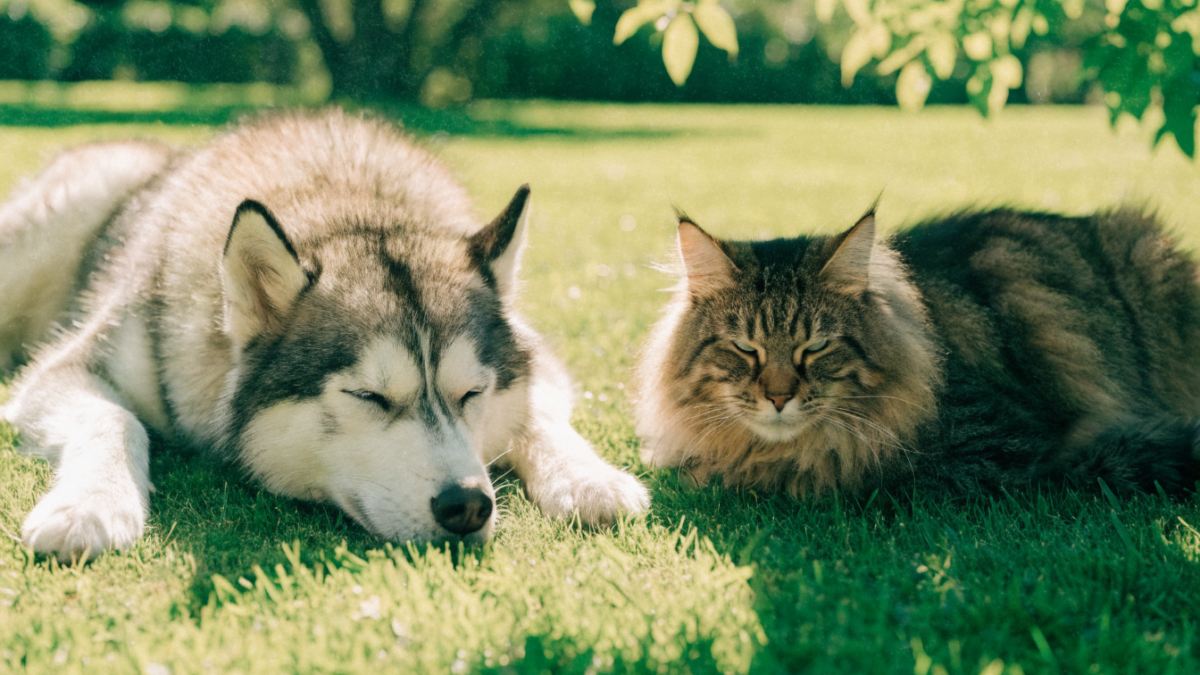
Double-coated breeds have, as the name suggests, two distinct layers of fur. The outer coat (also called guard hairs) consists of longer, coarser hairs that repel water, block dirt, and protect against UV radiation. The undercoat sits beneath — a dense, soft, woolly layer that provides insulation.
Think of it like a high-quality winter jacket paired with a breathable rain shell. The insulation traps a layer of air close to the skin, and the outer layer protects that insulation from the elements. Together, they form what I call a “built-in climate control system.”
This system is remarkably efficient. In winter, the undercoat traps body heat. In summer, those same insulating properties work in reverse — the coat traps a layer of cooler air against the skin and blocks the radiant heat of the sun from reaching the body directly. The guard hairs also reflect sunlight, much like wearing a light-colored shirt on a hot day keeps you cooler than going shirtless.
Common double-coated dog breeds include:
- Golden Retrievers and Labrador Retrievers
- German Shepherds
- Siberian Huskies and Alaskan Malamutes
- Bernese Mountain Dogs
- Pomeranians
- Shetland Sheepdogs
- Chow Chows
- Australian Shepherds
And yes, cats can have double coats too — Maine Coons, Persians, Norwegian Forest Cats, and many domestic longhairs share this structure.
The Summer Shave Myth
Here’s where human logic fails us. We know that taking off a heavy sweater cools us down, so we assume the same applies to our pets. But humans and dogs regulate body temperature in fundamentally different ways.
We sweat. Dogs and cats don’t — at least not across their bodies. They thermoregulate primarily through panting and through vasodilation (blood vessels expanding) in their paw pads and ears. Their fur isn’t just a winter accessory; it’s an active, year-round thermal management system.
When you shave a double-coated animal, you strip away both the insulation that keeps heat out and the UV barrier that protects their skin. The result is a pet who is hotter, not cooler. I’ve seen shaved Huskies come into the clinic in July looking absolutely miserable — panting harder, seeking shade more desperately, and sporting pink, sunburned skin where their coat used to be.
“He seemed cooler for the first day, and then he just got worse. He was panting constantly and his skin was red and flaky.” — a client who shaved her four-year-old German Shepherd, Remy, before I started treating him
Confusing Normal Behavior with Overheating
One thing I often hear from pro-shave owners is, “But my dog was panting so much before I shaved him!” Here’s the thing — dogs pant in warm weather regardless of their coat length. Panting is their normal cooling mechanism. A fluffy Golden Retriever seeking shade on a hot afternoon isn’t necessarily overheating; he’s being smart. It’s the equivalent of you choosing to sit under an umbrella rather than directly in the blazing sun.
The Real Risks of Shaving
Sunburn and Skin Cancer
Dog and cat skin is not designed for direct sun exposure. Without the protective guard hairs, UV rays penetrate straight to the skin surface, causing sunburn — yes, real, painful, peeling sunburn. Over time, repeated UV exposure increases the risk of skin cancer, particularly squamous cell carcinoma and hemangiosarcoma. Light-skinned and light-coated breeds are especially vulnerable.
Heat Stress and Heatstroke
This is the cruel irony. By trying to cool your pet, you’ve actually impaired their ability to regulate temperature. Without the insulating air layer, external heat hits the skin directly. A shaved double-coated dog outside on a 90-degree day will overheat faster than his fully coated counterpart — all other things being equal.
Permanent Coat Damage
This is the risk that breaks my heart, because it’s the one owners don’t see coming. In some double-coated animals, shaving damages the hair follicles permanently or disrupts the natural growth cycle so severely that the coat never returns to normal. The condition has a name: post-clipping alopecia, sometimes informally called “coat funk.”
The undercoat may grow back thick and wild while the guard hairs come in sparse, patchy, or with a strange, cotton-like texture. The coat loses its water-repellent properties. It mats more easily. It becomes a ongoing grooming nightmare that can take months or even years to resolve — if it ever does. I have a patient, a nine-year-old Chow mix named Biscuit, whose owner shaved him at age four. Five years later, his back is still covered in patchy, oddly textured fur that looks nothing like his original magnificent coat.
The unpredictability is what makes this so frustrating. Some double coats recover beautifully after a shave. Others are destroyed. There’s no way to know in advance which outcome you’ll get.
What to Do Instead: Keeping Your Double-Coated Pet Cool
So if shaving is off the table — and it should be — how do you actually help your thick-coated companion through the summer? The answer lies in working with their coat biology rather than against it.
Daily Brushing and De-shedding
This is the single most important thing you can do. Double-coated animals naturally blow their coat — shedding large amounts of undercoat — twice a year, typically in spring and fall. Regular brushing removes the loose, dead undercoat that would otherwise trap excess heat and form painful mats.
Use a high-quality de-shedding tool designed to reach through the topcoat and gently pull out loose undercoat hair. Look for tools with rounded teeth that won’t scratch the skin, and stainless steel construction for durability and easy cleaning. A slicker brush and a wide-toothed comb are also valuable additions to your grooming kit. Many professional groomers now offer de-shedding bath treatments that use conditioning products to loosen dead undercoat before thorough brushing — this is a fantastic and completely safe alternative to clipping.
Smart Summer Management
- Walk early or late. Avoid exercising during peak heat hours (10 AM to 4 PM). Hot pavement can also burn paw pads — if it’s too hot for your bare hand, it’s too hot for their feet.
- Provide shade and fresh water. Always. No exceptions. Even a thick-coated dog can stay comfortable in a shaded area with good airflow.
- Cooling mats. These gel-based mats absorb body heat and provide a cool surface for lying on. Look for non-toxic gel and durable, puncture-resistant covers.
- Never leave your pet in a parked car. Even with windows cracked, a car can reach lethal temperatures in minutes. This isn’t a coat issue — it’s a life-or-death issue.
- Consider a kiddie pool. Many double-coated breeds, especially Retrievers and Shepherds, love to stand or lie in shallow cool water. Just supervise closely.
The Rare Exceptions: When Shaving Is Medically Necessary
I want to be clear that I’m not saying double coats should never be touched with clippers. There are legitimate medical situations where shaving is necessary and appropriate:
- Severe matting that cannot be safely brushed out — mats that are tight against the skin can cause pain, skin infections, and restricted blood flow.
- Surgical preparation — the surgical site must be shaved for sterility.
- Skin conditions — severe hot spots, bacterial or fungal infections, or wounds that need air exposure and topical treatment.
- Diagnostic procedures — ultrasound, for example, requires shaving the area being examined.
In these cases, your veterinarian or a skilled professional groomer will shave only what’s necessary. The rest of the coat stays intact to continue doing its job.
What about cats? The same principles apply. I occasionally see Persian cats with coats so severely matted — usually because grooming has been neglected — that shaving is the only humane option. But as a routine summer cooling measure? Absolutely not. If anything, cats are even more susceptible to sunburn than dogs, particularly around the ears and nose.
The Bottom Line
Tucker is now eleven. Karen never did get him shaved, and every summer she brushes him thoroughly each evening, keeps a cooling mat in his favorite corner, and walks him at dawn. He’s gray around the muzzle now, but his coat is still gorgeous — thick, glossy, and doing exactly what nature intended.
Your double-coated dog or cat inherited a remarkable piece of evolutionary engineering. That thick, luxurious coat isn’t a summer burden — it’s a thermal protection system refined over thousands of years. When we shave it off, we’re not helping. We’re taking away their most powerful tool for staying comfortable in extreme temperatures.
So this summer, put down the clippers and pick up a brush. Your pet will be cooler, safer, and healthier — I promise.
And as always, if you have specific concerns about your pet’s coat, skin, or heat tolerance, talk to your veterinarian. Every animal is an individual, and your vet knows your pet’s full health history.