

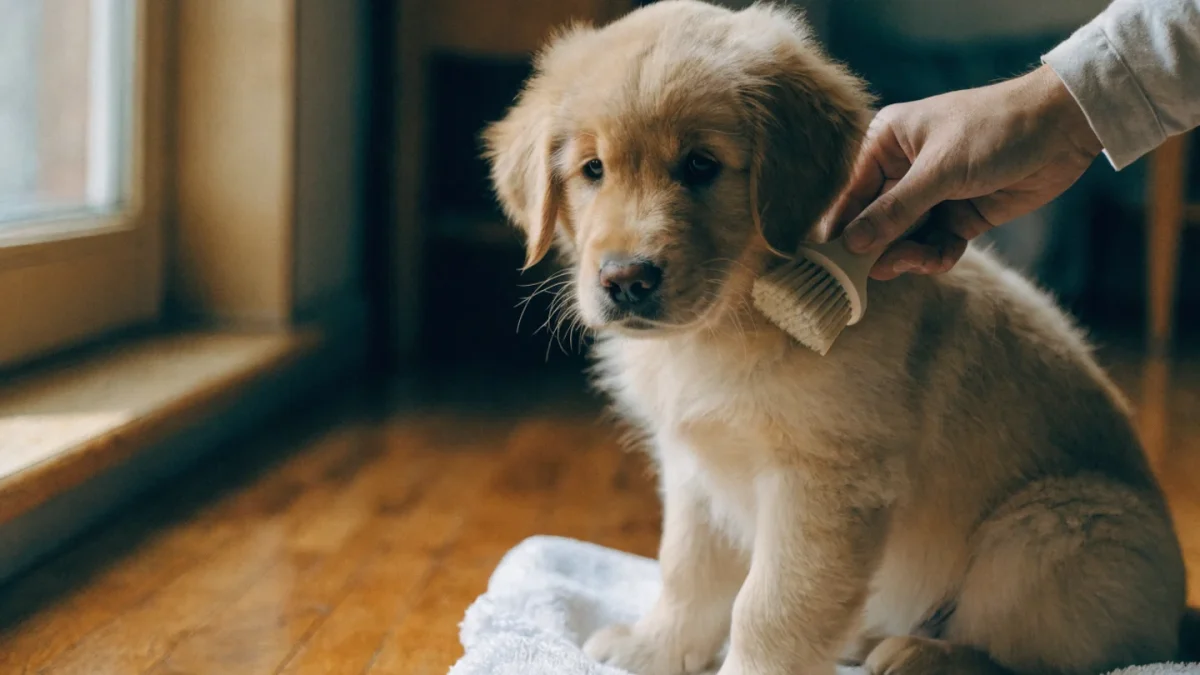
Puppies and kittens arrive in our homes during a brief developmental window — roughly 3 to 12 weeks for puppies, 2 to 7 weeks for kittens — when experiences don't just shape preferences, they wire the nervous system. How a young animal feels about handling, about touch, about the tools and sounds of grooming during this window determines how they'll respond to those things for the rest of their lives.
This is not hyperbole. A Bichon puppy I worked with years ago had been accidentally cut during a nail trim at six weeks old — just a small nick, a few seconds of pain. By the time she was four months old, she was collapsing in terror at the sight of nail clippers. For context on how home grooming and professional grooming divide responsibilities over a dog's life, professional vs home dog grooming is the right companion read. The association had set. We spent months carefully rebuilding it. We got there, eventually. But we were always working against that one early experience.
Starting right is not about doing everything perfectly. It's about ensuring the first experiences are net-positive: more treats than stress, more success than failure, more calm handling than forced compliance.
The Foundation: Why Early Matters So Much
Socialization in dogs and cats is not just about meeting people and other animals. It includes exposure to experiences: sounds, sensations, environments, tools. A puppy who has had their paws handled, their ears touched, a brush run through their coat, and a gentle examination of their mouth during the socialization window is categorically different — neurologically — from a puppy who hasn't.
The socialization window closes. Not sharply, not permanently — dogs and cats continue learning throughout their lives. But the ease with which new experiences are accepted, the depth of the neural pathways laid down, the baseline association formed — these are set during those early weeks in ways that are much harder to influence later.
For grooming specifically, this means: don't wait until the puppy's coat needs attention. Start before it matters. Start when the puppy is confident, curious, and has nothing to lose.
What to Start Immediately at Home
The day your puppy or kitten comes home, begin daily handling exercises. Brief. Positive. Non-negotiable.
Touch the paws. Pick up each foot individually. Press gently on the pads. Separate the toes. Mime the pressure of nail trimming without actually trimming. Follow every touch with a high-value treat. Do this every day.
Touch the face, muzzle, and ears. Run a finger along the gum line. Lift the ear flap. Look inside. Touch the ear canal opening gently. These are the areas a groomer will work during dental cleaning guidance and ear maintenance. Make them normal.
Run a brush through the coat. Doesn't matter if the puppy's coat is too short to need it — the sensation and the tool are what you're introducing. A soft-bristle puppy brush, a gentle run from neck to tail, treat at the end. Thirty seconds. Done.
Let them hear the clipper sound. Turn on clippers near the puppy but not on them. Treat for calm response to the sound. Move the running clipper closer gradually, over multiple sessions, until you can rest the vibrating clipper body (not the blade) against the coat without reaction.
For kittens: the same principles apply, with shorter sessions and more sensitivity to saturation. Kittens hit their limit faster and communicate it differently. Respect those signals — a hissing, swatting kitten who's had enough has had enough.
Bathing: When and How
Puppies can be bathed safely after about eight weeks old if they can maintain their body temperature adequately (smaller puppies take longer to warm back up — keep sessions short and the environment warm). The first bath isn't about getting the puppy clean; it's about making water, tubs, and the bathing process non-threatening.
Water temperature matters more than you think. Slightly warm — not hot, not tepid. A puppy placed in cold water is a puppy who will never enjoy bathing. Test the temperature the way you'd test bathwater for a child.
Keep it very short. First bath: wet, brief shampoo, rinse, done. Under five minutes. You're building an association, not achieving a perfect clean.
Dry thoroughly, warmly. A wet puppy who gets chilled has a bad time. Use a low-heat hair dryer held at a distance, or dry well with a towel in a warm room. Never send a puppy to a cool environment while still damp.
For kittens: most kittens don't need bathing — they're self-grooming from very young. The exception is a kitten with long coat who gets into something, has fecal soiling, or has specific skin conditions requiring medicated baths. If bathing is necessary, the same principles apply: warm water, short session, thorough drying, positive reinforcement throughout.
The First Professional Grooming Appointment
Timing matters. For puppies with coats that require professional maintenance — Poodles, Bichons, Schnauzers, Doodle mixes — the first professional visit should happen as soon as vaccines allow reasonable safety: typically around 14 to 16 weeks.
Earlier is better for coat type that needs regular professional maintenance — not because the puppy needs a haircut at 14 weeks, but because the socialization window benefits from these early exposures. A puppy salon visit at 14 weeks that consists entirely of a bath, a blowout, a gentle brush, and some treats — with no actual trimming — is an enormous investment in every future appointment.
See the separate guide on when to schedule a puppy's first professional groom for vaccination timing and breed-specific timing considerations.
For kittens: professional cat grooming appointments are less standardized. Long-haired breeds benefit from early exposure; short-haired kittens rarely need professional grooming at all. The handling exposure at home is more important than salon visits for most kittens. The cat grooming complete guide covers the full picture of what cat coat care looks like beyond the kitten stage.
Building Tolerance Systematically
Home handling isn't enough if the puppy associates grooming tools with unpleasant experiences. The specific desensitization process — tool introduction, counterconditioning, systematic exposure — is worth understanding.
The short version: introduce each tool separately, before using it. Let the puppy smell scissors before they're used near the face. Let them see and hear the nail clipper repeatedly before any nail is trimmed. Let the brush touch multiple times with treats before any brushing session happens.
When something goes wrong — the puppy reacts negatively to a tool, a sound, a specific handling — go backward. Back to a version of the exposure that doesn't cause stress, build success there, move forward more slowly. Pushing through a negative reaction does not build tolerance; it builds avoidance strategy.
The detailed protocol for desensitization exercises is in the puppy grooming desensitization guide.
Breed-Specific Considerations for Puppies
Poodles and Poodle mixes: The curly coat starts matting during the puppy-to-adult coat transition (roughly 6–18 months depending on the individual). Daily brushing from early kittenhood onward prevents the nightmare of this transition. Professional grooming every six to eight weeks is the baseline from about four months on.
Double-coated breeds (Huskies, Malamutes, Golden Retrievers, Collies): The soft puppy undercoat sheds out in the first year. Daily brushing prevents it from compressing into mats. These breeds benefit enormously from early, positive brushing sessions because the adult coat will require lifelong intensive brushing maintenance.
Wire-coated terriers: Baby coats are soft and dense; adult wire coats are harsher. The transition requires grooming adjustment. Introduce brushes early even if the texture doesn't seem to need it — the habit matters.
Long drop-coated breeds (Maltese, Shih Tzu, Lhasa Apso): These dogs need daily brushing by the time they're six months old and professional grooming once the adult coat comes in. Start combing face hair early to build tolerance — the tear stains and face cleaning these breeds require are lifelong.
Short-coated breeds (Labrador, Beagle, Boxer): Grooming is simpler but still worth establishing early. Nail trims, ear checks, and brushing tolerance, built during the socialization window, prevent the resistance problems that develop in dogs who never had positive early handling.
Kitten Grooming: The Special Case
Kittens groom themselves almost immediately. But that doesn't mean they don't benefit from human handling during grooming.
Long-haired kitten breeds — Persians, Maine Coons, Norwegian Forest Cats, Ragdolls — need brushing introduced before they need it. Start with a soft brush on the body, work gradually to sensitive areas (belly, legs, face), and build sessions to longer duration slowly. A kitten who tolerates full coat brushing by the time they're six months old is a cat who will be manageable throughout their life.
The face and ear handling is particularly important for cats. These are the areas cats are most likely to resist, and they're the areas that most need regular maintenance.
Common Mistakes New Owners Make
Starting the session when the animal is at peak energy. Grooming a bouncing puppy is a recipe for frustration. Wait for a post-exercise, post-meal calm period.
Doing too much at once in early sessions. First session: brush. Just brush. Not brush, nails, ears, bath, face cleaning, teeth. Each new tool and each new area is its own project. Layer them in over weeks, not in one session.
Continuing through clear distress signals. A puppy who is frantically trying to escape, snapping, or shutting down has communicated they're at their limit. Pushing past that limit poisons the whole experience. End the session before you reach that point — or immediately after you've recognized it. Not after "just one more thing."
Punishing resistance. Scolding a puppy for squirming during nail trims teaches them that grooming predicts bad things. The entire goal is the opposite: grooming predicts good things. Treats, praise, and calm persistence — not correction.
Waiting until the coat is a problem to start grooming. A seven-month Doodle in a full puppy-to-adult coat transition, who has never been brushed, sitting on a grooming table for the first time, terrified — that's an owner who waited too long. The groomer inherits that problem and has limited options.
What Success Looks Like
Not a puppy who loves grooming with unbridled enthusiasm — that's unrealistic. A puppy who tolerates grooming: who stays still, who accepts treats during handling, who doesn't escalate beyond mild protest when something uncomfortable happens, who will let you check ears and clip nails without it becoming a fight.
That's entirely achievable. With consistent, positive early handling, it's the norm.
A kitten who allows full-body brushing, ear checks, and face cleaning without a battle — achievable with the same approach.
These animals become adults who are groomed easily for their entire lives. That's not a small thing.
FAQ
When can I start brushing my puppy?
Immediately. Day one. The brush isn't doing much for a short-coated eight-week puppy's coat, but you're not doing it for the coat — you're doing it for the association. Early positive brush exposure is one of the highest-return investments in a dog's future.
My kitten hisses when I try to brush their belly. Is this normal?
Very common. Belly and leg areas are high-value from a cat's defensive perspective — vulnerable spots. Build up to these slowly. Start with areas the kitten accepts willingly (usually the back and behind the ears) and gradually work toward sensitive areas over multiple sessions.
Should I take my puppy to a salon before all vaccines are complete?
This is a judgment call best made with your vet's input. Many groomers who take puppies for "intro grooms" require only the first DHPP and rabies at minimum. The puppy is carried in rather than walking the floor, minimizing exposure risk. The socialization benefit during the window is real. Most veterinarians comfortable with behavior will support early socialization with appropriate precautions over waiting for full vaccine completion.
My new puppy came from a breeder who claims they've already been handling them. Can I skip the early work?
Trust but verify. Ask what specific handling the breeder did and how frequently. Observe how the puppy actually responds to paw touching, ear handling, and brush exposure when you try it at home. Some breeders do excellent early handling work; others claim to more than they did. Your dog's actual responses tell you where you're starting.
At what age does puppy grooming become adult grooming?
There's no sharp line. A dog whose coat transitions between 6 and 18 months is in a specific phase requiring adjusted grooming technique. Many groomers extend "puppy groom" treatment — extra patience, shorter sessions, more breaks — until a dog is comfortable with the full routine, regardless of age.