

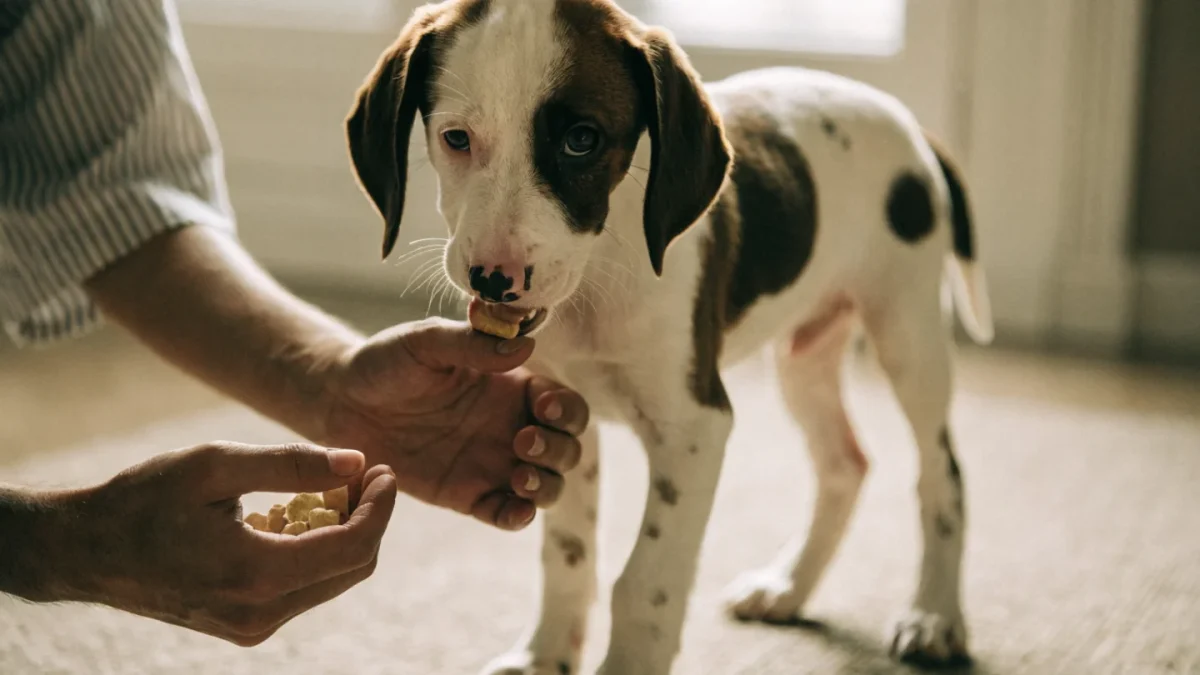
Desensitization has a clinical sound to it. The reality is simpler than the word suggests: repeated, positive exposure to things that might otherwise cause stress, building familiarity until those things lose their ability to trigger a reaction. This guide is the systematic companion to the puppy and kitten first grooming guide — that article covers the full picture; this one goes deep on the week-by-week handling work.
For grooming specifically, desensitization means this: every tool, every type of touch, every sound involved in grooming becomes familiar and associated with good things before it's ever actually used for its intended purpose. The brush is something the puppy has seen, sniffed, and had run along their back fifty times before it's used to work through a tangle. The nail clipper is something the puppy has heard click near them, then against one nail, then against multiple nails — with treats every step — before any serious trimming happens.
This process doesn't eliminate resistance entirely. But it prevents the entrenched grooming phobia that develops when puppies are handled forcibly, surprised by unfamiliar sensations, or pushed past their stress threshold repeatedly.
The Principles That Make This Work
Threshold awareness. Every puppy has a stress threshold — the point at which mild unease tips into fear, and mild fear tips into panic. Desensitization works by keeping the puppy below that threshold during every session. Just under the line where they become uncomfortable, building success there, then gradually raising the bar.
A puppy who pulls back slightly from the clipper is approaching their threshold. A puppy who lunges and bites is over it. Work at the pull-back level, not the lunge level.
Counterconditioning. Pairing the stimulus with something the puppy wants. Not just neutral exposure — positive exposure. The brush appears, a treat arrives. The clipper runs nearby, a treat arrives. Over time, the appearance of the grooming tool predicts the treat, not the handling.
Short sessions, high success rate. Five minutes of successful, below-threshold work beats thirty minutes that ends in a meltdown. End every session before the puppy runs out of patience. End on success — meaning the last thing that happened was a positive interaction, not a correction.
Week-by-Week Exercise Progression
This is a framework, not a rigid schedule. Adjust based on the individual puppy's progress.
Weeks 1–2: Body Handling Basics
Daily, 3–5 minutes:
Touch both front paws individually. Hold each foot for 3–5 seconds, longer as the puppy accepts it. Treat immediately after each foot.
Touch and lift each rear foot. Rear feet are often more sensitive — take more time here.
Run both hands along the puppy's back, sides, and neck. These are usually easy areas; success here builds the habit before you move to harder spots.
Touch both ears — hold the ear flap, lift it, look inside. Brief at first, treat after. Build to longer holds.
Open the puppy's mouth gently — run a finger along the gum line. This is the basis for future tooth brushing and oral examinations.
Goal by end of week 2: Puppy accepts all handling without significant protest. May pull away slightly from feet and ears — that's fine. Not pulling away hard, not biting.
Weeks 3–4: Introducing Tools
Continue daily body handling. Add:
Show the brush to the puppy while treating. Let them sniff it. Put it away. Treat.
Over several sessions: hold the brush, touch it to the puppy's back for one second, treat. Build to longer strokes over multiple sessions.
Repeat for the metal comb.
Place nail clippers near the puppy. Click them next to the paw without touching the nail. Treat. Multiple sessions before any nail contact.
Goal by end of week 4: Puppy accepts brush strokes along back, sides, and neck. Nail clipper present without panic.
Weeks 5–6: Working Sensitive Areas With Tools
Continue previous work. Add:
Brush behind the ears, working in brief touches with treats. These areas mat most in curly and long coats — this work is critical.
Brush under the "armpits" (chest/leg junction). Also a mat hot spot — introduce it early.
Work the brush toward the tail and rear legs.
Begin nail clipper work: touch the clipper to individual nails without clipping. Treat. Clip just the very tip of one nail — front paw, first nail — and stop. Massive treat reward. End session.
Goal by end of week 6: Puppy accepts brushing over most of the body. One or two nails have been successfully trimmed.
Weeks 7–8: Sound Desensitization
Turn on clippers or a hair dryer in the same room as the puppy. Watch the response.
If the puppy reacts mildly — looks at the sound source, sniffs the air, returns to normal activity — treat and continue. This is manageable.
If the puppy reacts strongly — tries to flee, won't eat treats, shaking — the volume or proximity is too much. Create more distance, continue treating at that distance, work closer over multiple sessions.
Goal by end of week 8: Puppy can eat treats in the same room as running clippers or a dryer, without significant distress.
Beyond Week 8: Full Integration
By 10–12 weeks, with consistent work: puppy tolerates full body brushing, multiple nail clips per session, running clipper held against the coat body (not blade contact yet), and basic face cleaning.
The professional groomer who sees this puppy for the first time will work with an animal who already understands grooming, has positive associations with handling, and can be finished without a battle.
When You Hit a Snag
Some puppies hit a hard limit on a specific body part or tool and don't move past it quickly. Common spots: nails (by far the most common), ear handling, face touching.
When you hit a snag:
Go backward. Find the version of the exposure the puppy accepts without protest. Build success there for a week. Then advance one increment.
Make the treat higher value. If the puppy isn't interested in their kibble during nail touch, use tiny pieces of cooked chicken. The value of the treat needs to genuinely exceed the discomfort of the experience.
Keep sessions shorter. If a puppy is melting down at nail clips after six nails, do two. End there. Build duration gradually.
Get help. If a specific area or tool creates severe, persistent distress despite systematic work, a professional with fear-free training experience can often identify what's driving it and suggest a different approach.
For Kittens: The Same Principles, Different Timeline
Kittens desensitize on a shorter timeline because their socialization window is earlier and briefer. Begin immediately after they arrive home (8 weeks typically) and compress the progression into four to six weeks rather than eight.
The handling is identical — paws, ears, mouth, brush exposure. The key difference: kittens communicate saturation more abruptly. A kitten who was accepting handling and suddenly becomes aggressive is over threshold, not stubborn. End the session immediately. Try again later, starting slightly further back from the point of failure.
FAQ
My puppy tolerates everything at home but falls apart at the groomer. Why?
Generalization — the ability to apply learned tolerance to new environments — has to be practiced. A puppy who's comfortable with handling at home in their own space may not transfer that comfort to a strange location with strange people and strange smells. Visit the grooming salon for non-grooming "say hello" visits before the first appointment. Build familiarity with the place separately from the procedure.
Should I use force to get through nail trims while the puppy is small enough to manage?
No. The puppy is small, yes. But the experience of being forced through something frightening doesn't build tolerance — it builds a dog who, at 60 pounds, is going to resist nail trims with significant force. The early investment in positive handling is exactly about not creating that outcome.
How do I know if I'm making progress?
The puppy accepts the same exposure with less resistance over time. If you could touch one paw for two seconds last week and this week you can hold it for five seconds with no protest, that's progress. Write notes. The changes are gradual and easy to miss without documentation.
My puppy had a bad experience at the groomer before I knew to do this. Is it too late?
No. Desensitization works at any age — it's just harder and slower with established negative associations than with neutral ones. Use the same exercises, go back to the very earliest steps where success is easy, and move forward more slowly than you would with a puppy who had no bad experiences.