

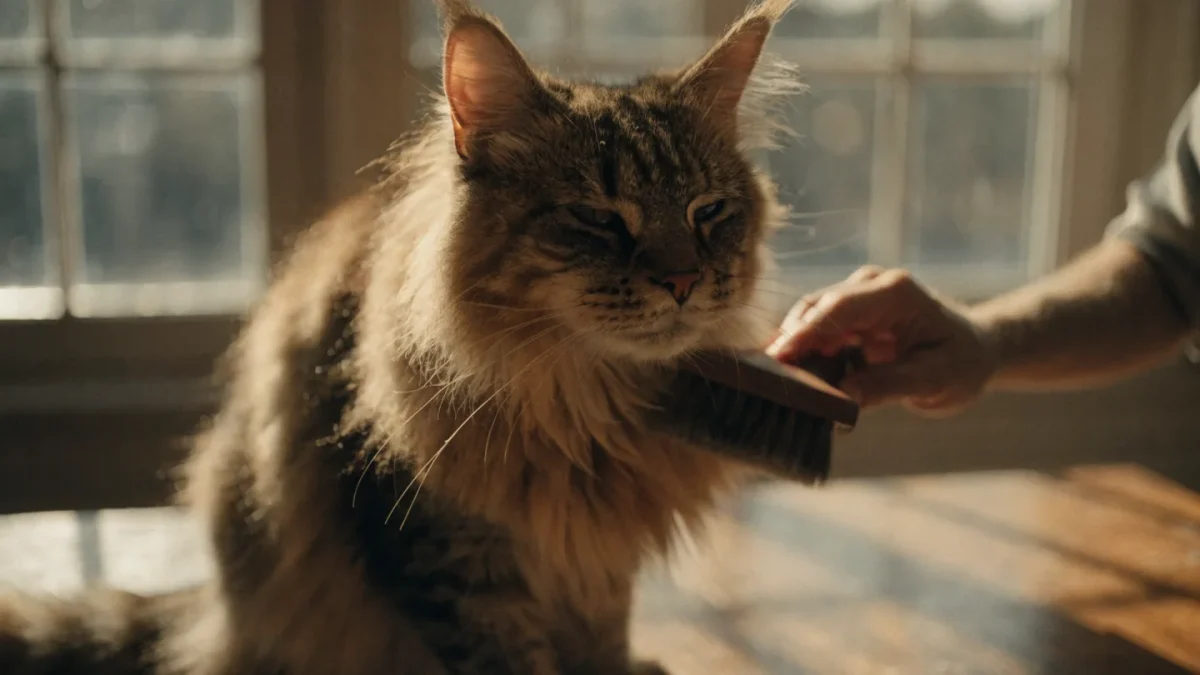
Cats are famous for their self-sufficiency. They spend upward of thirty to fifty percent of their waking hours grooming themselves—that's a genuine figure, backed by behavioral research going back to the 1980s. They're remarkably effective at it, too. The papillae on their tongue are essentially miniature grooming tools, hollow at the tip in a way that wicks saliva into the coat and distributes it efficiently. As a system, feline self-grooming is elegant.
But it's not complete. And for many cats—especially longhair breeds, senior cats, overweight cats who can't reach their hindquarters, and cats with health issues—it's not even close to sufficient. This is where owners come in.
Understanding what cats can handle themselves and what they can't is the foundation of a smart grooming routine. You're not replacing the cat's own work. You're supplementing it. Longhair cat grooming and mat prevention demands daily attention and specific tools; shorthair cat grooming essentials are less intensive but still non-zero.
The Self-Grooming System and Its Limits
What cats do well on their own: removing loose surface debris, maintaining coat alignment, distributing skin oils, and some level of detangling. What they don't do: remove dead undercoat effectively, prevent mats from forming in areas they can't reach, control hairball formation when shedding is heavy, clean inside their ears, or manage their nails.
That last point bears emphasis. Wild cats maintain their nails through constant use on rough surfaces. Indoor cats, on padded floors and furniture, don't wear their nails down. Left untrimmed, nails curve, thicken, and—in older or arthritic cats—can curve into the paw pad. Monthly trimming is a basic care task that owners can learn in fifteen minutes.
The hairball issue is significant. Every time a cat grooms itself, swallowed hair accumulates in the stomach. Some passes through; some gets expelled as hairballs. Regular brushing—especially on longhair cats—dramatically reduces the volume of hair ingested and the frequency of hairballs.
Brushing: The Core Task
Longhair cats (Persians, Maine Coons, Ragdolls, Birman, Norwegian Forest Cats, Turkish Angora, and others): daily brushing is realistic and often necessary. A mat in a longhair cat's coat, once consolidated, is painful to remove and may require sedation and professional help. Catch tangles before they consolidate.
Shorthair cats (British Shorthair, American Shorthair, Abyssinian, Burmese, and others): weekly to biweekly brushing is usually sufficient. The exception is heavy shedders like the British Shorthair, which has a dense plush coat that benefits from twice-weekly attention.
Rex breeds (Cornish Rex, Devon Rex) and hairless cats (Sphynx): different categories altogether, covered below.
Dog owners in the same household face different coat challenges—see the double-coated dog grooming guide and the long silky-coated dog grooming guide for breed-specific approaches.
Introduce brushing gradually to cats unfamiliar with it. Short sessions—one to two minutes—with high-value treats and immediate termination if the cat signals discomfort. The goal is the cat tolerating and ideally enjoying brushing, not enduring it resentfully.
Nail Trimming
Monthly for most cats. Some cats wear their nails down more on their own if they have access to scratching posts with appropriate texture; most indoor cats benefit from monthly trims regardless.
Use cat-specific nail clippers—the guillotine type or scissor type work equally well. The quick (the pink blood vessel) is visible in light-colored nails and a little more challenging to gauge in dark nails. Trim only the transparent tip—the curved hook—and stop well before the quick. If you accidentally cut into the quick, it bleeds and stings. Styptic powder stops the bleeding immediately.
Some cats are surprisingly calm about nail trimming if handled gently from kittenhood. Others require the "burrito wrap" technique (wrapped in a towel, one paw at a time) or two people. Neither approach is wrong.
Ears
Check weekly. You're looking inside the ear for dark discharge (suggests ear mites), redness, swelling, or unusual odor (suggests infection). A small amount of light-colored wax is normal.
If cleaning is needed, use a veterinarian-approved ear cleaner and a cotton ball—never a cotton swab inside the canal. Fold the ear flap back gently, apply a few drops of cleaner, massage the base of the ear to distribute it, and wipe out what comes to the surface. Most healthy cats need ear cleaning only occasionally; cats prone to ear issues may need more frequent attention.
Dental Care
The most universally neglected area of cat grooming. Dental disease affects an estimated 70 percent of cats over three years old—it's the single most common health problem in domestic cats. Daily tooth brushing is the gold standard; weekly brushing provides meaningful benefit; never brushing leads to plaque accumulation, gingivitis, and eventually painful tooth resorption.
Use cat-specific enzymatic toothpaste (human toothpaste contains xylitol and fluoride, both toxic to cats). The technique is less about technique and more about consistency: a small brush or finger brush, gentle circles along the gum line, a few teeth at a time if necessary.
Bathing
Most cats don't need regular baths. A healthy, short to medium-haired cat that grooms itself regularly doesn't benefit from monthly bathing—it's unnecessary and most cats strenuously object to it.
When bathing is warranted: significantly oily or dirty coat, flea treatment requiring a bath, skin conditions as directed by a vet, or longhair cats who've developed mat situations that require soaking to address. Sphynx cats are the notable exception—they need regular bathing due to sebum accumulation on their skin.
Detailed bathing technique in the complete guide to bathing dogs and cats.
Senior Cats and Grooming Changes
Cats over ten often groom themselves less effectively. Arthritis makes twisting and reaching difficult. Weight changes affect what areas they can reach. Dental pain makes the grooming motion uncomfortable. If your senior cat's coat condition has declined—dullness, visible oiliness along the spine, or mats appearing in previously clean areas—increase your brushing frequency and schedule a vet check to rule out underlying health changes.
FAQ
My cat hates being brushed. What can I do?
Desensitize gradually over days or weeks. Start by touching the cat with the brush while offering treats, without actually brushing. Progress to one stroke, reward, stop. Build up slowly. Many cats that seemed unbrushed turn out to be touchable with the right tool—try different brush types. Some cats prefer rubber bristle brushes; others accept a grooming glove more readily than any traditional brush.
How do I know if my cat has mats?
Run your fingers through the coat, pressing toward the skin. Mats feel like dense, hard knots that don't yield when you push them. They're most common behind the ears, under the armpits, and in the groin area. A comb—not just a brush—will catch mats that fingers miss.
Do indoor cats need grooming if they don't go outside?
Yes. Indoor cats still shed, still develop mats (especially longhairs), still accumulate plaque on their teeth, and still need nail trims. The indoor environment doesn't provide the natural surfaces that help with nail wear, and the sedentary lifestyle of many indoor cats means they groom themselves less than outdoor cats.
Is it safe to use human shampoo on a cat?
No. Human shampoos have a different pH than appropriate for cat skin and may contain ingredients toxic to cats. Cat-specific or kitten-specific shampoos are the safe choice.
How often should longhair cats be professionally groomed?
Every six to eight weeks for a bath, blow-dry, and any trimming is a common schedule for longhair cats maintained by owners who brush at home. Some longhair cats benefit from a "lion cut" in summer—a clip that leaves the head and leg furnishings but removes the body coat—for temperature management and mat prevention.