

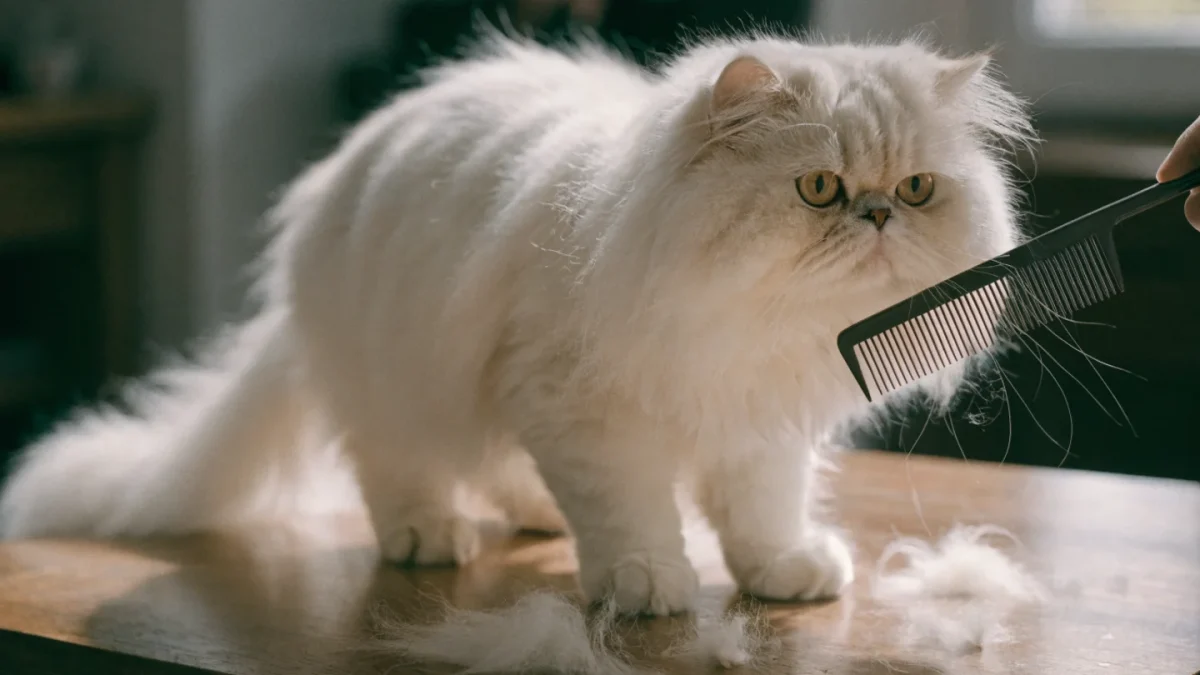
A longhair cat in good coat condition is one of the genuinely beautiful things in domestic animal keeping. Healthy, mat-free, gleaming coat on a Persian or Maine Coon or Norwegian Forest Cat is the result of consistent work—not magic, not luck, and not the cat doing it alone.
But the math of longhair cat ownership is brutally simple: miss a few days of brushing and you start paying interest in the form of tangles. Miss a week and you're looking at consolidating mats. Miss two weeks during a heavy shed and you may be facing a matting situation that requires professional intervention. The cat's self-grooming can maintain a shorthair coat. It cannot maintain a longhair coat. The complete cat grooming guide covers the full scope of feline grooming; this article focuses specifically on the challenges unique to longhair coats.
Why Longhair Cats Mat
The physics are straightforward. Long hair has more surface area and more length to tangle around itself. Longhair cats have an undercoat that sheds continuously; loose dead undercoat hairs get trapped in the longer topcoat rather than falling free. Those trapped hairs form nuclei around which additional hairs tangle.
Add friction zones—areas where the body bends and the coat rubs against itself or against surfaces—and you have the predictable mat geography of longhair cats: armpits, groin, behind the ears, around the base of the tail, and where any collar sits.
The other factor: most cats can't fully self-groom their spine from mid-back to tail. That strip down the center of the back accumulates shed coat that the cat can't reach efficiently. Check it regularly.
Brushing Tools for Longhair Cats
A wide-toothed metal comb is the most important tool. Not a brush—a comb. Brushes glide over the surface of long cat coat and give the illusion of grooming without actually penetrating to the undercoat where mats form. The metal comb reaches the undercoat.
After combing through, use a slicker brush or soft bristle brush to fluff and smooth the top coat. But do the comb first.
For initial detangling on a cat with developing tangles, a dematting comb or rotating-tooth comb helps separate fibers without pulling as aggressively.
Daily Brushing Routine
Five to fifteen minutes. That's a realistic daily commitment for a longhair cat.
Start with the areas where mats form first: armpits, behind the ears, groin, tail base. Gently work a wide-toothed comb through each area. If you hit resistance, don't force—stop, support the mat root with your fingers to prevent pulling the skin, and work the comb through gently from the outside of the tangle in.
Move on to the easier areas: flanks, back, chest, tail plume. Finish with the belly if the cat tolerates it—many cats are sensitive about belly contact and you may need to build tolerance here gradually.
End with a comb-through from neck to tail along the spine. If the comb passes through freely from root to tip without catching, you're done.
Mat Prevention Strategies Beyond Brushing
Bathing every four to six weeks. Clean coat mats less readily than dirty coat. The bath also removes accumulated shed undercoat that's working toward mat formation. Dry completely—a wet longhair cat lying down will mat.
Keeping the mat-prone areas slightly trimmed. Some owners clip the armpits and groin areas short, even when keeping the rest of the coat full. These areas mat regardless of diligent brushing; keeping them shorter reduces the maintenance burden without changing the cat's overall appearance. If you have a shorthair cat in the same household, shorthair cat grooming essentials shows how much easier their routine is—and why longhair owners often feel the gap acutely.
Light detangling spray. Applied lightly to the coat before brushing, a pet-safe detangling spray reduces friction between hairs and makes the comb work significantly more smoothly.
Handling Existing Mats
If you find a mat that the comb doesn't easily work through:
- Apply a small amount of detangling spray or conditioner to the mat and let it sit for a minute.
- Try to separate the mat with your fingers first—this is more gentle than any tool.
- Work a dematting comb or mat splitter through the mat from the outer edge in, small amounts at a time.
- If the mat is skin-tight, dense, or larger than a quarter, do not force it. Forcing a tight mat risks cutting the skin with scissors or causing significant pain.
- For severe matting, see a professional groomer or veterinarian. Severe cases may require sedation for safe removal.
Never use scissors to cut mats unless you have significant experience—the skin tent into mats and the risk of cutting the cat is very real.
FAQ
How do I keep my longhair cat's coat mat-free in summer?
Bathing more frequently in summer helps (every three to four weeks) because sweat and increased shedding accelerate mat formation. Some owners opt for a summer clip—lion cut or belly shave—which dramatically reduces mat formation during high-shed months.
My longhair cat resists brushing. How do I manage?
Use very short sessions—sixty seconds—with high-value treats. Work only on one area per session. Use a grooming glove or soft rubber brush first, which most cats tolerate better than metal tools, and progress gradually to a comb once the cat is comfortable with handling. Daily short sessions build tolerance faster than occasional long attempts.
Do professional groomers have to shave cats with severe mats?
Sometimes, yes. When mats are dense, numerous, and close to the skin, the humane option is removal rather than painful working-through. Professional groomers experienced with cats can often remove significant matting under mild sedation or heavy restraint, but severe cases require veterinary sedation for the cat's safety and comfort.
Is a lion cut a good option for a longhair cat?
For cats prone to matting or in homes where daily brushing isn't reliably possible, yes. The lion cut removes the body coat to approximately half an inch while leaving the head, lower legs, and tail plume. It significantly reduces grooming maintenance and keeps the cat more comfortable in warm weather. The coat grows back fully in three to four months.