

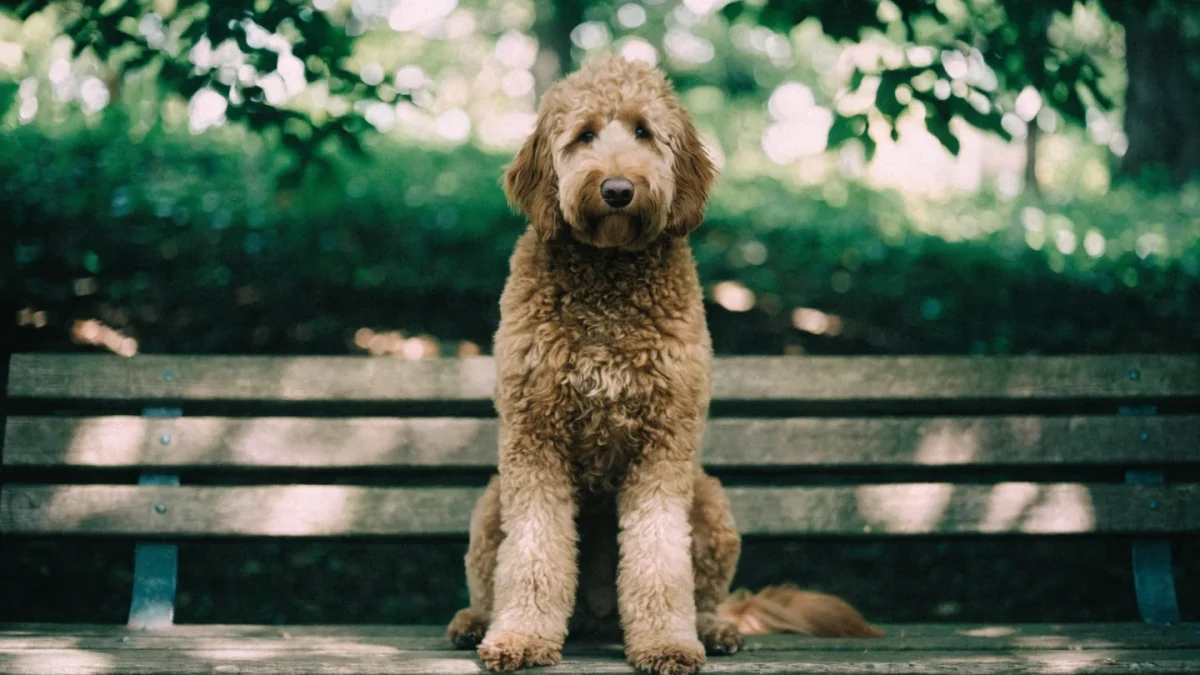
The marketing around Doodles as low-maintenance dogs is one of the most persistent myths in the modern dog world, and it does real harm.
"Low-shedding" got interpreted as "low-maintenance," and that jump caused a generation of Doodle owners to be genuinely unprepared for what their dog's coat actually requires. I've met Goldendoodles that arrived at veterinary appointments matted to the skin with no airflow to the flesh beneath. Owners who were blindsided. Dogs that were uncomfortable and couldn't communicate it except through scratching and squirming during handling.
The Doodle coat, when maintained properly, is genuinely manageable and produces minimal shed hair in the home. The same coat, neglected, becomes a welfare problem faster than almost any other coat type.
Why the Doodle Coat Is Uniquely Challenging
Here's the core issue: when you breed a Poodle to a Golden Retriever or Labrador, the resulting coat genetics are unpredictable. Poodles have single-layer, continuously-growing curly coats that don't shed. Retrievers have double-layer coats that shed seasonally.
The F1 Doodle — a first-generation cross — can produce puppies in the same litter ranging from nearly straight coats to quite tight curls. F1B crosses (Doodle bred back to Poodle) tend toward curlier, denser coats. But the real problem isn't the curl — it's what happens when you combine continuous Poodle-type growth with some residual double coat structure from the retriever side.
The resulting coat often has a texture that's denser and more mat-prone than a purebred Poodle's. The Poodle coat mats, but it mats in predictable ways that groomers understand. The Doodle coat mats more aggressively, in more locations, and faster.
That's not an opinion — it's something every professional groomer with extensive Doodle experience will confirm. The "worst" coats for matting they see come largely from Doodle breeds.
The Coat Type Spectrum
Not all Doodles have the same coat. Understanding which type your dog has changes the maintenance approach.
Curly/Poodle-dominant: Tight, dense curls that grow continuously and don't shed. Most demanding. Requires brushing 4-5 times a week. Professional clip every 6 weeks.
Wavy/fleece coat: The most common Doodle coat type. Medium-length waves with a softer texture than a tight curl. Slightly more forgiving, but still mats without consistent brushing — 3-4 times per week minimum. Clip every 6-8 weeks.
Straight/flat coat: Rare in well-bred Doodles; most common in F1s with more retriever-side influence. Has more of a double coat character — sheds more than the curly type, but also mats less aggressively. Still benefits from regular brushing 2-3 times weekly.
The challenge for owners is that Doodle puppies often have soft, manageable coats that give no indication of the adult coat they'll develop. Around 9-14 months, the adult coat comes in — and that's when owners who weren't briefed by their breeder or vet get a shock.
The Puppy Coat Transition
This is a specific danger period. As the puppy coat sheds and the adult coat grows in, the two textures interact and mat at a rate that can be startling. A Doodle at 9-12 months needs more brushing than at any other life stage, not less.
Daily brushing during the puppy-to-adult coat transition is not excessive. It's protective. The mats that form during this period, if not caught early, can establish themselves in layers close to the skin that are genuinely difficult to remove without shaving.
What Proper Doodle Grooming Looks Like
Brushing: Minimum 4 times per week for curly and wavy coats. Daily during the coat transition period and any time the dog is swimming regularly. Use a slicker brush and follow with a comb to confirm you've reached the skin.
Professional grooming: Every 6-8 weeks. A responsible Doodle breeder tells owners this before they leave with the puppy. Start grooming appointments early — 12-16 weeks — so the puppy is comfortable with the process before the adult coat arrives and sessions get longer.
First groom timing: Getting a Doodle into professional grooming by 12-16 weeks serves two purposes: puppy socialization to the grooming process, and the groomer getting to assess coat type early and advise on what's coming.
For the full range of maintenance techniques, the complete guide to curly and wool-coated dog grooming covers everything in detail.
The Style Options
Most Doodle owners choose a puppy cut or teddy bear cut — even-length body fur that's easy to brush and doesn't require specialized clipper technique. Both styles work well for the Doodle coat. For owners who want more definition, a modified sporting clip is appropriate.
The elaborate show clips developed for Poodles (Poodle haircuts and clip styles) can technically be applied to Doodles, but the different coat texture makes achieving show-quality results much harder.
FAQ
My Doodle was described as "no maintenance" by the breeder — is that possible?
No. "Low-shedding" is accurate for most Doodles. "No maintenance" is not. Any Doodle owner told this was underinformed, and the dog pays the price for the misconception.
My two Doodles from the same litter have very different coats — why?
Coat genetics in F1 crosses are genuinely unpredictable. Two puppies from the same litter can carry different combinations of both parents' coat genes, producing dramatically different coat types. This is normal biology, not a sign that one dog is mixed differently than the other.
At what point should I call a professional groomer instead of dealing with matting myself?
When you can't run a comb from skin to coat tip in any section without significant resistance, see a groomer. Attempting aggressive home detangling on a badly matted Doodle is stressful for the dog, time-consuming, and can cause skin damage if scissors get involved.
Is the "doodle coat" a recognized coat type by breeders?
Doodle breeders who take their breeding seriously absolutely recognize and discuss coat types. Responsible multi-gen Doodle breeders have a much better ability to predict coat type than F1 crosses, because they're selecting for coat characteristics over multiple generations. If you're getting a Doodle puppy, ask the breeder to assess coat type at 6-8 weeks — a good breeder can give you a reasonable prediction.