

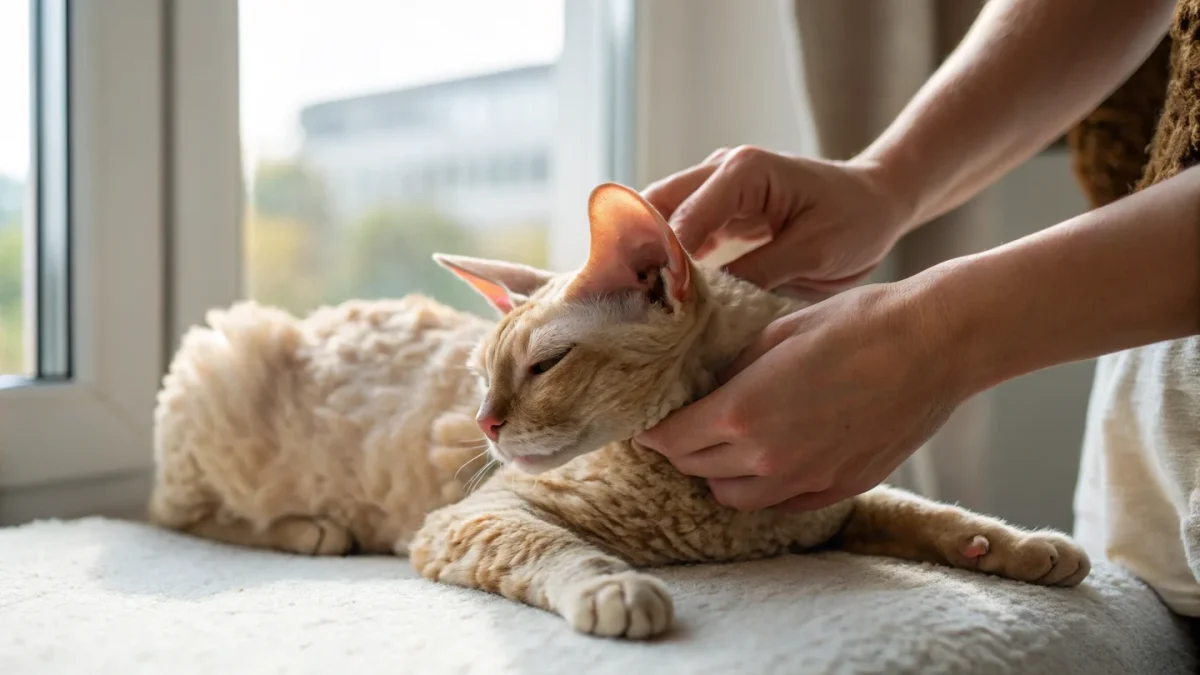
The Devon Rex coat looks minimal — short, wavy, sparse in places — and most people assume it's the easiest cat coat to maintain. That assumption creates bald patches. For context on why the coat is the way it is genetically, Devon Rex coat genetics and breed background explains the KRT71 mutation and what it means for coat structure.
The short version: the Devon Rex coat is made of fragile guard hairs that break easily when handled roughly. Aggressive brushing doesn't smooth the coat — it removes it. The approach matters more than the frequency.
What Not to Use
Wire slicker brushes, metal pin brushes, and fine-tooth combs all apply too much mechanical force to Devon Rex guard hairs. Regular use of any of these produces thinning and bare patches in the areas most frequently groomed — typically the neck, shoulders, and behind the ears, which are both the places most people think to brush first and the places where the Devon Rex coat is already naturally thinnest.
The patches grow back, but it takes months and requires stopping the source of damage first.
The Right Approach: Hands and Soft Tools
Option 1 — Rubber grooming glove: A soft rubber grooming glove with small nubs works well. The nubs catch loose hair without pulling on attached hairs. Use light pressure, move with the direction of the coat, and stop at the first sign of resistance rather than working through tangles.
Option 2 — Dampened hand: Simply lightly dampening your hand and running it over the coat removes loose hair and distributes the skin's natural oils. This sounds overly simple, but for many Devon Rex cats with very delicate coats, it's the safest approach.
Option 3 — Chamois cloth: A soft chamois or microfiber cloth smoothed over the coat achieves a similar effect to the dampened hand with slightly more surface coverage.
Frequency: once or twice weekly for most coats. During the very mild seasonal transitions this breed experiences, slightly more frequent smoothing prevents loose hair accumulation. Nothing about the Devon Rex coat requires daily intervention.
Ear Cleaning
The Devon Rex's ears are the grooming feature that requires the most consistent attention. Large, wide-set, and warm — they function as efficient wax collectors. Without regular cleaning, buildup accumulates into a dark, waxy residue that creates an environment for yeast and bacteria.
Weekly inspection is the routine. If you see visible wax accumulation, clean with a soft cotton ball moistened with a gentle ear cleaner. Wipe the visible ear surfaces and the outer ear canal — the parts you can see — without probing deeply. Deep probing with cotton swabs damages the ear canal and is counterproductive.
Cats that develop recurring ear issues, including Malassezia (yeast) infections, need veterinary assessment rather than increased home cleaning. The Devon Rex is more susceptible to Malassezia than average, partly because of the skin chemistry associated with the sparse coat.
Bathing
The Devon Rex needs occasional baths more than most cats. Standard feline skin produces oils at normal rates, but the Devon Rex's sparse coat can't absorb and distribute those oils the way a full coat does. The result, in unbathed cats, is a slightly greasy skin texture — especially noticeable around the neck, behind the ears, and along the spine.
A bath every four to six weeks manages this for most individuals. Some cats need it slightly more often; some slightly less. Use a gentle, pH-appropriate cat shampoo. Rinse thoroughly — residue in the sparse coat causes skin irritation more readily than in coated breeds.
After bathing, dry the Devon Rex promptly. The sparse coat provides almost no insulation when wet, and these cats are already cold-sensitive. A warm towel followed by a heated cat bed or a warm room is the right post-bath routine.
Nails
Trim every two to three weeks. Devon Rex cats are acrobatic climbers and jumpers — their nails see regular use. Sharp nails also mean more damage when the cat's play enthusiasm exceeds appropriate handling.
Skin Monitoring
When you're grooming your Devon Rex, use the time to check the skin in areas covered by the sparse coat. The Devon Rex's reduced coat coverage means skin conditions are more visible than in most breeds — early dermatitis, dry patches, and beginning stages of Malassezia infection are often catchable by an attentive owner during routine grooming. Any patch of flaking, scaling, redness, or unusual texture warrants a veterinary look.
What Bald Patches Mean
Not all Devon Rex bald patches are grooming damage. Some individuals naturally have thin or bare areas on the ears, belly, and behind the ears — this is within normal range for the breed and not a health concern if the skin beneath looks normal (no redness, flaking, or irritation).
Bald patches that develop in previously-covered areas, that show redness or inflammation, or that the cat is scratching at need a veterinary assessment. They can indicate grooming damage (fixable by changing technique), allergy (manageable with proper diagnosis), or infection (treatable with appropriate medication).
The grooming is the technical part of Devon Rex ownership. For the broader question of whether the breed suits your household — energy level, social demands, health commitments — is a Devon Rex right for you? covers the full assessment.