

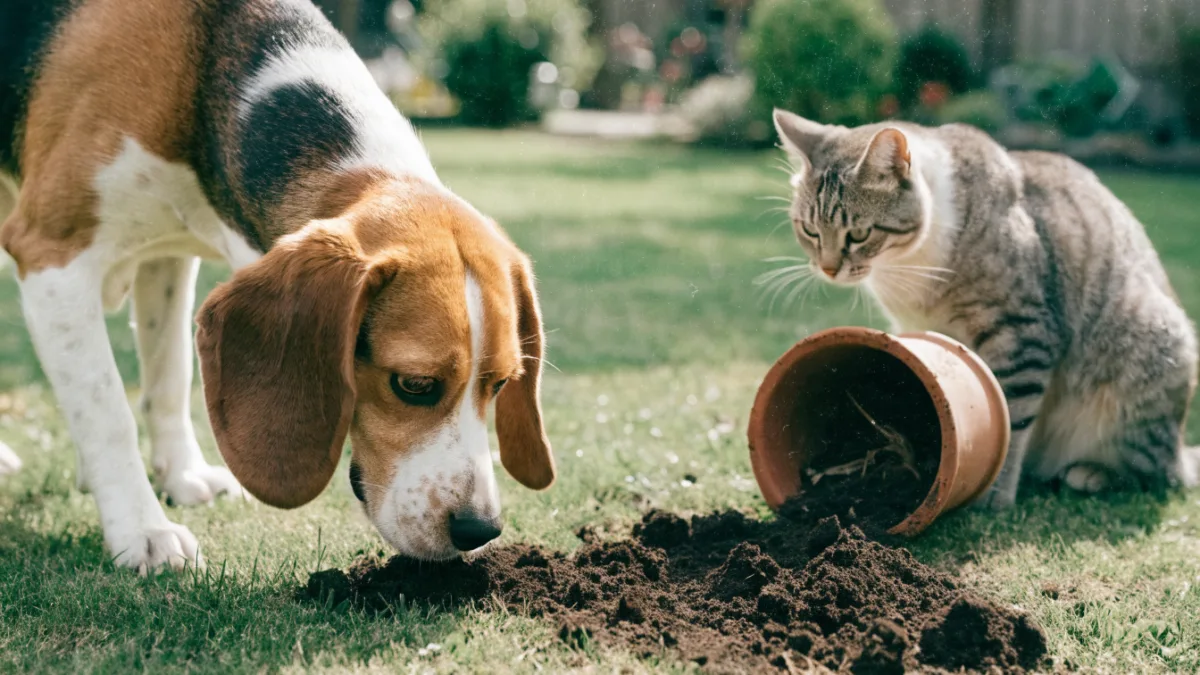
When Marcus brought his four-year-old Labrador mix, Cooper, into the clinic last spring, he looked genuinely embarrassed. “I think my dog has lost his mind,” he told me. “He’s out there every afternoon eating fistfuls of dirt from my garden bed like it’s a gourmet meal.” Cooper, true to form, sat on the exam table wagging his tail with a suspicious brown smudge still on his muzzle. After a full workup — blood panel, fecal exam, dietary review — it turned out Cooper was perfectly healthy. He was just bored, his yard was full of interesting-smelling decomposing roots, and the soil in that particular corner happened to smell amazing to a dog with a powerful nose. But that doesn’t mean every dirt-eating dog or cat gets the same clean bill of health. Soil consumption, known in veterinary medicine as geophagia, sits at the intersection of behavior and medicine, and figuring out which side your pet falls on requires some careful detective work.
What Is Geophagia, and Why Does It Happen?
Geophagia is a specific type of pica — the broader term for the craving and consumption of non-food items. Pica can involve dirt, but also paper, plastic, fabric, or even rubber bands. Geophagia is specifically about soil, mud, or clay.
Here’s where I want to be honest about something: I used to tell clients that dirt-eating was almost always a nutritional deficiency. That was the textbook answer I learned in school. But the accumulated case experience shows the picture is considerably more nuanced. Sometimes it’s medical, yes. But very often, it’s behavioral — and understanding the difference matters enormously for how you respond.
The Behavioral Side of the Story
Dogs explore the world with their mouths. That’s not a flaw — it’s how they’re built. Soil contains decaying organic matter, underground insects, roots, and sometimes the buried remains of other animals’ waste. To a dog, a patch of rich garden soil can smell like a buffet.
There’s also a temperature-regulation component. Dogs will dig into cool earth on hot days because the soil a few inches below the surface is significantly cooler than the ground above. That digging can transition into eating — not because the dog is hungry, but because the mouth contact feels rewarding in the moment.
Boredom and anxiety play significant roles too. I saw a beautiful Border Collie named Sage last year whose owner had started a new job with long hours. Within three weeks, Sage had begun methodically eating holes into the lawn. She wasn’t sick — she was understimulated. Once the owner added daily training sessions, puzzle feeders, and a morning agility routine, the behavior disappeared within a month.
When Dirt-Eating Points to Something Medical
While many cases are behavioral, geophagia can signal real medical issues that need attention. Here are the conditions I always rule out before calling a dirt-eating habit “just a quirk.”
Nutritional Deficiencies and Anemia
Iron-deficiency anemia and certain mineral deficiencies can drive animals to seek trace minerals in soil. This is where the evolutionary argument comes in — and it’s a legitimate debate in veterinary circles. Some holistic practitioners argue that geophagia reflects an ancient instinct, that wild canids and felids deliberately consumed clay-rich soil for beneficial minerals and digestive soothing. Traditional veterinary medicine tends to push back, arguing that any complete, commercially balanced diet provides necessary nutrients and that persistent dirt-eating more likely indicates a malabsorption issue — where the body can’t properly absorb nutrients even when they’re being consumed — rather than a simple dietary gap.
The truth probably lies somewhere between. I’ve seen pets on excellent diets develop geophagia due to underlying gastrointestinal disease like inflammatory bowel disease (IBD), where the gut wall is inflamed and absorption is compromised. In those cases, the dirt-eating wasn’t the problem — it was a symptom.
Gastrointestinal Upset
Some animals eat soil when their stomach is bothering them. Clay-rich soil can have a mild soothing effect, and some pets will eat dirt to induce vomiting when they feel nauseated. If your dog or cat eats dirt and immediately vomits, that’s worth paying attention to — it suggests the behavior is serving a purpose related to GI discomfort.
Parasitic Infections
Soil is a primary transmission route for intestinal parasites including roundworms, hookworms, and giardia. What makes this particularly tricky is that parasites can both cause and result from geophagia. An animal with a heavy parasite load may feel nutritionally depleted and eat dirt seeking minerals, which then exposes them to even more parasites. It’s a cycle that needs breaking from both ends — treating the parasites and addressing the behavior.
Feline Geophagia: A Different Animal Entirely
We tend to associate pica with dogs, but cats absolutely develop this habit too, and the context is often quite different. Feline geophagia frequently connects to stress, obsessive-compulsive tendencies, or environmental deprivation — particularly in indoor-only cats without sufficient enrichment.
I’ve noticed a significant increase in stress-related feline pica since the pandemic shifts began. When owners who had been working from home started returning to offices, cats who had grown accustomed to constant companionship suddenly found themselves alone for long stretches. A client named Priya brought in her two-year-old Siamese cat, Luna, who had begun licking and consuming soil from her potted houseplants obsessively. Luna’s medical workup was completely normal. What had changed was Priya’s schedule — she’d gone from being home all day to working full-time in an office. Once we implemented structured play sessions, food puzzles, window perches for environmental stimulation, and a consistent routine, Luna’s behavior gradually resolved.
For cats, I often recommend growing safe indoor grass — typically oat, wheat, or barley grass — as an appropriate outlet for the chewing and grazing behavior they naturally crave. It gives them something acceptable to nibble on rather than your potting soil.
The Hidden Dangers Lurking in Your Backyard
Even when the behavior itself is harmless curiosity, what’s in the soil might not be. This is where the risk gets genuinely concerning.
Chemical Toxicity
Treated lawns and gardens pose serious risks. Herbicides, pesticides, and chemical fertilizers can be toxic if ingested, and pets don’t need to eat much contaminated soil to become ill. What’s particularly insidious is that many pets are attracted to the scent of organic fertilizers — bone meal, blood meal, and fish-based products smell appealing to carnivores. Take a terrier mix named Pepper, who dug into a garden bed treated with blood meal fertilizer and developed severe gastrointestinal upset and early signs of pancreatitis. Her owner had assumed organic meant safe, which is a common and understandable misconception.
Cocoa mulch is another serious hazard. It contains theobromine — the same compound that makes chocolate toxic to dogs — and some pets will readily consume it. If you use any lawn or garden products, always check the labeling for pet safety and restrict access to treated areas according to manufacturer recommendations.
Physical Dangers
Soil isn’t just dirt. It often contains pebbles, wood chips, root fragments, and hardened clods. These can cause broken teeth, create choking hazards, or — most dangerously — cause intestinal obstruction. A blockage is a surgical emergency. If your pet eats significant amounts of soil mixed with debris and then stops eating, starts vomiting, or shows signs of abdominal pain, seek veterinary care immediately.
Warning Signs That Should Prompt a Vet Visit
Not every mouthful of dirt warrants a trip to the clinic, but certain signs should always be taken seriously. Watch for:
- Vomiting, especially if it happens repeatedly after dirt consumption
- Diarrhea or changes in stool consistency
- Lethargy or unusual tiredness
- Loss of appetite that lasts more than a day
- Excessive drooling, which can indicate nausea or oral pain
- Sudden weight loss
- Abdominal pain — your pet may resist touching their belly or adopt a hunched posture
If you notice any combination of these symptoms alongside dirt-eating, don’t wait. These could indicate anything from parasite infection to toxicity to gastrointestinal blockage, and early intervention makes a meaningful difference in outcomes.
Practical Steps to Address the Behavior
If your pet has been cleared medically and the behavior is deemed behavioral rather than pathological, there’s a lot you can do at home to redirect the habit.
First, manage access. If your dog always eats dirt from the same garden bed, restrict access to that area with fencing or supervision. For indoor cats, cover potting soil with aluminum foil or river rocks that are too large to swallow — most cats find the texture unpleasant and will abandon the attempt.
Second, provide alternatives. Dogs benefit from appropriate chew items — look for veterinary-approved dental products that carry the Veterinary Oral Health Council seal, or durable chew toys appropriate for your dog’s size and chewing style. Cats, as I mentioned, often respond well to safe grasses and food puzzles that satisfy their hunting and foraging instincts.
Third, address the root cause. If boredom is driving the behavior, increase exercise and mental stimulation. If anxiety seems involved — especially in cats — consider environmental modifications and consult with your veterinarian about whether anti-anxiety medication might be appropriate alongside behavioral intervention. Never administer any medication without consulting your vet first, as dosages vary significantly based on species, weight, and health status.
Finally, keep your pet on a regular deworming schedule and feed a complete, balanced diet appropriate for their life stage. Your veterinarian can help you select the right protocol for parasite prevention based on your local climate and your pet’s risk factors.
Dirt-eating isn’t always cause for alarm, but it’s rarely something to ignore completely. The key is observation — noticing when the behavior started, how often it happens, and whether other symptoms accompany it. Cooper the Labrador is still occasionally caught with a muddy nose, and Marcus has learned to redirect him with a toy when he catches him sniffing around that garden bed. It’s become a manageable quirk rather than a medical mystery. That’s the outcome I hope for every pet owner facing this strange but surprisingly common behavior: not perfection, but understanding. Your pet’s body is often telling you something through their behavior. Learning to listen — knowing when to act and when to simply redirect — is one of the most valuable skills you can develop as their companion.