
The holiday season is the time of year when I learn exactly how many things in my house are suddenly interesting to my cats. String lights, ribbon, pine branches, the smell of food that should not be eaten by animals — it all combines into a sort of festive obstacle course I'm navigating from October through January.
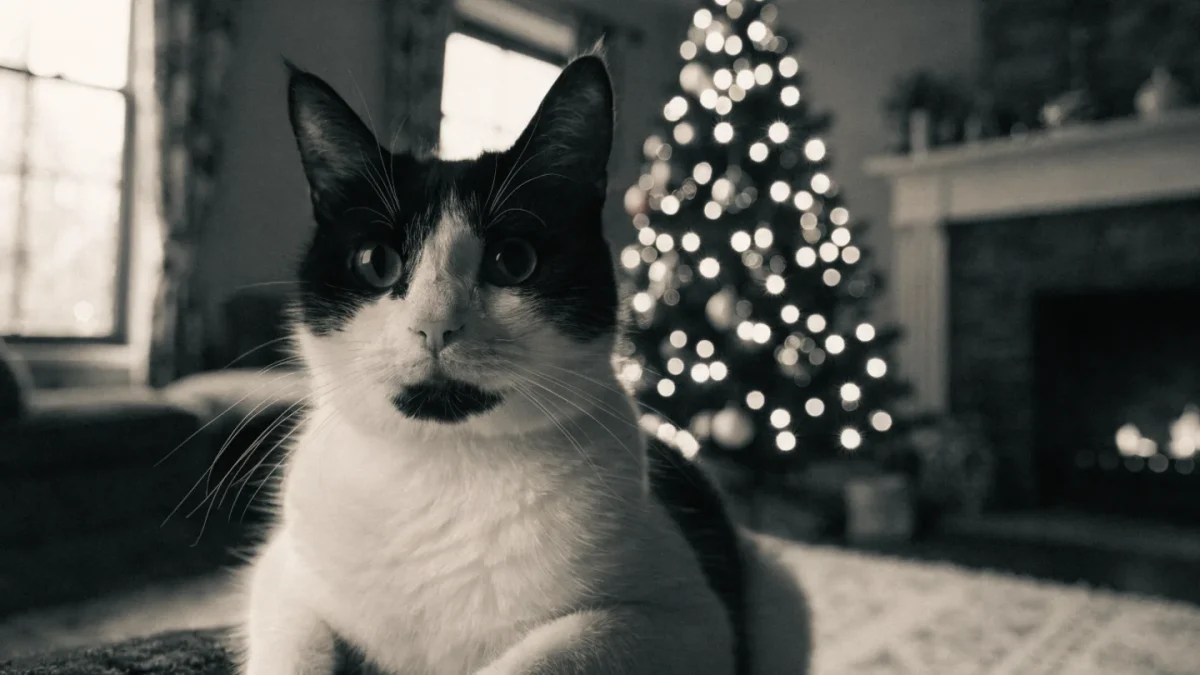
Miso found the Christmas tree situation entirely beneath her dignity. Fig, on the other hand, was personally offended that an entire tree had appeared in the living room and wasn't for him. The first night I caught him sitting inside the lower branches with the expression of someone who has discovered a loophole.
The thing about holiday hazards is that they're predictable. They come back around every year on the same schedule. Once you know what to watch for and build the habits, it becomes less about crisis management and more about just… having a checklist you run through in fall.
Here's the season-by-season version.
Fall: Halloween Season
Candy
This is the big one for dog owners especially. Halloween candy is hazardous in ways that go beyond just "sugar is bad."
Chocolate — the darker the chocolate, the more theobromine it contains, and theobromine is what's toxic to dogs (and to cats, though cats don't usually seek out sweets). A single piece of dark chocolate can be a problem for a small dog. A large amount of milk chocolate can also cause issues. Keep all candy out of reach — including in bags that get tossed on the floor, left on coffee tables, or sorted by kids.
Xylitol — an artificial sweetener found in some sugar-free candy, gum, and baked goods. It's extremely toxic to dogs even in small amounts. Check labels on any sugar-free products.
Wrappers — foil and cellophane wrappers can cause intestinal obstruction if ingested. Dogs who raid the candy bowl often eat several at once.
Costumes
Pet costumes can be adorable or they can be a stress event your pet will never forgive you for. Some pets genuinely don't mind them; many do. Signs your pet is not okay with a costume: inability to move normally, struggling to get it off, panting or drooling that isn't explained by heat, hiding, or becoming suddenly still and flat.
If you want to try a costume, introduce it gradually (let them sniff it, put it on for a few minutes, build up), never force it, and have a "never mind" threshold — if they're clearly miserable, the photo isn't worth it.
Never leave a costumed pet unsupervised. A costume that shifts can restrict breathing or movement.
The Door Situation
Halloween specifically creates a high door-opening frequency, which is the main window through which pets escape. A scared, spooked dog or cat during trick-or-treating is a bolting risk.
Best practice: put pets in a quiet room well before trick-or-treating starts. Make sure their ID tags are current and their microchip registration is up to date (do this in October before the holiday, not after an incident).
November: Thanksgiving
Thanksgiving is the holiday where food hazards peak for pets. There's a lot of food, a lot of people not watching what they're leaving on the counter, and a lot of well-meaning guests who want to share with the dog.
Food hazards
Cooked bones — turkey and chicken bones become brittle when cooked and can splinter into sharp fragments that can perforate the GI tract. This is a genuine emergency, not just a stomachache risk.
Onions, garlic, leeks — toxic to both dogs and cats. The problem is that they appear in so many dishes (stuffing, gravy, roasted vegetables) that guests may not realize the food contains them.
Grapes and raisins — the mechanism isn't fully understood, but both are toxic to dogs and can cause kidney failure. Raisins in particular often appear in holiday dishes (certain stuffing recipes, fruit dishes, desserts).
Rich fatty foods — turkey skin, gravy, buttery mashed potatoes. A dog who eats a lot of rich food in one sitting can develop pancreatitis, which is painful and sometimes serious. "He seems fine" in the moment doesn't always hold.
Unbaked dough — if you're doing holiday baking, raw dough with active yeast is dangerous. It continues rising in a warm stomach and can cause bloating, obstruction, and alcohol toxicity from the fermentation process.
The most effective strategy: instruct guests not to feed the pets, and put pets away from the table and kitchen during meal prep and serving.
December: Christmas and Winter Holidays
For the detailed breakdown of trees, ornaments, and decorations, see pet-proofing your Christmas tree and decorations. Here's the high-level version:
Trees
Live trees — pine needles cause GI irritation if ingested; the water in the tree stand can grow bacteria and may contain fertilizer. Cats especially are drawn to both.
Ornaments — glass ones break and create sharp fragments; small ones are swallowing hazards; any ornament dangling from a low branch is a cat temptation.
Tinsel and ribbon — this is a high-risk item for cats specifically. Cats are attracted to linear, shiny, crinkly things, and tinsel/ribbon ingestion can cause intestinal obstruction requiring surgery. If you have cats, skipping tinsel entirely is a reasonable call.
Electrical cords and lights — chewing hazard for puppies and kittens especially. Use cord covers or tape cords along walls.
Holiday plants
Poinsettias — mild GI irritant, widely overstated as toxic. Causes drooling and possibly vomiting. Not usually serious.
Holly — the berries especially are more genuinely toxic: vomiting, diarrhea, lethargy.
Mistletoe — more toxic than people realize, especially European mistletoe. Keep completely out of reach.
Lilies — often in holiday floral arrangements. Extremely toxic to cats. Easter lilies, tiger lilies, Asiatic lilies — even small exposures (chewing on a leaf, drinking water from a vase containing lilies) can cause acute kidney failure in cats. If you have cats, no lilies in the house, full stop.
Amaryllis — often given as holiday bulbs. Toxic to both dogs and cats.
Holiday food
For the full breakdown — by food and by risk level — see holiday foods that are dangerous for pets. The summary: chocolate, xylitol, alcohol, grapes/raisins, cooked bones, and macadamia nuts are the highest concern.
Candles
A lit candle is a burn and fire risk with curious pets around. Use holders that can't be knocked over, or use battery-operated candles in rooms where pets have unsupervised access.
New Year's Eve and New Year's Day
The noise factor. Fireworks, noisemakers, celebrations — many pets find this genuinely distressing.
This is one of the periods with the highest pet escape rate — scared animals bolt through opened doors or over/under fences during the noise. Check fences for gaps in late December. Make sure ID is current.
For managing noise anxiety:
- Set up a safe retreat — a crate, an interior room, or anywhere your pet self-selects as their secure space
- White noise or music helps muffle sudden loud sounds
- Keep windows and curtains closed during peak noise periods
- Don't force them to "get used to it" — this rarely works and often increases stress
- Stay calm around them; your energy matters
- If your pet has severe noise anxiety, talk to your vet before the holiday — there are situational medications that can help, but they work better when you're not administering them in the middle of a panic
Don't punish hiding. Don't try to soothe-coo excessively if they're not seeking you out — sometimes just being present in the room without making it a big deal is the most reassuring thing you can do.
The Through-Line: Guests
Every single holiday hazard gets amplified by guests who don't know your rules, don't know your pets' history, and genuinely mean well.
"Can I give them a piece of this?" — the question every pet owner dreads. The most useful thing you can do before any gathering is brief your guests once, clearly: specific foods that are off-limits, whether your pet can be fed treats at all, and what to do if they're not sure.
Some people ignore this. For those guests, management is easier than re-education: keep food in the kitchen, keep pets in rooms where they can't counter-surf, pick up plates when people walk away from them.
FAQ
Q: My dog ate a piece of chocolate. Should I panic?
It depends on the type of chocolate, the amount, and your dog's size. Dark chocolate and baking chocolate are far more dangerous than milk chocolate or white chocolate. A small amount of milk chocolate in a large dog is usually not an emergency. A significant amount of dark chocolate in a small dog is. The ASPCA Animal Poison Control Center has a calculator, and calling them (or your vet) is the right move if you're unsure. Don't wait for symptoms to appear — the window for treatment is better before symptoms start.
Q: How do I stop guests from feeding my pets?
The most effective approach is a combination: a brief verbal mention when they arrive, and then not giving them the opportunity. Put the dog in another room during meals if your guests can't reliably not feed them. Some people genuinely won't respect the rule — it's not personal, they just love animals and think one bite of turkey won't hurt. Management is more reliable than enforcement in a crowded, distracted holiday environment.
Q: My cat keeps drinking from the Christmas tree water stand. What do I do?
Cover the base of the tree so they can't access the water. Tree water can contain fertilizer, preservatives, or bacteria. A tree skirt secured around the base works, or you can use commercial tree stand covers. Some people use aluminum foil around the base (cats often dislike the texture and sound). Fresh water available nearby in multiple places makes the tree water less appealing.
Q: Can cats actually be harmed by tinsel?
Yes, and it's worth taking seriously. When cats ingest linear materials (string, tinsel, ribbon, thread, elastic), it can get anchored somewhere in the digestive tract while the intestine continues to contract around it, causing something called a "linear foreign body" obstruction. This often requires surgery. Symptoms include vomiting, lethargy, not eating, and abdominal pain. If you suspect your cat has ingested tinsel or ribbon, contact your vet promptly.
Q: Is it okay to let my pet attend holiday parties?
For well-socialized dogs who genuinely enjoy being around groups of people, a mellow gathering can be fine. For anxious pets, pets with unpredictable behavior around strangers, or situations with loud music, shouting, and chaotic energy — it's kinder to let them sit this one out in a quiet room. Holiday parties are optimized for humans, not for pets. Your pet being comfortable in their space is better than them being "included" and stressed.