

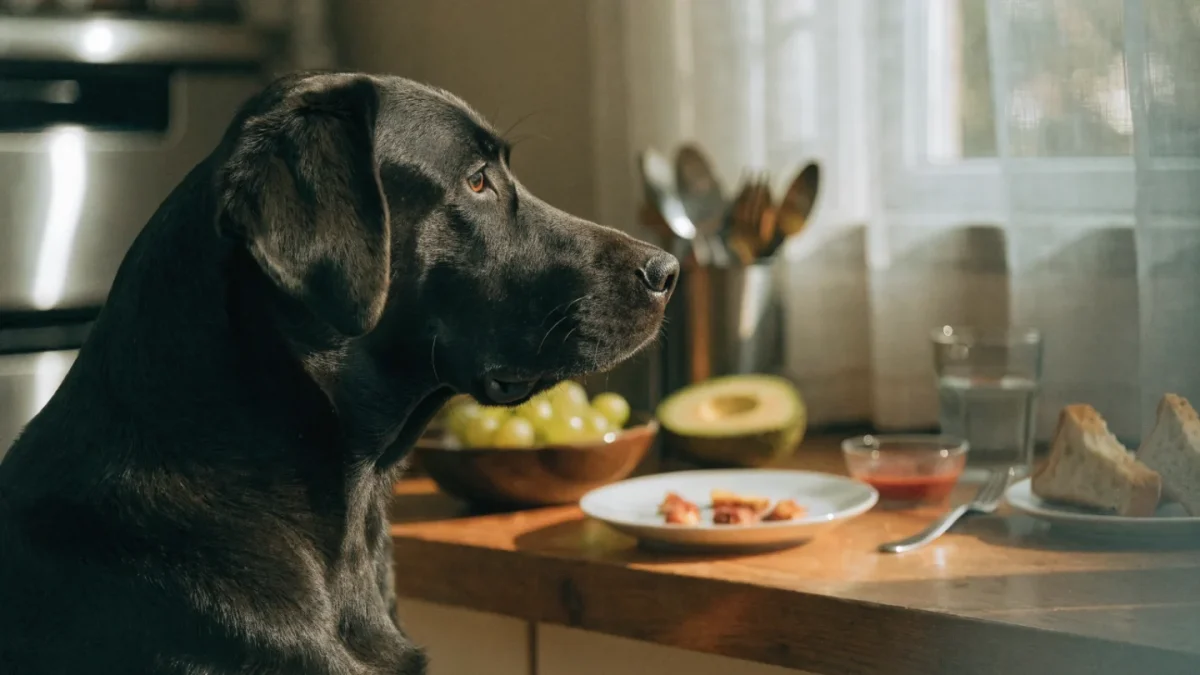
Last Thanksgiving, I got four calls about dogs who'd gotten into holiday food. One was a Dachshund who ate a significant amount of stuffing — which, in this household, was made with onions, garlic, and sage. Another was a Beagle who'd stolen what the owner described as "just a few bites" of pecan pie. A third was a larger dog who'd eaten an unknown amount from the holiday candy bowl.
Three of the four were fine with monitoring. One needed treatment.
The pattern I see over and over: owners know that some human foods are bad for dogs, but they're fuzzy on the specifics — which ones are actually dangerous versus mildly upsetting, and how much matters. This article is my attempt to make the fuzzy parts clear.
Why Some Human Foods Are Genuinely Dangerous
Dogs can eat many human foods safely. Plain cooked chicken, rice, carrots, most fruits — these are fine in moderation. The foods on this list are different because they interact with dog physiology in specific, damaging ways: triggering dangerous insulin drops, destroying red blood cells, damaging kidneys, overwhelming the liver. These aren't foods that just cause stomach upset. They can cause organ failure.
The No-Tolerance List
Grapes and raisins. I put these first because the unpredictability is what makes them so dangerous. Some dogs eat a handful of grapes and have nothing worse than loose stool. Others develop acute kidney failure from a small amount. We don't know why, we can't identify the toxic compound, and we have no way to predict which dogs are susceptible. That unpredictability means I treat every grape or raisin ingestion as a potential emergency until proven otherwise. Currants, dried cranberries that contain currants, and raisin-containing foods (fruitcake, trail mix, certain cereals, oatmeal raisin cookies) all fall in this category.
Xylitol. This sugar substitute causes a dangerous insulin surge in dogs within 30-60 minutes of ingestion, leading to life-threatening hypoglycemia. At higher doses, it causes acute liver failure. The problem is that xylitol is in hundreds of products most people think of as benign: sugar-free gum (often a very high concentration per piece), certain peanut butters, mouthwash, sugar-free baked goods, some vitamin supplements and medications. For complete information on xylitol poisoning in dogs, including which products to check and exactly what to watch for, that's worth reading in full — it's one of the most under-recognized dangers I see.
Chocolate (especially dark chocolate and baking chocolate). Theobromine and caffeine in chocolate act as stimulants that dogs can't efficiently metabolize. Dark chocolate and baker's chocolate contain far more theobromine per ounce than milk chocolate. Symptoms include vomiting, diarrhea, restlessness, rapid heart rate, tremors, and seizures. A small amount of milk chocolate in a large dog might cause only GI upset; the same chocolate in a small dog, or any significant amount of dark chocolate in any dog, warrants a call to poison control.
Onions, garlic, leeks, and chives. All members of the allium family damage red blood cells in dogs, causing hemolytic anemia. The damage is cumulative — a dog fed food regularly containing these ingredients can develop anemia that seems to come out of nowhere weeks later. Garlic powder and onion powder are more concentrated by weight than fresh forms. Cooked versions retain their toxicity. The clinical signs of allium toxicity — pale or yellowish gums, weakness, rapid heart rate, collapse — can take 3-5 days to appear after exposure.
Alcohol. Dogs have essentially no tolerance for alcohol. Even small amounts of wine, beer, liquor, or alcohol-containing foods can cause vomiting, disorientation, dangerous drops in blood sugar and body temperature, and respiratory depression. The smaller the dog, the worse the math. This includes rum cake, wine-poached fruits, and other alcohol-cooked foods where people assume the alcohol "burns off" — it doesn't entirely.
Macadamia nuts. The mechanism is unknown but the syndrome is consistent: weakness especially in the hind legs, vomiting, tremors, fever, and lethargy within 12 hours of ingestion. Recovery is usually good with supportive care, but it's genuinely unpleasant. About 2g per kilogram of body weight is the threshold — which isn't many nuts for a small dog.
Raw yeast dough. Expands in the stomach (causing distension and potential bloat) and produces ethanol as a fermentation byproduct. A dog who ate raw bread dough is both bloating and becoming intoxicated simultaneously. This is more serious than it sounds.
Caffeine in concentrated forms. Coffee grounds, tea bags, caffeine tablets, energy drinks, some diet supplements. Not the drip coffee your dog licked off the floor — that's probably fine — but concentrated caffeine causes tachycardia, hypertension, tremors, and seizures. Coffee and espresso grounds left accessible are the most common culprit.
The "Be Cautious" Category
These aren't on the no-tolerance list but deserve attention:
Avocado. The flesh is relatively low-risk for dogs, but the skin, pit, and leaves contain persin, which is toxic to some animals. The real hazard with avocados and dogs is the pit — it's a significant choking and obstruction risk.
Salt and heavily salted snacks. Large amounts cause excessive thirst and urination, and sodium ion poisoning in severe cases. Most dogs who steal a few potato chips are fine, but allowing access to large amounts of salty snack foods isn't a good habit.
Cooked bones, particularly chicken and pork. Not a food toxin, but cooked bones splinter and can cause gastrointestinal perforations. Worth mentioning alongside food safety because the holiday bone-in roast is a common source of this injury.
Fat trimmings and greasy food scraps. Pancreatitis. Dogs who eat large amounts of fat — even from foods that are otherwise non-toxic — can develop severe, sometimes life-threatening pancreatitis. Some breeds (Schnauzers, Cocker Spaniels) are particularly predisposed.
Nutmeg. In large amounts causes tremors, seizures, and central nervous system signs. The small amount in a slice of pumpkin pie is probably not a meaningful risk; a dog who gets into a spice cabinet and eats significant amounts of nutmeg is a different story.
What I Actually Tell My Clients
When people ask me to give them a simple rule, I tell them: if it's not specifically formulated for dogs, don't assume it's fine to share. That doesn't mean your dog can never have any human food — many things are perfectly safe. But the default assumption that "food is food" ignores the real metabolic differences between dogs and people.
And for recognizing food poisoning signs in your dog — vomiting, lethargy, pale gums, trembling, collapse — knowing what to look for helps you decide whether something that happened 20 minutes ago needs a vet visit tonight or can wait for the morning.
Frequently Asked Questions
My dog stole a grape. What should I do right now?
Call your vet or the ASPCA Animal Poison Control (888-426-4435) immediately. Tell them your dog's weight, when it happened, and approximately how many grapes. Don't wait to see if symptoms develop — treatment within the first few hours is significantly more effective than treatment after kidney damage has begun.
How much chocolate is dangerous for my dog?
It depends on the type and your dog's weight. Dark chocolate and baking chocolate are dangerous at much lower doses than milk chocolate. The ASPCA's website has a toxicity calculator, and their poison control line can run the math in real time. For any exposure involving dark chocolate or baking chocolate, call immediately. Milk chocolate in a large dog — a small piece — may only cause stomach upset, but I'd still recommend calling to verify.
Is peanut butter safe for dogs?
Plain peanut butter made from only peanuts and salt is generally fine as an occasional treat. The danger is peanut butter made with xylitol as a sweetener — several brands have used it. Always check the ingredient label. If it says "sugar alcohol," "xylitol," or "birch sugar," don't give it to your dog.
What about nuts other than macadamia?
Walnuts (especially black walnuts and moldy walnuts) can cause neurological symptoms and GI upset. Pecans can be problematic due to mold toxins they sometimes carry. Almonds aren't technically toxic but frequently cause GI obstruction because dogs don't chew them well. Cashews and peanuts (technically legumes) are lower risk in small amounts. None of them are great snacks for dogs — the risks outweigh the benefits.
The ingredient list doesn't say xylitol but says "sugar alcohol" — is that the same thing?
"Sugar alcohol" is a category that includes xylitol, sorbitol, maltitol, erythritol, and others. Xylitol is the most dangerous to dogs by a wide margin; the others are lower risk but can cause GI upset. If the label says "sugar alcohol" without specifying, I'd avoid giving the product to your dog until you can confirm it doesn't contain xylitol. Contact the manufacturer if needed.