

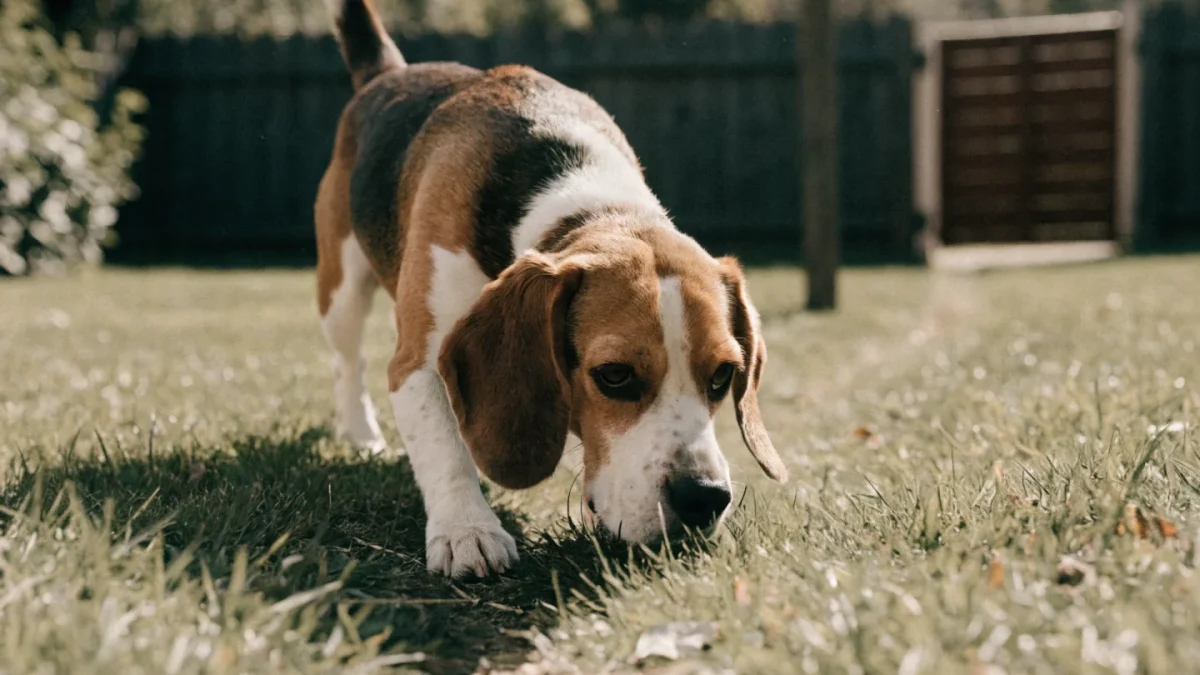
Beagles are the fifth most popular breed in the United States and consistently rank among the top ten globally. They are also one of the most frequently surrendered breeds to shelters and rescues. That gap between acquisition rate and retention rate tells you something important: a lot of people get beagles who shouldn't have gotten beagles.
This isn't a criticism of the breed. It's a criticism of how the breed is marketed — cute, compact, family-friendly — without adequate disclosure of what "family-friendly scent hound" actually demands from the family. So here's the honest assessment, organized around the questions that matter most before you commit to 12 to 15 years with this dog.
You Need to Be Home
Beagles are pack animals bred to spend every waking hour surrounded by other dogs or, in modern domestic life, their human family. A beagle left alone for eight to ten hours daily is not going to quietly wait for your return. It will howl, chew, dig, and express its distress in ways that are loud, destructive, and predictable.
If both adults in a household work full-time outside the home, a beagle is a difficult choice unless you have a dog-walking arrangement, a doggy daycare setup, or a second dog that provides companionship during the day. A lone beagle in an empty house is one of the most reliable recipes for neighbor complaints and behavioral problems in the breed world.
This isn't a training issue you can fix with a crate and a chew toy. It's a fundamental incompatibility between the breed's social architecture and an isolation-heavy lifestyle.
You Need Secure Space
A fenced yard is not technically mandatory, but it transforms the beagle ownership experience. Without one, you are the sole provider of every outdoor moment your dog experiences, entirely on-leash, multiple times per day, in all weather conditions.
If you do have a yard, the fencing must be serious. At least 150 centimeters tall, with no gaps at the base and ideally with buried mesh to prevent digging escapes. Beagles are not dramatic escape artists in the way some terrier breeds are, but a beagle that catches an interesting scent on the other side of a fence will work patiently and persistently to reach it.
Off-leash parks are a mixed experience. Some beagles do fine in enclosed dog parks where they can socialize and run. Open, unfenced spaces are a gamble that most experienced beagle owners won't take. The beagle breed guide covers the recall reliability issue in detail — the short version is that a beagle's nose outranks your voice nearly every time.
You Need Noise Tolerance
Beagles are among the most vocal companion breeds. They bark, they bay (a distinctive howl-yodel that carries across considerable distance), and they howl. They vocalize when excited, when bored, when they detect scent, and sometimes for no discernible reason at all.
If you live in an apartment, a condo with shared walls, or any housing situation where noise complaints are a real possibility, a beagle is a risky choice. Training can reduce the frequency of vocalization, but it cannot eliminate a behavior that was selectively bred over centuries. A beagle that never bays is about as common as a border collie that never herds.
In a detached house with reasonable neighbor distance, the vocalization is manageable and often becomes something owners grow to appreciate. But going in with the expectation that you'll train the baying out of the dog is setting yourself up for frustration.
You Need to Control Food
Beagles have an extreme food drive. They will eat anything edible — and many things that aren't — in any quantity, at any time. This isn't a charming quirk. Unmanaged, it leads to obesity, which is the single most common health issue in the breed and shortens lifespan by roughly two years. A large-scale study by Salt et al. (2019) in the Journal of Veterinary Internal Medicine, covering over 50,000 dogs across 12 breeds, found that overweight male beagles lived an average of 13.2 years compared to 15.2 years for normal-weight males — a reduction of two full years.
Living with a beagle means measured meals, no free-feeding, secured trash cans, food stored out of reach, and absolute consistency from every household member. The beagle will test these boundaries with sad eyes, strategic whining, and remarkable patience. Every person in the home — including visiting grandparents and children old enough to understand — needs to follow the same rules.
If your household culture is relaxed about food management and table scraps, a beagle will exploit that immediately and gain weight quickly.
What Most People Get Wrong
The most common misconceptions about beagles center on the assumption that small size equals low maintenance. People see a 12-kilogram dog with a friendly face and assume it will be easier than a larger, more obviously demanding breed.
A beagle's exercise needs, mental stimulation requirements, and behavioral complexity are closer to what you'd expect from a medium-to-large working breed. The energy and drive inside that compact body were built for full days of hunting across open countryside. A beagle that doesn't get adequate physical and olfactory exercise will redirect that energy into behaviors you won't enjoy. Prospective owners who want a similarly family-compatible breed at a more manageable activity level may find the labrador retriever breed guide a useful comparison — both breeds are food-motivated and pack-oriented, but the retriever's stronger biddability makes training more predictable.
The second misconception is that beagles are "dumb" because they score poorly on obedience rankings. Beagles are intelligent, perceptive, and quick to learn. They simply evaluate whether compliance serves their interests before deciding whether to comply. This is a working hound trait, not a cognitive deficit — but it frustrates owners who expect the eager-to-please responsiveness of retrievers or shepherds.
Who Thrives With a Beagle
The best beagle owners share a few characteristics:
They're home a lot — remote work, retirement, staggered schedules, or a stay-at-home arrangement that keeps someone present for most of the dog's waking hours.
They enjoy walking and outdoor time as an activity they'd do anyway, not a chore they'll tolerate. Sixty to ninety minutes daily is the minimum, and owners who genuinely enjoy it sustain the commitment far more reliably.
They find independence charming rather than maddening. The selective hearing, the calm refusal to perform a behavior it has decided against — these traits are either endearing or enraging, with little middle ground.
They have a sense of humor about food. The counter-surfing, the garbage investigations, the surgical precision of sandwich theft — you either find it funny (after securing the food) or you don't.
The Right Owner for This Breed
Beagles reward the right owner with 12 to 15 years of loyal, affectionate, endlessly entertaining companionship. They're social, sturdy, good with children, good with other dogs, and carry just enough mischief to keep household life from ever becoming predictable.
But they are not the right dog for everyone, and there's no shame in reaching that conclusion. A beagle acquired on impulse — because of Snoopy, because the puppy was cute, because the breed profile said "family-friendly" — is statistically more likely to end up in a shelter than a beagle acquired by someone who researched the breed's actual demands and said, "Yes, all of that sounds like exactly what I want."
Be the second type of owner.