

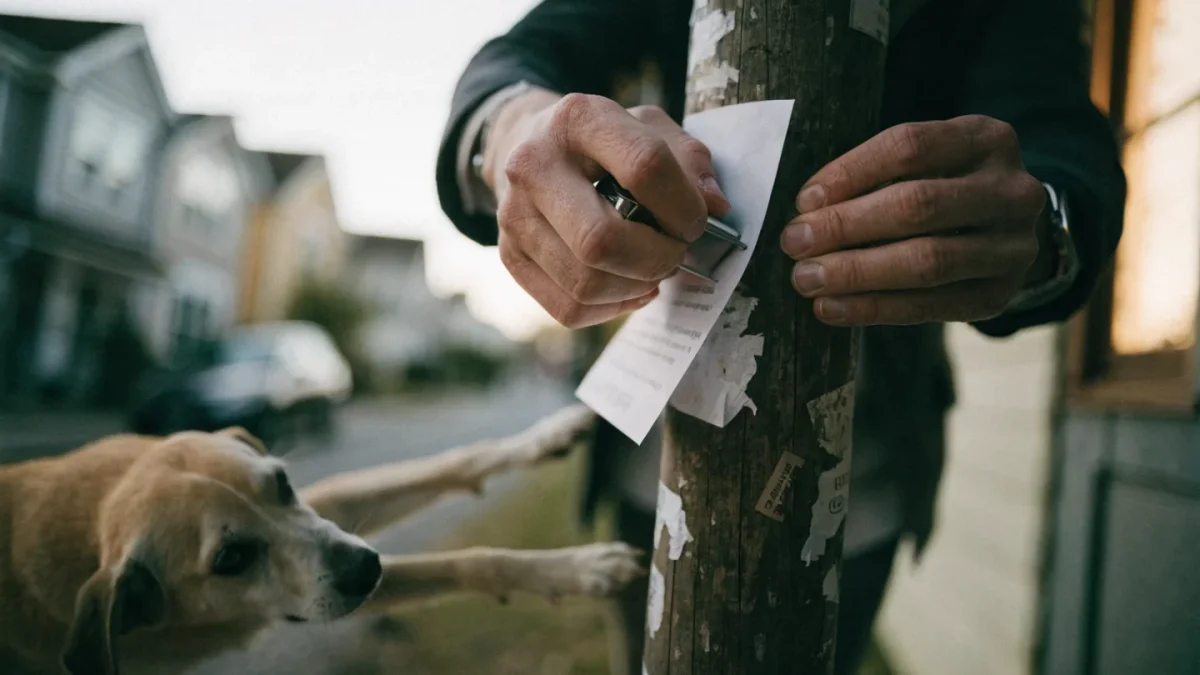
The calls I find hardest to receive are the ones that start: "My dog got out three days ago and I don't know what else to do." Not because three days is too late — sometimes animals are found weeks later — but because the first 24 hours are when the most important steps happen, and by day three, the trail is colder and the optimal actions are behind them.
What follows is the protocol I walk clients through when a pet goes missing. It's designed to run multiple search efforts simultaneously, because time matters and parallel action is better than sequential.
In the First Hour
1. Search your immediate area first. Call their name. Check every room in the house (yes, including closets, under beds, behind appliances — cats especially hide in impossible places). Check your yard and any outbuildings. If they're not there, expand the radius immediately — go to the edges of your property and look.
2. Check with immediate neighbors. Knock on doors within a 3-house radius. Ask if they've seen your pet in the last few hours, and ask them to check their garages, sheds, and under their decks.
3. Call or contact all animal shelters in your county. Not just the closest one. Call every shelter within 20 miles and give them a detailed description (species, breed, color, sex, any distinguishing features, microchip number). Ask how to file a report and do it in writing with their lost pet intake form. Shelters fill with strays daily; don't assume your animal would stand out.
4. Post on Nextdoor and local Facebook groups. Include a clear, recent photo and your phone number. These platforms are how most suburban pet reunifications happen now. Post in every neighborhood group covering your area.
Hour 2–6
5. Contact your local animal control. Different from the shelter — animal control picks up strays from public spaces and may have your pet before a shelter does. Get the contact and file a report.
6. Make flyers. Large photo (the face in particular), basic description, your cell phone number. Nothing else — simplicity is read and remembered faster. Print 50 and post them within a half-mile radius: telephone poles, mailbox areas, intersections.
7. Walk your neighborhood at dawn and dusk. These are the times pets are most active and most visible. Bring something that smells familiar — a piece of your clothing, their bedding, a food item. Some lost dogs are responsive to familiar smell when they're too frightened to respond to voice.
8. For dogs: post on pet-specific lost/found apps. PawBoost, Pet FBI, FIDO Alert — these apps notify people in your geographic area about lost pets. Fill out the report with photos.
Lost Cats vs. Lost Dogs: Different Strategies
Dogs and cats behave very differently when lost, and the search strategy should reflect this.
Lost dogs often travel farther from home than cats. Dogs may be spotted by neighbors blocks or miles away. They're more likely to approach people. A dog who got out in the morning might be several miles away by afternoon. Broader radius searching, vehicle search, and reports to parks and recreation areas are appropriate.
Lost cats almost always hide. This is the most important thing to understand: a lost cat is almost certainly hiding within a very small radius of where they escaped — possibly within 100 yards. They may be under a neighbor's deck, in a garage, under a porch. They often don't come when called because they're in a state of fear-based hiding and freezing. They may not come out at all until things are very quiet, often at night.
For lost cats: intensive searching of the immediate area, crouching low and looking under and behind structures, setting up a humane trap (borrowed from the shelter or purchased) near the exit point with familiar-smelling bedding inside, and monitoring at night when they're more likely to move. Calling at night in a quiet, calm voice is more likely to get a response than daytime calling.
The Shelter and vet Sweep (Daily)
This isn't one-and-done. Visit shelters in person, every day if possible. Not just call. People's descriptions of animals don't match well — color perception varies, breed identification is inconsistent. If you've called and described your dog as "a mid-size brown dog" and a shelter received a "tan terrier mix," you may have missed each other.
In addition: post your lost pet report at local vet clinics. People who find injured pets often take them directly to vets, bypassing the shelter system entirely.
The 72-Hour Mark
If your pet hasn't been found by 72 hours, expand the strategy:
- Double the flyer distribution radius
- Pay for a promoted social media post if you have the option
- Contact local rescue groups — many have networks of volunteers who help search
- Consider setting up a humane trap overnight if you're searching for a cat
- Post in neighboring city/county groups (animals travel)
For disasters specifically: contact your county emergency management office — animals recovered from disaster zones are often taken to temporary holding facilities that aren't in the standard shelter system.
When Found
If someone contacts you saying they have your pet: ask for a photo before you go to confirm it's yours. When you collect them, verify with physical evidence (microchip scan, distinguishing marks). Have your original vaccination records and ID documents available.
If your pet has been loose for more than 24 hours, a vet check on return is worthwhile — they may have injuries that aren't visible, or have consumed something harmful.
For the long term: review how the escape happened and close the gap. Check fencing, reinforce gates, update identification records. See pet identification methods for the three-layer ID system that dramatically improves recovery odds if this ever happens again.
FAQ
My cat escaped 12 hours ago and I've searched everywhere. How far could she have gone?
Cats who are lost and hiding usually stay very close to home — within 1–2 blocks, often less. The problem is she's hiding, not moving. Search low and close: under porches, decks, bushes, in garages, under cars. Set up a trap with bedding near the escape point tonight.
Should I leave food and water outside?
For cats specifically — yes, near the exit point. Familiar-smelling bedding outside can attract them back. For dogs, leaving food outside may attract other animals and complicate the search. Leaving your worn clothing outside in the last known location is useful for dogs.
I found a dog and am looking for the owner. What's the right protocol?
Post photos on local community groups immediately. Take the dog to a vet clinic to scan for a microchip (free, doesn't require an appointment at most clinics). Report to local animal control. If you can keep them safely for a few days while searching, that's ideal.
My dog went missing during a natural disaster. The shelter options are disrupted. What do I do?
Contact every local emergency management resource, county animal shelter, and regional animal rescue. During and after declared disasters, many jurisdictions set up temporary animal collection points that don't show up in regular shelter systems. Post actively on social media with the specific disaster and your location — the post-disaster pet recovery community is active and responsive.
Is there a national lost pet database?
The closest to one is the USPS-partnered registry combined with regional shelter networks. PetFBI and similar services aggregate reports nationally. HomeAgain and AKC Reunite have national microchip registries. IAFP (International Association of Pet Registries) advocates for a unified system. For now, the most effective search spans multiple platforms simultaneously rather than relying on any single system.