

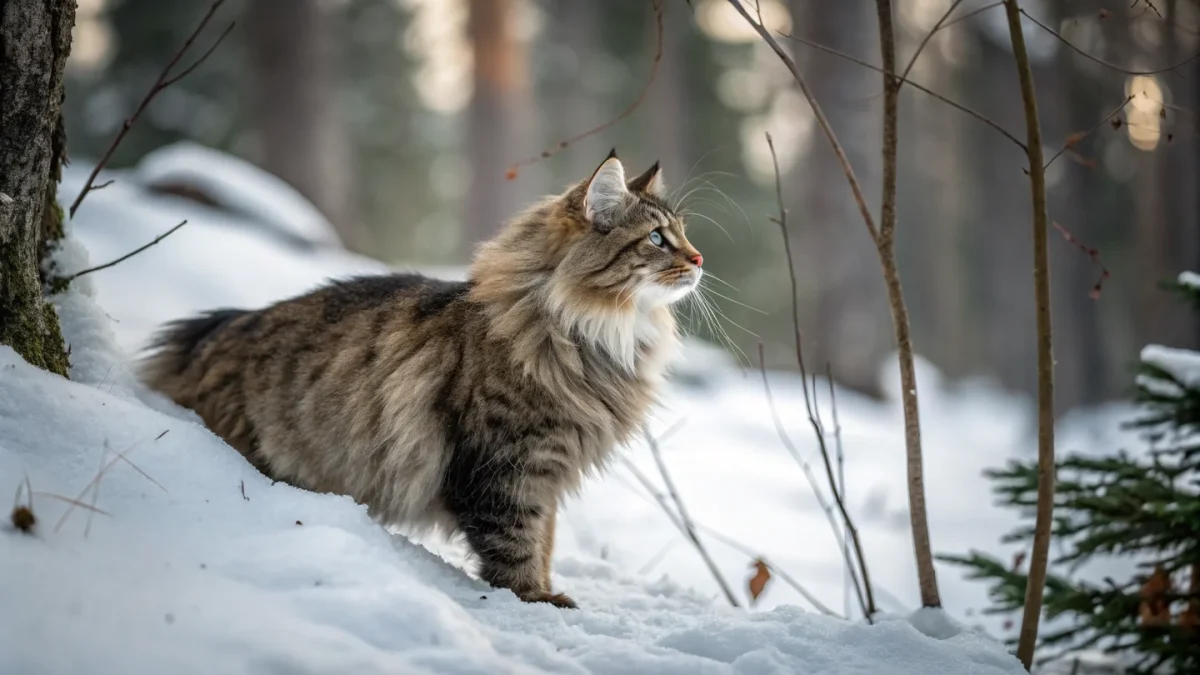
The Maine Coon was never designed. No breeder sat down in the 19th century and decided to create a large, shaggy, playful cat for New England farmhouses. The breed emerged because the cats that survived and reproduced in that environment, over generations, happened to look and behave that way. Thick coats and large paws were adaptive advantages; gentle temperaments were useful in working alongside people. Natural selection did what natural selection does.
The Ragdoll, by contrast, was explicitly designed. Breeder Ann Baker in California in the 1960s selected foundation cats for docility, size, and point coloration, crossed them deliberately, and produced a breed with predictable traits within a relatively short timeframe. That's a different process entirely.
The distinction matters because it shapes the genetic health, behavioral consistency, and available gene pool of the resulting breed.
For context on how these categories fit into the full breed landscape, the cat breed categories guide covers the full picture. And how cat breeds are created goes deeper into the mechanics.
Natural Breeds: Shaped by Environment
Natural breeds (sometimes called "landrace" breeds, though that term is more common in livestock) developed without deliberate human selection programs. Their characteristics emerged from:
- Climate adaptation: Norwegian Forest Cat and Siberian developed heavy coats for northern winters. Turkish Van developed in a semi-arid region around Lake Van.
- Geographic isolation: Island or regional populations developed distinct traits through genetic drift and local selection pressures.
- Working relationships: Cats kept for rodent control in specific environments may have been passively selected for temperaments compatible with human work settings.
Examples: Norwegian Forest Cat, Siberian, Turkish Angora, Turkish Van, Maine Coon, Abyssinian (traditional), American Shorthair.
Natural breeds tend to have:
- Broader genetic bases due to larger founding populations
- Fewer concentrated genetic health conditions from founder effects
- Physical types adapted to practical function rather than aesthetic ideals
- Behavioral profiles that reflect survival-selected traits (independence, resourcefulness)
Selectively Bred: Created With Intent
Selectively bred cats were created through deliberate programs targeting specific traits. This includes:
Mutation development breeds: A spontaneous mutation appeared in one or a few cats, and breeders developed that mutation into a recognizable breed through controlled outcrossing. Cornish Rex (the re mutation), Devon Rex (the re^d mutation), Scottish Fold (the Fd ear fold mutation), LaPerm.
Deliberate cross breeds: Two or more existing breeds were crossed with specific outcomes in mind. Ragdoll (Ann Baker's selective program), Tonkinese (Siamese × Burmese), Burmilla (Chinchilla Persian × Burmese).
Hybrid programs: Wild cats crossed with domestic breeds. Bengal (Asian leopard cat × domestic), Savannah (serval × domestic).
Selectively bred breeds tend to have:
- Narrower founding gene pools, with associated risks of genetic disease concentration
- More predictable physical and behavioral traits across individuals
- Higher risk of inherited health conditions that were present in founders or were introduced during development
- Traits sometimes selected for aesthetics in ways that create structural health concerns (Persian flat face, Scottish Fold ears)
Which Is "Better" for an Owner?
Neither categorically. This is a useful background lens, not a verdict.
Natural breeds with broad gene pools can still have individual health concerns based on lines and individual genetics. Some selectively bred breeds are quite healthy. The Scottish Fold's osteochondrodysplasia is inherent to the mutation — a natural breed that happens to produce this would carry the same concern. The Persian's brachycephaly came from selective breeding toward an extreme aesthetic — a choice that natural selection would not have made.
The distinction is most useful as a prompt: investigate the specific genetic health history and breeding practices of any individual cat's lines, regardless of whether the breed is natural or selectively bred.