


The heart beats roughly 100,000 times a day in a medium-sized dog. Learn more about common dog health problems here. It's doing that right now as your pet sleeps at your feet, processes their dinner, or races to meet you at the door. For most of a pet's life, the heart works without fanfare — and without any particular attention from us. But heart disease is common in companion animals. It's one of the leading reasons pets see cardiologists, and understanding what can go wrong is the first step toward catching it early.
This guide covers the major cardiac conditions affecting dogs and cats, how they're diagnosed, what treatment looks like, and the signs every owner should know.
How the Heart Works — Briefly
The heart has four chambers: two atria (upper) and two ventricles (lower). The right side pumps blood to the lungs to pick up oxygen; the left side receives that oxygenated blood and pumps it to the rest of the body. Four valves ensure blood flows in one direction.
When any component of this system fails — valves thicken or leak, muscle walls stretch thin or thicken excessively, the electrical system misfires — the result is a heart that can't maintain adequate output. Fluid backs up, oxygen delivery falls, and the clinical signs of heart disease emerge.
Common Heart Diseases in Dogs
Dogs develop two main categories of acquired heart disease with age:
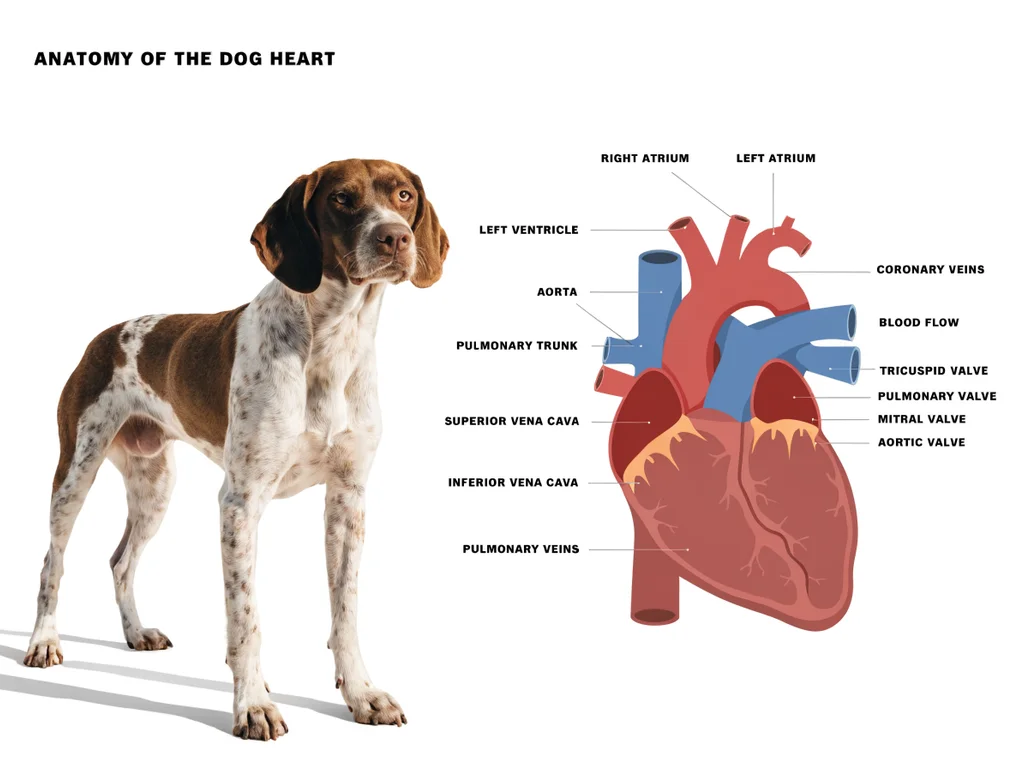
Mitral valve disease (MVD) is the most common cardiac condition in dogs overall, accounting for the majority of canine heart disease. The mitral valve, which sits between the left atrium and left ventricle, develops degenerative changes — the leaflets thicken, become irregular, and no longer close cleanly. Blood leaks backward with each heartbeat (mitral regurgitation), creating the characteristic heart murmur vets detect during routine exams.
Small breeds are disproportionately affected. Cavalier King Charles Spaniels are particularly predisposed and are often diagnosed with mitral valve disease before age 5. For most breeds, early MVD progresses slowly over years before clinical signs appear. Heart disease in dogs covers this progression in detail.
Dilated cardiomyopathy (DCM) primarily affects large and giant breeds — Doberman Pinschers, Boxers, Great Danes, Irish Wolfhounds, and others. The heart muscle weakens and the chambers enlarge, reducing pumping efficiency. DCM in Dobermans in particular tends to progress rapidly and carry a more guarded prognosis than MVD. A dietary component — specifically grain-free and legume-heavy diets — has been investigated as a contributing factor in some non-predisposed breeds, based on FDA reports and veterinary research, though the exact mechanism remains under investigation.
Other cardiac conditions in dogs include arrhythmias (abnormal heart rhythms), pericardial effusion (fluid around the heart), and congenital defects present from birth.
Common Heart Diseases in Cats
Cats present a fundamentally different cardiac picture than dogs. The dominant feline heart disease is hypertrophic cardiomyopathy (HCM), where the heart muscle thickens rather than dilating. The stiffened muscle doesn't fill efficiently, and the result is a heart working harder against itself.
HCM is often genetic in origin — Maine Coon and Ragdoll cats carry known gene mutations — but it occurs across all breeds and in domestic shorthairs. The insidious feature of feline HCM is how quietly it can progress. Many affected cats show no clinical signs until the disease is advanced, and some cats' first sign of HCM is sudden death or saddle thrombus (a blood clot that lodges at the aortic trifurcation, causing acute rear limb paralysis — a true emergency).
Heart disease in cats explores feline cardiomyopathies in depth.
Other feline cardiac conditions include dilated cardiomyopathy (now rare since taurine was added to commercial cat food), restrictive cardiomyopathy, and hyperthyroidism-induced cardiac changes.
Warning Signs of Heart Disease in Pets
Heart disease often develops silently. The signs that prompt an owner to call the clinic can range from subtle to urgent:
Early or moderate disease:
- Reduced exercise tolerance — tiring faster than usual on walks
- A dry, soft cough (particularly in dogs with fluid accumulation)
- Slightly increased breathing rate, especially at rest
- Mild weight changes
- A murmur detected incidentally during a wellness exam
Advanced or decompensated disease:
- Rapid or labored breathing
- Blue-tinged gums (cyanosis) — an emergency
- Abdominal distension from fluid accumulation (ascites)
- Fainting or collapse
- Profound weakness or inability to rise
- Open-mouth breathing in cats — always a respiratory emergency in this species
The resting respiratory rate is one of the most practical tools for monitoring dogs and cats with known cardiac disease at home. A rate consistently above 30 breaths per minute at rest warrants contact with your veterinarian, even without other signs. This threshold, established in veterinary cardiology guidelines, reflects the point at which fluid accumulation in the lungs may be developing. Many cardiologists recommend owners track this number once daily.
How Heart Disease Is Diagnosed
Stethoscope exam: The starting point. Heart murmurs are graded 1-6 based on loudness, and the location and character of the murmur can suggest its cause. However, murmur grade does not reliably correlate with disease severity — a soft murmur can occur with significant disease, and some serious arrhythmias produce no murmur at all.
Chest radiographs: Evaluate heart size, shape, and position. Critically, X-rays reveal pulmonary edema — fluid in the lungs — which is the immediate life-threatening consequence of left-sided heart failure.
Echocardiography (ultrasound of the heart): The gold standard for cardiac assessment. Echo evaluates chamber dimensions, wall thickness, valve structure and motion, and pumping function (ejection fraction). It's how we distinguish MVD from DCM from HCM and how we stage disease.
Electrocardiography (ECG/EKG): Assesses the heart's electrical activity. Essential for diagnosing arrhythmias, which may require Holter monitoring (a 24-hour ambulatory ECG recording) for definitive characterization.
Blood pressure: Hypertension frequently accompanies and worsens cardiac disease. Blood pressure measurement should be part of the workup for any pet with suspected cardiac disease, particularly cats (where hypertension is often secondary to hyperthyroidism or kidney disease).
Blood biomarkers: NT-proBNP is a cardiac biomarker released when heart muscle is under stress. Elevated levels can prompt earlier echocardiographic evaluation and are used to screen cats for occult (hidden) HCM before symptoms develop. Studies have shown that NT-proBNP testing has high sensitivity for distinguishing cardiac from non-cardiac causes of respiratory distress in cats.
Treatment Principles
Heart disease in pets is rarely cured. The goals of treatment are to slow progression, delay decompensation, improve quality of life, and extend comfortable lifespan. This is achievable — many dogs and cats with managed cardiac disease live comfortably for years after diagnosis.
Medications commonly used:
- Pimobendan — a medication that both strengthens the heart's contraction and dilates blood vessels; now used earlier in mitral valve disease (pre-clinical stage in dogs with a large heart) based on the landmark EPIC trial, which showed pimobendan delayed onset of congestive heart failure by approximately 15 months in dogs with preclinical MMVD and cardiac enlargement.
- Diuretics (furosemide and others) — remove excess fluid accumulation in the lungs and body. Essential in congestive heart failure.
- ACE inhibitors — reduce the workload on the heart by dilating blood vessels; commonly used in dogs with heart failure.
- Anti-arrhythmic medications — class varies depending on arrhythmia type and species.
- Taurine and L-carnitine supplementation — in specific cases of nutrient-associated DCM.
Cats with HCM often require medications to manage heart rate and prevent clot formation. Antithrombotic therapy reduces, though doesn't eliminate, the risk of saddle thrombus.
Diet: Low-sodium diets are often recommended as disease advances to reduce fluid retention. The role of diet in cardiac disease is nuanced and species-specific — consult your vet or a veterinary cardiologist before changing your pet's diet based on cardiac concerns.
Exercise: Moderate restriction in dogs with clinical heart failure. Cats tend to self-limit. Activity recommendations should be individualized based on disease stage.
The Role of Veterinary Cardiology
General practitioners diagnose and initially manage most cardiac disease. For complex cases, murmurs in young animals, suspected cardiomyopathy, arrhythmias requiring Holter monitoring, or when disease progression despite treatment warrants reassessment, veterinary cardiologists offer specialist-level echocardiography, advanced testing, and nuanced management guidance.
Referral doesn't mean your primary vet can't help — it means the case benefits from additional expertise. The two work together.
Living With a Cardiac Pet
A heart disease diagnosis is not a death sentence. Dogs with early mitral valve disease may remain in the preclinical stage for 3-7 years or longer before any treatment is needed. Cats with HCM vary enormously — some live years with manageable disease, others progress quickly.
What consistently makes a difference: monthly weight monitoring (fluid retention causes rapid weight gain), weekly resting respiratory rate checks, regular rechecks as your cardiologist schedules them, and prompt contact with your vet when anything changes.
These animals know how to live fully in the time they have. Our job is to make sure that time is as comfortable and well-supported as possible.
When to see your vet: A routine annual exam includes cardiac auscultation. If your vet hears a new murmur or arrhythmia, or if your pet shows any of the warning signs listed above — particularly rapid breathing, coughing, reduced tolerance for activity, or any of the emergency signs — prompt evaluation is warranted. Don't wait for the next scheduled appointment.