

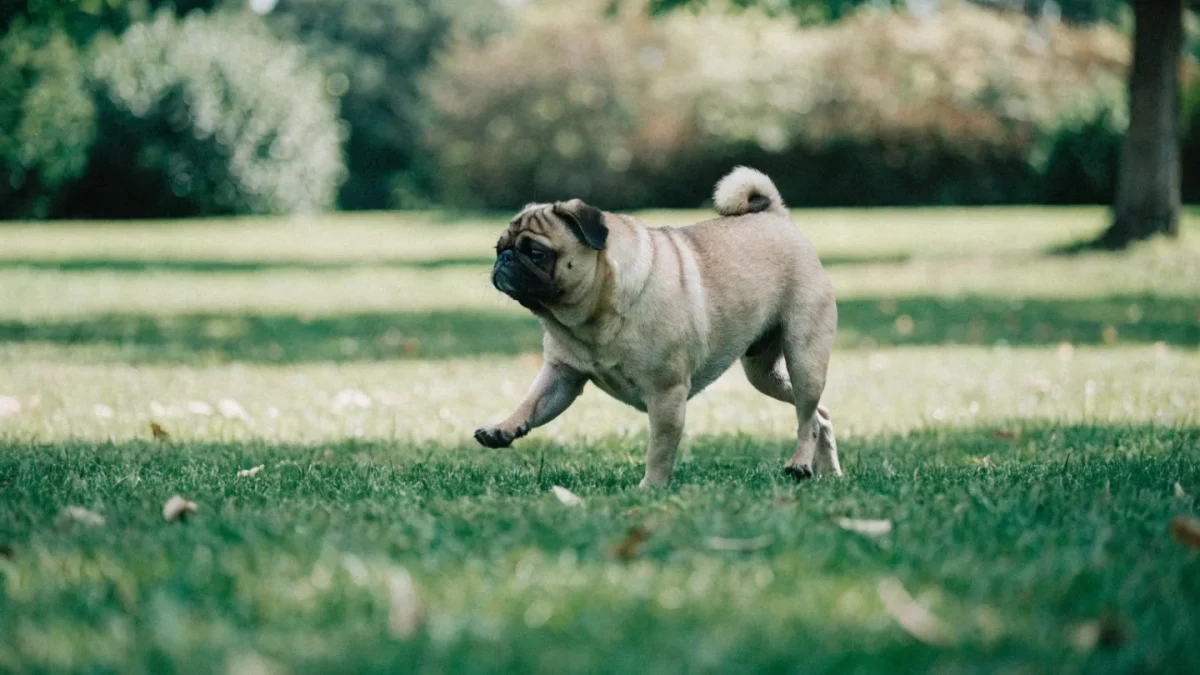
Pugs have been companion dogs since at least the Shang Dynasty in China, roughly 1600 BCE, which gives this breed approximately 3,600 years of accumulated human opinion — and a proportional volume of misinformation. The internet era added another layer: pugs became meme culture fixtures, which is entertaining but terrible for accurate breed understanding. The cartoon version of the pug that lives online bears limited resemblance to the actual animal.
Here are five pug misconceptions myths that range from mildly inaccurate to genuinely harmful.
1. Pugs Are Lazy Dogs
Walk into most conversations about pugs, and someone will describe them as couch potatoes. It's one of the breed's defining stereotypes, and it's misleading.
Pugs are not high-drive working dogs. They don't need two hours of trail running. But they are considerably more active than their reputation suggests, particularly in puppyhood and young adulthood. A healthy pug under five years old is often playful, curious, and surprisingly energetic in short bursts. The breed was developed as a companion dog, not a lawn ornament.
The lazy-pug myth causes real harm because it leads owners to under-exercise their dogs. Pugs are one of the breeds most prone to obesity, and they gain weight with remarkable speed when activity drops. A pug that gets no structured exercise becomes an overweight pug — and an overweight pug experiences significantly worse respiratory function, joint stress, and heat intolerance than one at a healthy weight. The "lazy" label becomes a self-fulfilling prophecy.
The complete pug breed guide recommends 30 to 45 minutes of moderate daily exercise, adjusted for temperature and the individual dog's respiratory capacity. That's not a marathon. But it's substantially more than zero.
2. All Pugs Can't Breathe
The pug's brachycephalic (flat-faced) structure does affect its respiratory system. That's a documented anatomical reality, and minimizing it would be irresponsible. But the blanket statement that "pugs can't breathe" treats the entire breed as a medical emergency, which isn't accurate either.
Brachycephalic Obstructive Airway Syndrome (BOAS) severity exists on a spectrum. Some pugs — particularly those from lines that have selected for more moderate facial structure — breathe reasonably well during normal activity, tolerate moderate exercise, and live their lives without requiring surgical intervention. Others have severely compromised airways that affect daily quality of life.
The variables that determine where an individual pug falls on this spectrum include the degree of soft palate elongation, the diameter of the nares (nostrils), the presence of everted laryngeal saccules, and the overall proportion of muzzle length to skull width. These vary between individual dogs and between breeding lines.
What doesn't help is either extreme of the conversation — dismissing breathing concerns as overblown or characterizing every pug as a dog that's suffocating. The pug temperament profile discusses how the breed's activity patterns naturally accommodate its respiratory limitations, but accommodation is not the same as absence of the problem.
3. Every Pug Is a Health Disaster
This misconception is the overcorrection to years of ignoring breed health problems. The pendulum has swung, and now pugs are sometimes described as if owning one guarantees constant veterinary emergencies.
Pugs do carry a heavier health burden than many breeds. BOAS, Pug Dog Encephalitis, patellar luxation, eye injuries due to prominent globes, skin fold infections, and spinal issues including hemivertebrae are all documented predispositions. Pretending otherwise would be dishonest.
But severity and frequency vary enormously. A pug from health-tested parents with moderate facial proportions, clear eyes, and a healthy weight may live 12 to 14 years with routine veterinary care and relatively manageable issues. A pug from extreme-conformation lines with no health screening may face chronic respiratory distress, recurrent skin infections, and progressive neurological problems.
The distinction matters because the blanket "all pugs are sick" framing discourages the selection pressures that could actually improve the breed. If every pug is equally doomed regardless of breeding choices, there's no incentive to breed for health. In reality, the choices breeders make about conformation, health testing, and structural moderation directly affect outcomes.
4. Pugs Are Unintelligent
Pugs score low on traditional obedience-based intelligence rankings, and their clownish demeanor reinforces the dumb-dog stereotype. Both signals point in the wrong direction.
The breed's apparent obedience deficit is better understood as a motivational mismatch. Pugs were bred for 3,600 years as companion animals. They were never selected for compliance with work commands. They were selected to be engaging, charming, and attentive to human social cues — and at those tasks, they excel.
A pug that ignores a "sit" command while simultaneously reading your facial expression to determine whether food is forthcoming is not unintelligent. It's allocating its cognitive resources to the problem that matters to it. Pugs are capable problem-solvers when motivated. They learn routines rapidly, manipulate their owners with impressive sophistication, and remember the location of every food source they have ever encountered.
Intelligence is not a single axis. A pug will never compete with a Border Collie in obedience trials. A Border Collie will never match a pug's ability to exploit human emotional responses to obtain a third dinner.
5. Pugs Have Always Looked Like This
This is the historical misconception that matters most, because it affects how people think about the breed's future.
Pugs in 18th- and 19th-century paintings look noticeably different from many modern pugs. Historical artwork by William Hogarth — whose 1745 self-portrait The Painter and his Pug featuring his dog Trump hangs in Tate Britain — and other painters consistently depicts pugs with longer muzzles, less prominent eyes, longer legs, and a generally less exaggerated silhouette than what appears in many show rings today. Eighteenth-century pugs were typically more robust, weighing 14 to 18 pounds, with a muzzle length noticeably longer than modern breed specimens.
The progressive shortening of the pug's muzzle has been driven by selection for features that appeal to judges and buyers — flatter faces, larger eyes, more compact bodies. This trend has intensified the breed's brachycephalic challenges. The pug that existed 200 years ago could likely breathe more efficiently than many pugs bred in the last few decades.
This matters because it means the pug's health problems are not inevitable, immutable features of the breed. They are the result of human decisions about breeding priorities. Different decisions — selecting for moderate muzzle length, open nares, and functional anatomy — can move the breed in a healthier direction without abandoning what makes a pug a pug. Several breeding programs are already pursuing this approach, and the results are encouraging.
The breed's history proves the current extreme is not the only option. The pug was a healthy, functional companion for millennia before conformation trends compressed its airway.